Lalon's Spiritual Journey Through Song: Preserving His Music and Philosophy
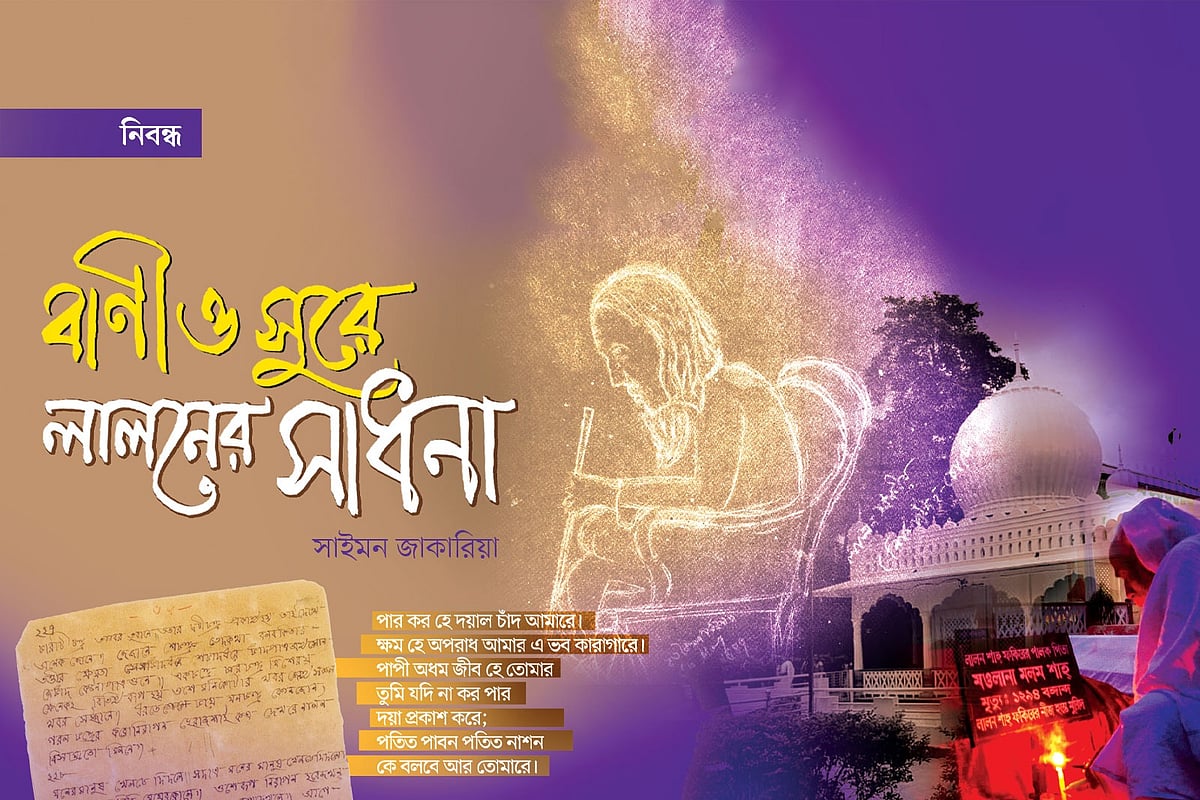
Fakir Lalon Sain, a revered spiritual figure in Bangladesh, disseminated his profound spiritual insights through the lyrics and melodies of his songs during his lifetime. Despite his significant contributions, Lalon is often narrowly perceived as merely a mystic poet due to a lack of information and general unawareness. However, thanks to the efforts of his disciples and international researchers, authenticated records of Lalon's song lyrics are preserved in various archives and private collections worldwide, alongside traditional melodies passed down through generations of Lalonian artists. This article delves into the historical evidence surrounding Lalon's musical legacy, addressing key questions about his performance practices, the existence of his manuscripts, and the preservation of his song melodies. Historical accounts suggest Lalon actively performed his music, even during his illness, finding solace and strength in singing. A report from the 'Hitokori' newspaper, published shortly after his passing in 1890, details his immense popularity and the widespread reach of his teachings, indicating he had over ten thousand disciples. This report also mentions that Lalon continued his spiritual practices and singing even when unwell, often becoming engrossed in divine melodies and forgetting his physical ailments. The article highlights that Lalon's music was central to his spiritual practice, with accounts describing him singing throughout the night before his death. His disciples' recollections corroborate this, describing him composing and singing songs, even dictating lyrics for them to be written down. The first known printed song by Lalon appeared in 1885 in 'Kangaler Brahma-Beda,' a publication by Kangal Harinath Majumdar, indicating the early efforts to document his lyrical compositions. This demonstrates that during Lalon's lifetime, his musical activities involved oral composition, melody creation, lyrical transcription by disciples, collection by associates, and initial publication efforts by those close to him. Later, numerous scholars and artists, including Rabindranath Tagore, contributed to publishing and preserving Lalon's songs, with the first musical notation of his songs being published by Indira Devi Chowdhurani in 1898-99.
This historical account underscores the critical role of oral traditions and community preservation in disseminating spiritual and artistic legacies, particularly for figures like Lalon Sain who operated outside formal institutions. The narrative highlights the challenges posed by information scarcity and the subsequent efforts by disciples, scholars, and publishers to authenticate and disseminate his work. It implicitly raises questions about the inherent biases in historical record-keeping and the potential for marginalized voices to be overlooked. The preservation of Lalon's music, spanning lyrical documentation and melodic transmission, illustrates a complex interplay between individual genius and collective memory. The ongoing efforts to collect and archive his work, even a century later, demonstrate the enduring cultural significance of his philosophy and artistic expression, prompting reflection on how future artistic legacies can be more comprehensively documented and protected in the digital age.
AI-generated to prompt reflection — not editorial opinion, not advice, not a statement of fact. How this works.