Landslide in China's Chongqing Kills 8, Leaves 34 Missing
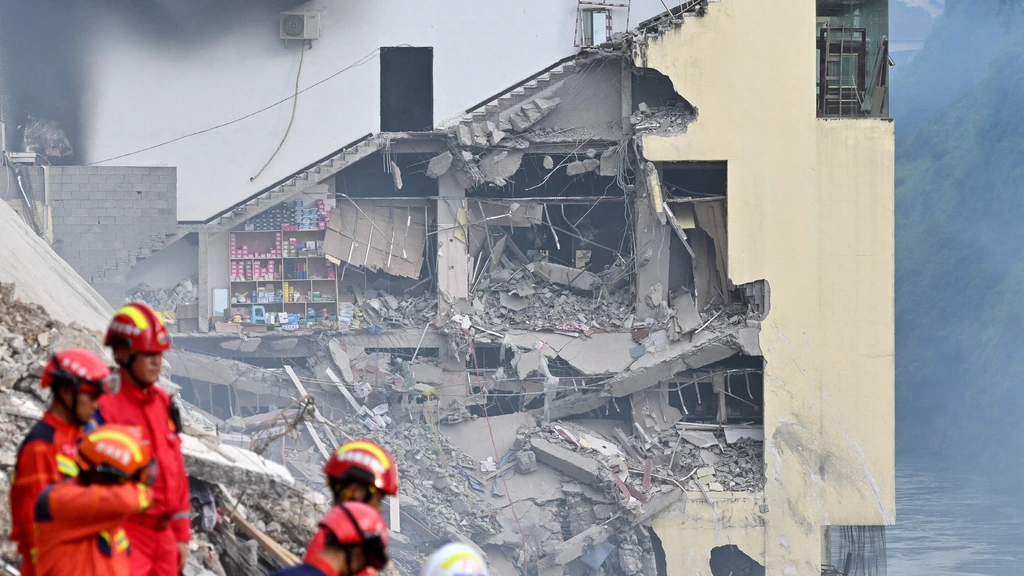
A significant landslide near the city of Chongqing in central China has resulted in at least eight fatalities and left 34 people missing. The disaster occurred shortly after 9:00 AM local time when massive amounts of rock and soil cascaded down, burying over ten residential buildings. Multiple structures collapsed, necessitating the evacuation of approximately 1,100 residents. Over 800 rescue workers are currently on site, with emergency services utilizing excavators to sift through the debris. Ten individuals have been rescued alive, including two who sustained serious injuries. State broadcaster CCTV reported that the rescue operations were hampered by the risk of further landslides. Images from state media depict a section of a mountainside collapsing onto a residential area, with large boulders also sliding down onto adjacent buildings. The landslide took place near the Wujiang River, which flows through a steep karst mountainous region. The exact cause of the landslide remains undetermined. Chinese President Xi has directed authorities to investigate the cause of the disaster. In response, the authorities are dispatching over 8,000 relief supplies, including tents, field beds, and emergency kits, to Chongqing.
This landslide event in Chongqing highlights the inherent risks associated with human settlements in geologically unstable regions, particularly those characterized by steep terrain and karst formations. The incident underscores the critical need for robust geological hazard assessments and stringent land-use planning in areas prone to such natural disasters. While immediate rescue and relief efforts are underway, the investigation into the cause, as ordered by President Xi, will be crucial for developing effective mitigation strategies. Future considerations should include early warning systems, reinforced infrastructure, and potentially managed relocation from high-risk zones to prevent future loss of life and property. The response also involves significant logistical challenges in delivering aid to the affected population, emphasizing the importance of resilient supply chains for disaster relief.
AI-generated to prompt reflection — not editorial opinion, not advice, not a statement of fact. How this works.