LARES-2 Satellite Confirms Einstein's Frame-Dragging Theory
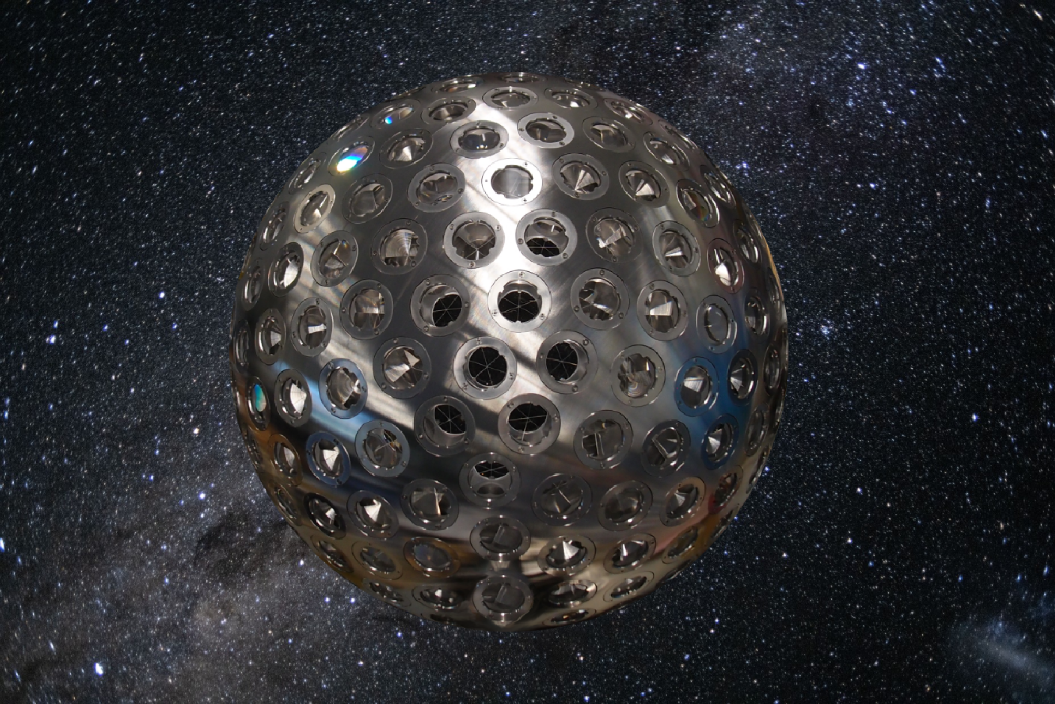
The LARES-2 satellite has successfully measured the frame-dragging effect, also known as the Lense-Thirring effect, around the Earth. This phenomenon, predicted by Albert Einstein's theory of general relativity, describes how a rotating massive body drags spacetime around with it. The LARES-2 mission aimed to provide highly precise measurements to test this fundamental aspect of gravity.
The satellite, launched by the Italian Space Agency (ASI) and managed by the European Space Agency (ESA), orbits the Earth at an altitude of approximately 5,600 kilometers. The precise tracking of its orbit over time allows scientists to detect the subtle distortions in spacetime caused by Earth's rotation. The initial results from the LARES-2 mission align with the predictions made by Einstein's theory, offering further validation of its accuracy.
The successful measurement of the frame-dragging effect by the LARES-2 satellite provides robust empirical support for Einstein's theory of general relativity. This validation is crucial for advancing our understanding of gravitational physics and spacetime dynamics. As technology enables increasingly precise measurements of cosmic phenomena, future missions can build upon these findings to explore more complex gravitational interactions, potentially revealing deviations from general relativity under extreme conditions. Such precise observations are vital for refining theoretical models and could inform the development of next-generation technologies that leverage gravitational principles.
AI-generated to prompt reflection — not editorial opinion, not advice, not a statement of fact. How this works.