Large Hadron Collider Anomalies Could Signal Dark Matter Presence
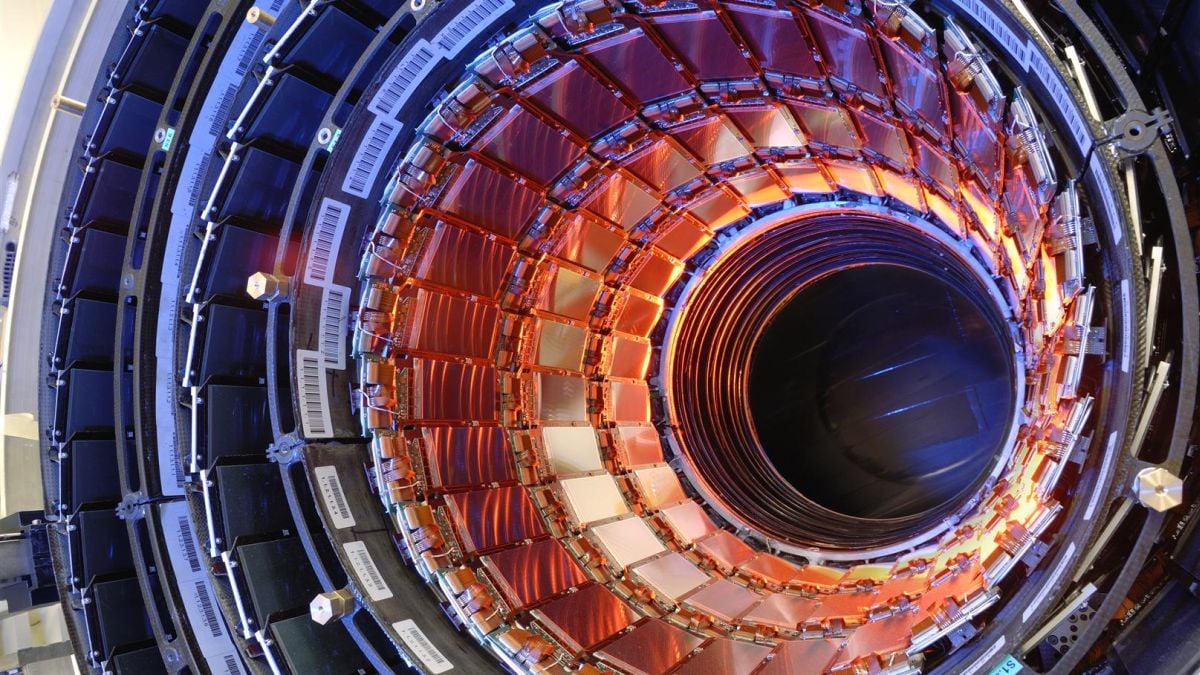
Unexplained phenomena observed within the Large Hadron Collider (LHC) might offer clues pointing towards the existence of dark matter. Scientists are exploring these anomalies as potential indicators of this elusive substance. The LHC, a colossal particle accelerator located at CERN, is designed to probe the fundamental structure of the universe by colliding particles at extremely high energies. While the primary goal is to understand particle physics, unexpected readings have emerged. These unusual events, sometimes colloquially referred to as 'UFOs' in this context, are not currently explained by the Standard Model of particle physics. Researchers are carefully analyzing the data to determine if these observations could be the signature of dark matter particles interacting with ordinary matter, albeit weakly. Dark matter is theorized to make up a significant portion of the universe's mass but does not interact with light, making it invisible and incredibly difficult to detect directly. The possibility that the LHC could indirectly reveal dark matter's presence is a significant development in astrophysics and cosmology. Further investigation and data collection are crucial to confirm or refute this hypothesis.
The observation of unexplained phenomena at the Large Hadron Collider presents an intriguing avenue for scientific inquiry into dark matter. Rather than focusing on sensationalized interpretations, the focus should remain on rigorous data analysis and theoretical modeling. The potential for the LHC to yield indirect evidence of dark matter highlights the ongoing challenge of reconciling current particle physics models with cosmological observations. Future research will likely involve refining experimental parameters and developing new theoretical frameworks to better interpret such anomalies, potentially leading to a paradigm shift in our understanding of the universe's composition within the next decade.
AI-generated to prompt reflection — not editorial opinion, not advice, not a statement of fact. How this works.