Late Radio Signal Solves Black Hole Mystery
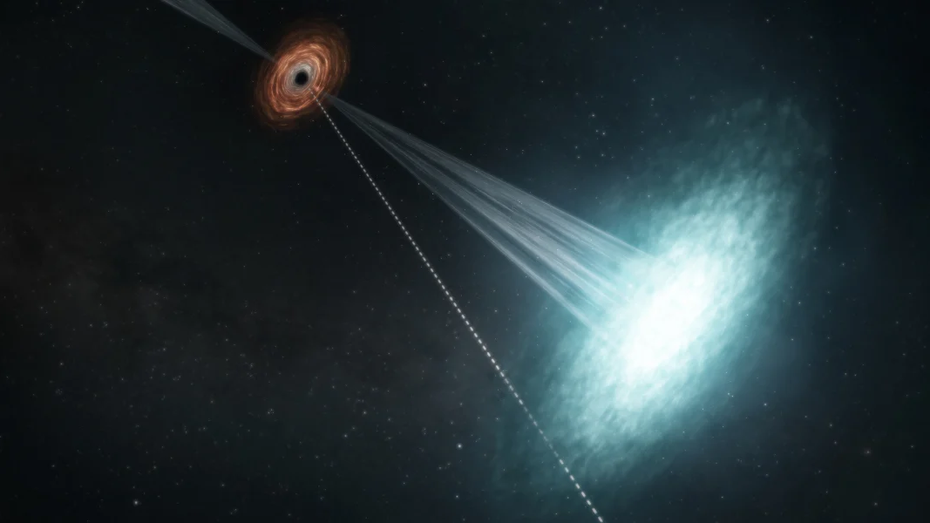
An unusual flash of light from deep space had puzzled scientists for years. The phenomenon, which originated from a black hole, has now been explained through a combination of sky surveys and complex computer simulations. This new understanding provides a completely different perspective on the event. The research involved detailed observations and advanced computational modeling to reconstruct the sequence of events. This breakthrough allows astronomers to better comprehend the dynamics of black holes and their interactions with surrounding matter. The late-arriving radio signal was key to unlocking the puzzle, offering crucial data that had previously been missing. The findings are expected to advance our knowledge of astrophysical phenomena and the extreme environments near black holes.
This discovery highlights the iterative nature of scientific inquiry, where initial observations can lead to prolonged periods of investigation before a comprehensive explanation emerges. The reliance on both observational data from sky surveys and theoretical modeling through computer simulations underscores the synergy required in modern astrophysics. The eventual resolution of the anomaly through a late-arriving radio signal suggests that our current observational capabilities may still be limited, and that unexpected data streams can be crucial for understanding complex cosmic events. Future advancements in telescope technology and data processing will likely enable faster and more complete analyses of such phenomena, potentially refining our understanding of black hole physics and the broader universe within the next decade.
AI-generated to prompt reflection — not editorial opinion, not advice, not a statement of fact. How this works.