Late Rains Swell Araguaia River, Forcing Businesses to Adapt
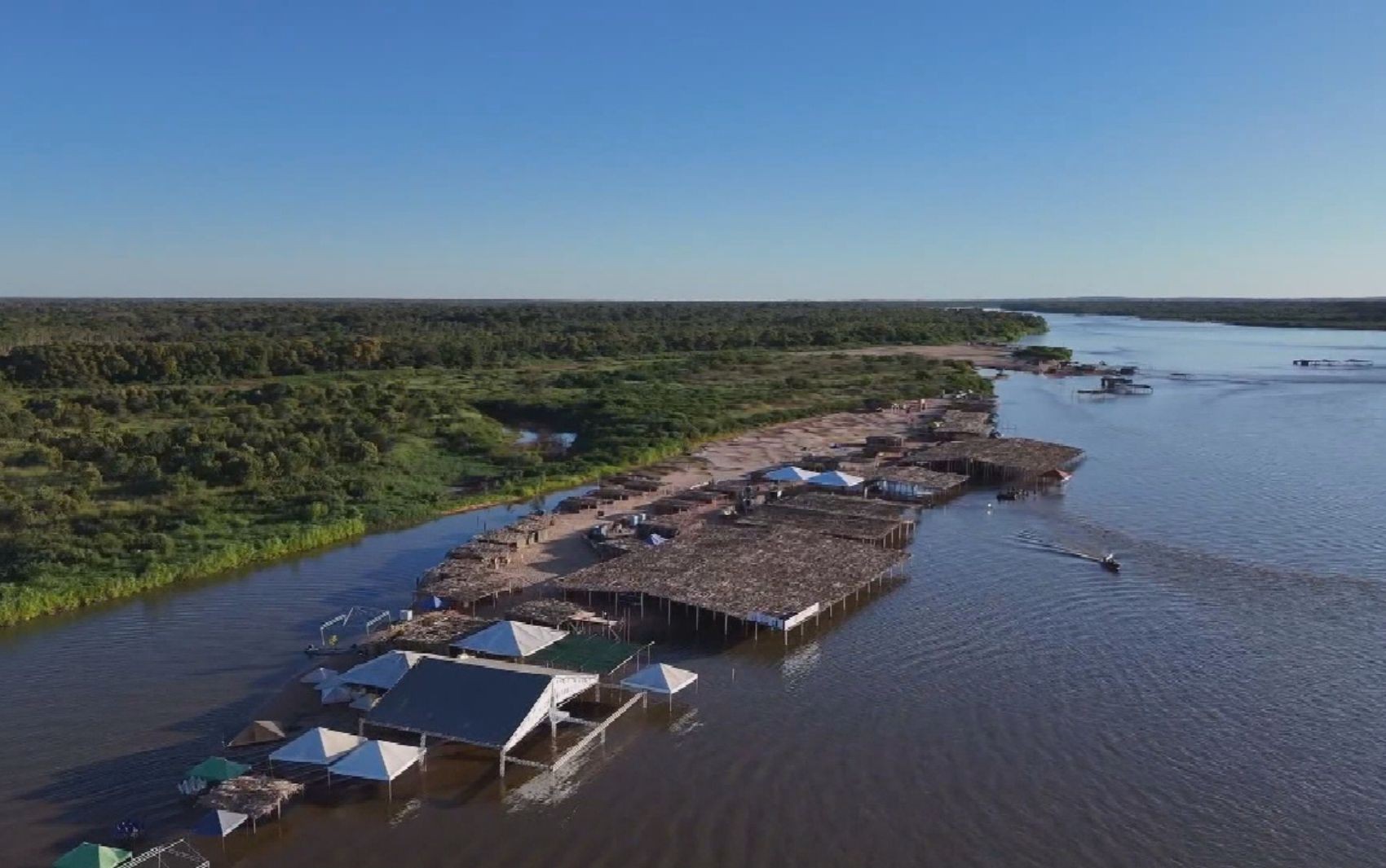
Unusually late rainfall has caused the Araguaia River's water levels to remain high, delaying the formation of its popular tourist beaches. Typically, the river's waters recede between July and August, revealing sandy shores and small beaches that attract visitors. However, this year, the river remains full well into July, impacting businesses that rely on the dry season. Richard Robert, a ranch owner, noted that by this time last year, he was already serving customers, but this year, the water levels are significantly higher.
Local businesses are implementing adaptive strategies to cope with the extended high water. Construction master Júnior Pontes elevated bathroom structures by 60 cm to prevent flooding, while some ranches have relocated due to reduced sandy areas, particularly at the renowned Praia do Cavalo. According to André Amorim, manager of Goiás's Meteorological and Hydrological Information Center, significant and atypical rainfall in June, including in the southwestern regions of Goiás and parts of Mato Grosso, contributed to the slower water level decrease. Despite these challenges, expectations are that the river levels will normalize within the next 10 days, allowing the beaches to emerge and tourism to resume as usual.
The delayed formation of Araguaia River beaches due to late rainfall highlights the sensitivity of local economies to climatic variations. This event underscores the need for adaptive infrastructure and business models that can better withstand unpredictable weather patterns, a challenge likely to intensify with climate change. While the immediate impact is on tourism and local commerce, it also prompts consideration of long-term water management strategies and the potential for increased flood risks in regions traditionally reliant on dry seasons. The resilience demonstrated by local businesses in adapting to these conditions offers valuable insights into community-level responses to environmental shifts, suggesting that proactive planning and flexible operations are crucial for navigating future environmental uncertainties.
AI-generated to prompt reflection — not editorial opinion, not advice, not a statement of fact. How this works.