Latin America's Largest Tunnel Water Reservoir Built in Ancient Rock
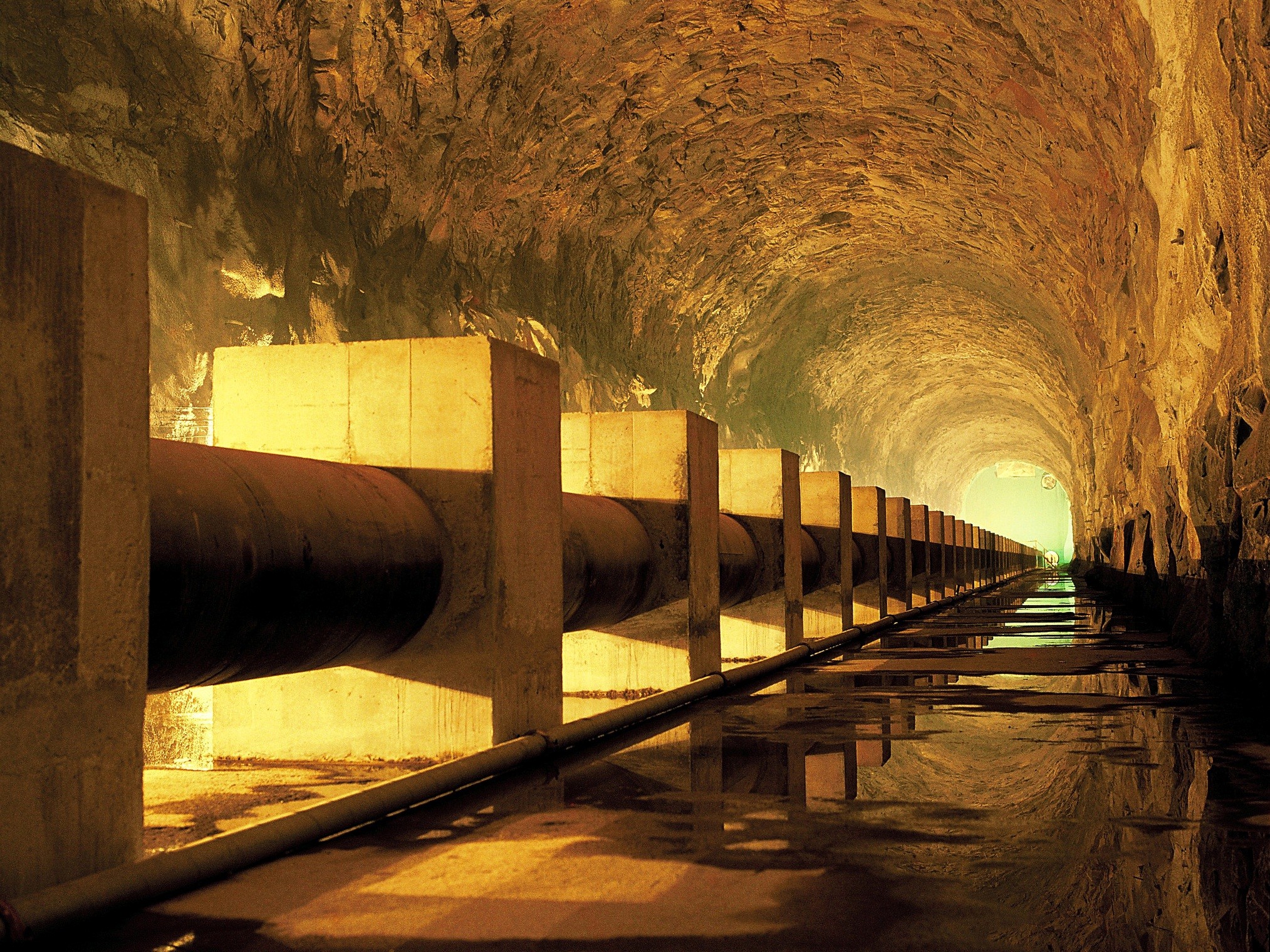
The Santa Tereza-Voturuá Tunnel Reservoir, located between the cities of Santos and São Vicente on the São Paulo coast, is the largest treated water reservoir in tunnel format in Latin America. It has a storage capacity of 110 million liters and was excavated within the Santa Terezinha and Voturuá hills. The structure, built between 1979 and 1981, serves Santos and São Vicente and also reinforces the water supply for Guarujá and Praia Grande, playing a strategic role in the water security of the Baixada Santista region.
The reservoir was constructed 42 meters above sea level to enable gravity-fed water supply, thereby saving electricity costs. According to the Santos Archive and Memory Foundation, the tunnel was carved into granite gneiss rocks approximately 600 million years old, the same geological formation found at Sugarloaf Mountain in Rio de Janeiro. This high-quality rock allowed the structure to utilize the natural rock as its support.
With a length of over one kilometer, the reservoir is divided into two chambers, each measuring about 13 meters high and 15 meters wide. Its 110 million liter capacity is equivalent to 220 million 500ml water bottles, 44 Olympic swimming pools, or 55,000 water tanker trucks. Interestingly, the stones removed during excavation were used to build the Submarine Outfall. Although the reservoir has been opened for public visits in the past, Sabesp currently states it is not accessible except for scheduled maintenance. The company is investing in further enhancing regional water security, with plans to add 21 more reservoirs by 2029, increasing capacity by over 130 million liters.
This infrastructure project highlights the strategic integration of geological formations into essential public works, leveraging the stability of ancient rock for long-term water storage. The design's reliance on gravity for water distribution demonstrates an early consideration for energy efficiency, a principle increasingly critical in sustainable development. The project's expansion plans underscore a forward-looking approach to water security, anticipating future demand and climate-related challenges in the Baixada Santista region. The successful construction and ongoing investment in such reservoirs suggest a robust governance framework for critical infrastructure, aiming to ensure resilience against potential supply disruptions.
AI-generated to prompt reflection — not editorial opinion, not advice, not a statement of fact. How this works.