Leatherback Turtle Found Dead on Cabo Frio Beach
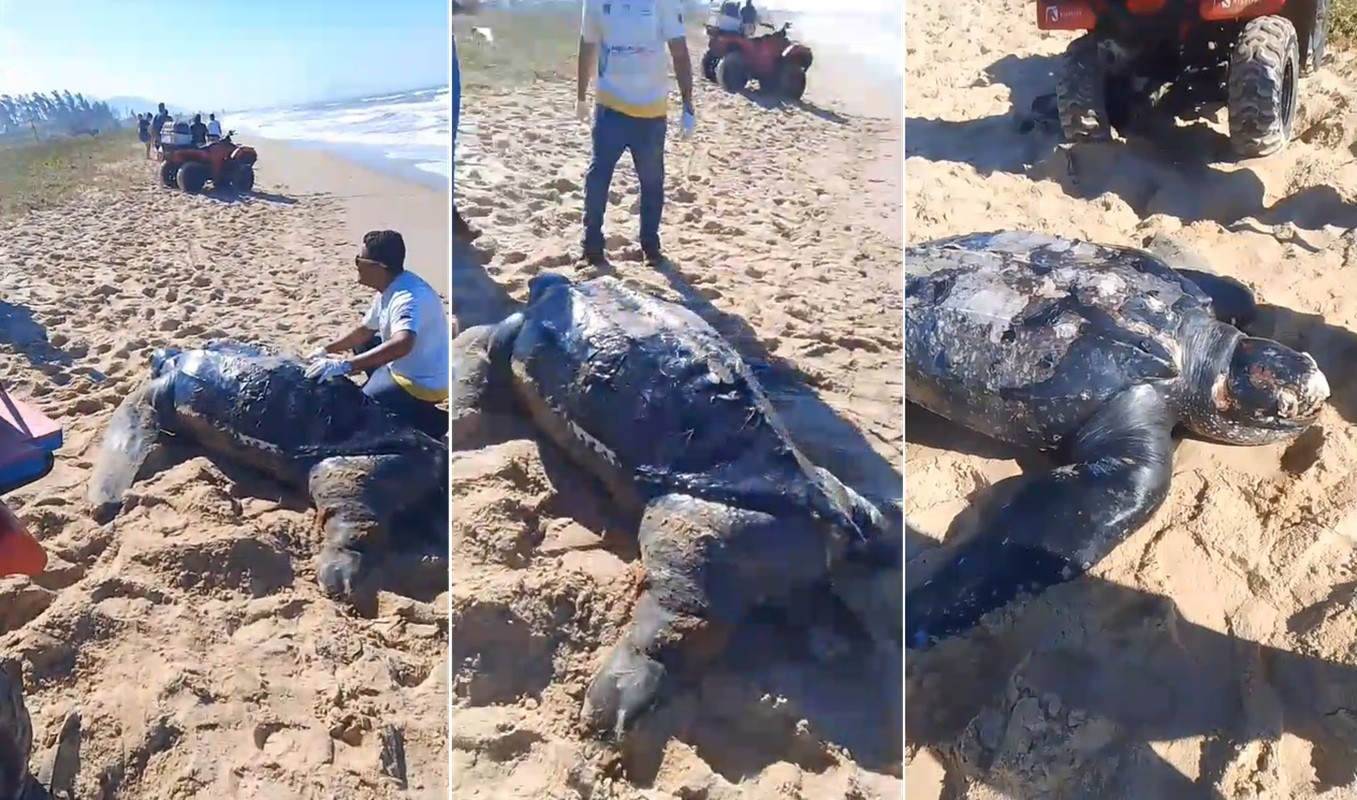
A leatherback sea turtle (Dermochelys coriacea), the world's largest sea turtle species, was discovered deceased on Unamar Beach in Cabo Frio, located in Brazil's Região dos Lagos. The Institute BW (IBW) team was alerted and responded on Tuesday, May 28th. They collected biometric and biological data from the animal and performed a necropsy on-site, adhering to the technical protocols of the Campos Basin and Espírito Santo Beach Monitoring Project (PMP-BC/ES). This initiative is part of the institute's marine fauna monitoring and rehabilitation efforts, ongoing since 2020. According to Paula Baldassin, IBW's veterinary coordinator and vice-president, the collected data enhances understanding of threats to endangered marine species and aids conservation actions. Leatherback turtles are primarily oceanic, migrating long distances for feeding and reproduction, with Brazil's main known nesting site in northern Espírito Santo. The species is classified as vulnerable to extinction by the IUCN due to threats like accidental fishing capture, plastic ingestion, boat collisions, habitat degradation, and climate change impacts. The IBW advises the public to avoid touching stranded or deceased marine animals and to report them to their specialized team at 0800 991 4800.
The discovery of a deceased leatherback sea turtle underscores the persistent threats facing vulnerable marine species. While the Institute BW's diligent monitoring and necropsy provide crucial data for conservation, the underlying causes of mortality—fishing bycatch, plastic pollution, and climate change—reflect systemic challenges in human-ocean interaction. The incident highlights the tension between coastal development and biodiversity preservation, and the need for robust international cooperation to mitigate transboundary threats like plastic waste and migratory habitat degradation. Future efforts must integrate advanced tracking and predictive modeling to anticipate and reduce impacts on these ancient mariners, moving beyond reactive data collection to proactive ecological stewardship.
AI-generated to prompt reflection — not editorial opinion, not advice, not a statement of fact. How this works.