Lebanon President Defends Israel Talks, Vows No Territorial Concessions
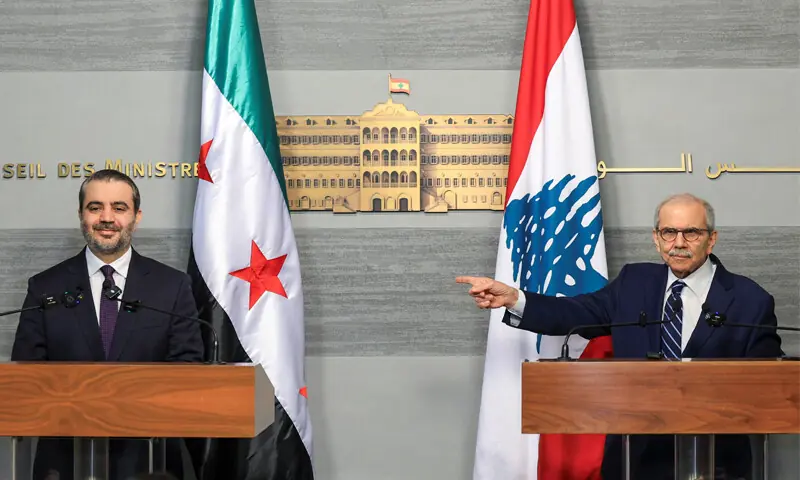
Lebanese President Joseph Aoun on Thursday defended a US-backed framework agreement with Israel, stating that the negotiations are a "diplomatic war" and not a betrayal, and vowed that Lebanon would not surrender any territory. These remarks were made during a visit by Syrian Foreign Minister Asaad al-Shaibani, who assured President Aoun that Syria has no intention of military intervention in Lebanon, despite US pressure. President Aoun explained that Beirut engaged in talks to secure Israel's withdrawal from Lebanese land, aiming for peace and to avoid further bloodshed. The framework agreement, signed last week, proposes the Lebanese army gradually taking control of southern Lebanon as Hezbollah disarms and Israel withdraws, though a timeline and a security annex remain undisclosed. This agreement follows recent conflict that began on March 2, involving Hezbollah missile launches and Israeli retaliatory strikes, which have reportedly killed over 4,200 people in Lebanon. Despite the agreement, Israeli Defense Minister Israel Katz indicated that Israeli forces would remain in designated "security zones" in Lebanon, Syria, and Gaza until further notice, citing Hezbollah as a continued threat. Meanwhile, Syrian diplomatic efforts aimed to de-escalate regional tensions, with Minister Shaibani clarifying Syria's non-intervention stance and extending an invitation to President Aoun for a visit to Syria.
The Lebanese president's defense of the framework agreement with Israel frames the negotiations as a strategic "diplomatic war" aimed at territorial integrity and avoiding further conflict. This framing attempts to reconcile engagement with a regional adversary with national sovereignty and public sentiment, particularly in light of significant domestic opposition like that from Hezbollah. The Syrian foreign minister's visit and assurances of non-intervention highlight the complex geopolitical dynamics at play, suggesting an effort to manage regional stability amidst external pressures. The agreement's success hinges on the delicate balance of Israeli withdrawal, Hezbollah disarmament, and the Lebanese army's assertion of authority, a process fraught with uncertainty due to the lack of a defined timeline and undisclosed security annex. The continued presence of Israeli forces, even post-agreement, underscores the persistent security concerns and the potential for ongoing friction, necessitating careful statecraft to navigate these competing interests over the coming decade.
AI-generated to prompt reflection — not editorial opinion, not advice, not a statement of fact. How this works.