Leopard Attacks Rise in Nepal as Human-Wildlife Conflict Intensifies
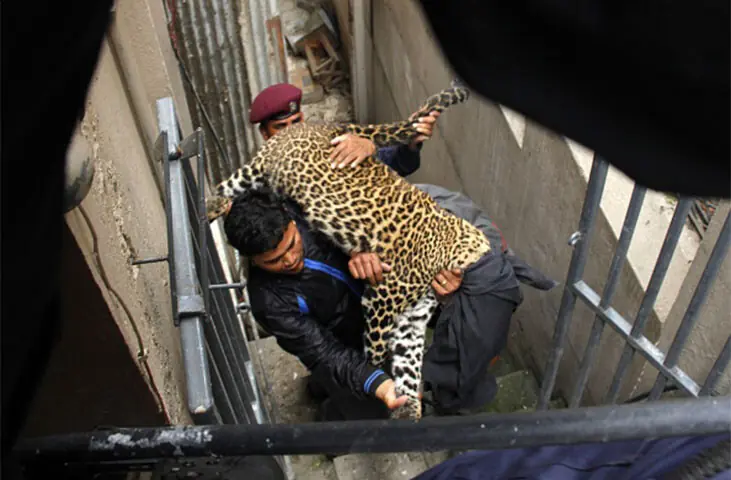
A recent leopard attack on a farmer, Bulal Maharjan, near Kathmandu highlights the escalating human-wildlife conflict in Nepal. The 67-year-old farmer was injured when a leopard lunged at him, an incident that also saw two others hurt before the animal was sedated by forest officials. This event reflects a broader trend where human settlements are increasingly encroaching on leopard habitats, driven by factors like forest expansion and climate change. From 2000 to 2020, conflicts involving four major mammals—elephants, rhinos, tigers, and leopards—resulted in 887 human deaths and the killing of 1,139 animals, with common leopards being the primary cause of human fatalities. Nepal's conservation efforts, particularly the community forest program initiated in the early 1990s, have successfully increased forest cover and, consequently, leopard populations in the mid-hills. However, this success has led to unintended consequences, as leopards are increasingly preying on domestic animals due to changes in their natural prey's habitat. Wildlife biologist Kedar Baral's research indicates that domestic animals constitute 27% of the leopard's diet in the mid-hills, up from the wild ungulates that typically form their preferred prey. Development projects, including hydropower and construction, are also expanding into leopard habitats, further displacing the animals and increasing encounters. Climate change may also be a contributing factor, with research suggesting that warming temperatures are shifting suitable leopard habitats to higher elevations, potentially increasing conflict zones. Conservation biologist Philip Nyhus suggests a two-pronged approach: preventing conflict by separating wildlife from human populations and livestock, and mitigating impacts when conflicts do occur. International examples, such as using spiked leather collars on livestock in Argentina to deter puma attacks, offer potential solutions. Despite these efforts, changing public attitudes, implementing effective interventions, and establishing adequate compensation systems remain significant challenges.
The growing frequency of leopard attacks in Nepal, as detailed in the report, illustrates a complex interplay between successful conservation initiatives and the inevitable pressures of human development and environmental change. While the expansion of community forests has demonstrably aided leopard populations, it has also inadvertently created conditions for increased human-wildlife conflict by altering prey distribution and bringing predators closer to settlements. The data on diet shifts, showing a significant reliance on domestic animals, points to an ecosystem under stress where traditional predator-prey dynamics are disrupted. Furthermore, the potential influence of climate change on habitat suitability suggests that these conflicts may intensify and shift geographically in the coming decade. Addressing this challenge requires a nuanced strategy that balances conservation goals with the immediate safety and livelihoods of local communities, potentially by exploring innovative, proactive measures like those seen internationally, rather than solely relying on reactive responses. The long-term sustainability of both human populations and wildlife hinges on adaptive management that anticipates future ecological and climatic shifts.
AI-generated to prompt reflection — not editorial opinion, not advice, not a statement of fact. How this works.
