Let Us Remain Nepali: A Call for Unity Beyond Divisions
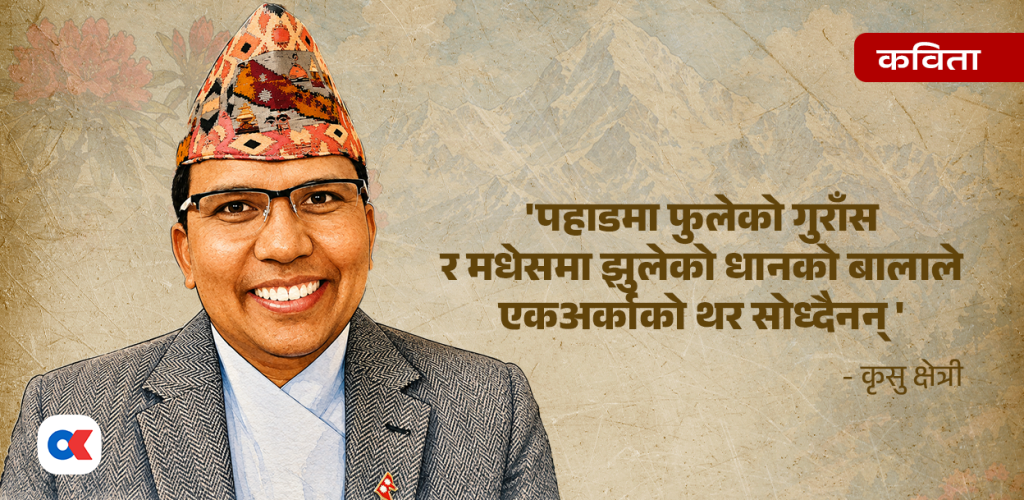
A statement urges against confining Nepali identity within narrow labels or divisions based on religion or ethnicity. The authors express a desire to be recognized as a unified Nepali people, likening their identity to the wind that connects the Himalayas to the Terai plains. They reject being categorized by religious affiliations such as Hinduism, Islam, Buddhism, Christianity, or Kirat. The sentiment highlights a shared sky and a common existence, suggesting that the spiritual calls from different religious sites, like the Aarti at Pashupatinath and the Azan from mosques, rise to the same heavens. This plea emphasizes a desire for an inclusive national identity that transcends religious and sectarian boundaries, promoting a sense of shared heritage and belonging.
This statement reflects a societal aspiration for national cohesion that transcends religious and ethnic particularism. It challenges the fragmentation of identity along sectarian lines, advocating for a broader, inclusive Nepali identity. The narrative emphasizes shared geography and common experience as unifying forces. From a systemic perspective, fostering such an inclusive identity can strengthen social capital and reduce intergroup conflict, potentially leading to greater national stability and development. However, the challenge lies in balancing the recognition of diverse cultural and religious practices with the promotion of a singular national narrative, a dynamic often navigated through inclusive governance and policy frameworks.
AI-generated to prompt reflection — not editorial opinion, not advice, not a statement of fact. How this works.
