Li Auto Bets on Custom Chip with Novel Architecture for Autonomous Driving
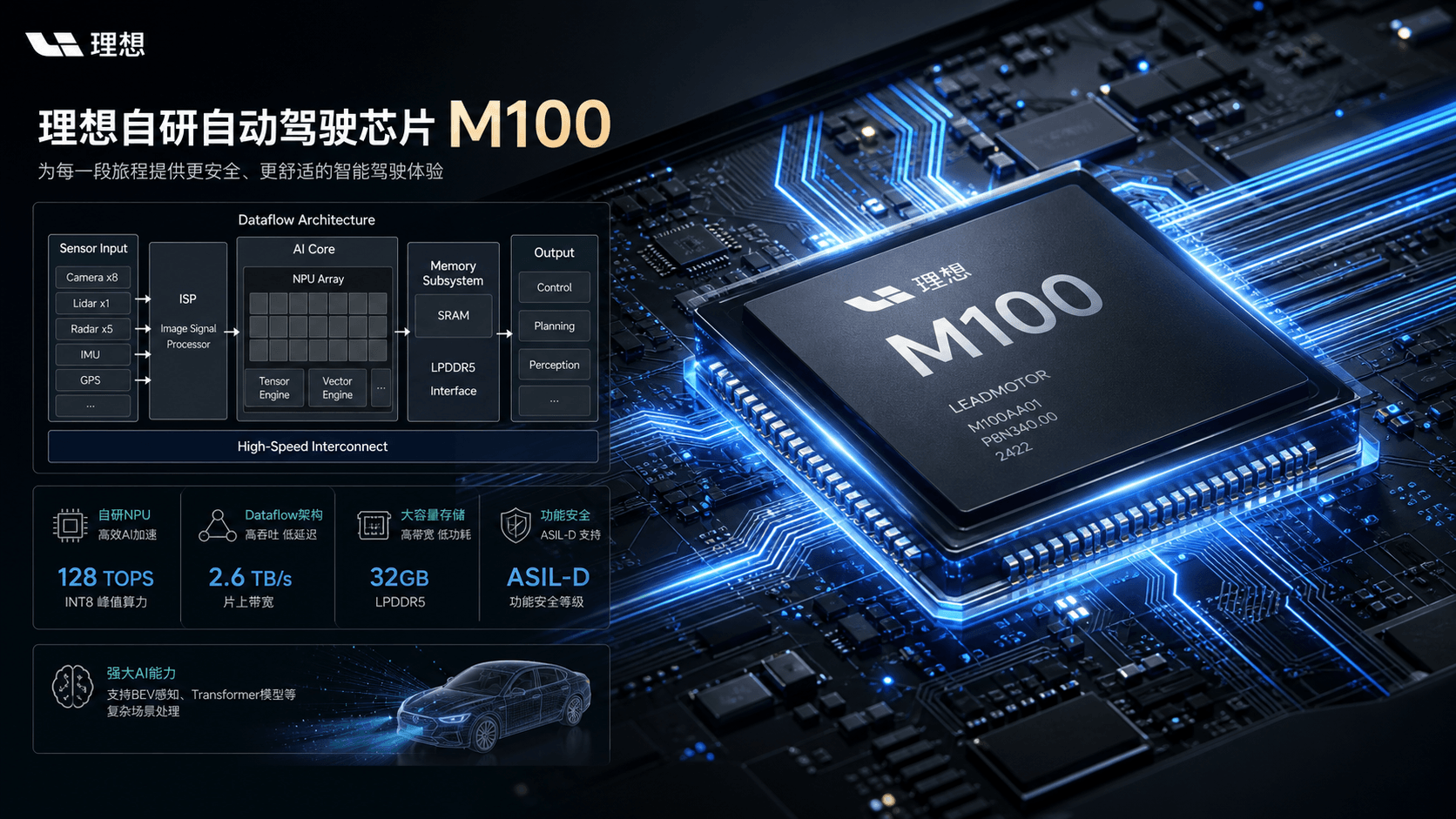
Li Auto has developed its own autonomous driving chip, the Mach M100, marking a significant technological endeavor for the Chinese electric vehicle manufacturer. This custom silicon boasts a processing power of 1280 TOPS (tera operations per second), a substantial figure indicating its capability for complex AI computations required for self-driving systems. The chip's distinguishing feature is its unique dynamic dataflow architecture. This approach represents a contrarian strategy, diverging from the prevailing industry trend that heavily relies on NVIDIA's dominant Graphics Processing Units (GPUs) for AI acceleration. By developing its own chip with a distinct architecture, Li Auto aims to gain greater control over its autonomous driving technology and potentially optimize performance and cost more effectively than relying on third-party solutions.
Li Auto's development of the Mach M100 chip with a dynamic dataflow architecture signifies a strategic move to reduce reliance on established semiconductor giants like NVIDIA. This in-house chip development allows for greater customization and potential cost efficiencies, aligning hardware capabilities directly with the company's specific autonomous driving software needs. The adoption of a novel architecture suggests a long-term vision to differentiate its autonomous driving performance and potentially set new industry benchmarks. However, this approach also carries inherent risks, including significant R&D investment, manufacturing challenges, and the need to continuously update the chip to keep pace with rapid advancements in AI and automotive technology. The success of this strategy will hinge on its ability to outperform or offer comparable capabilities to established GPU solutions while managing the complexities of custom silicon development and integration within the rapidly evolving autonomous driving landscape over the next decade.
AI-generated to prompt reflection — not editorial opinion, not advice, not a statement of fact. How this works.