LIGO Detects Unusual Gravitational Wave Signal, Hinting at Primordial Black Hole Discovery
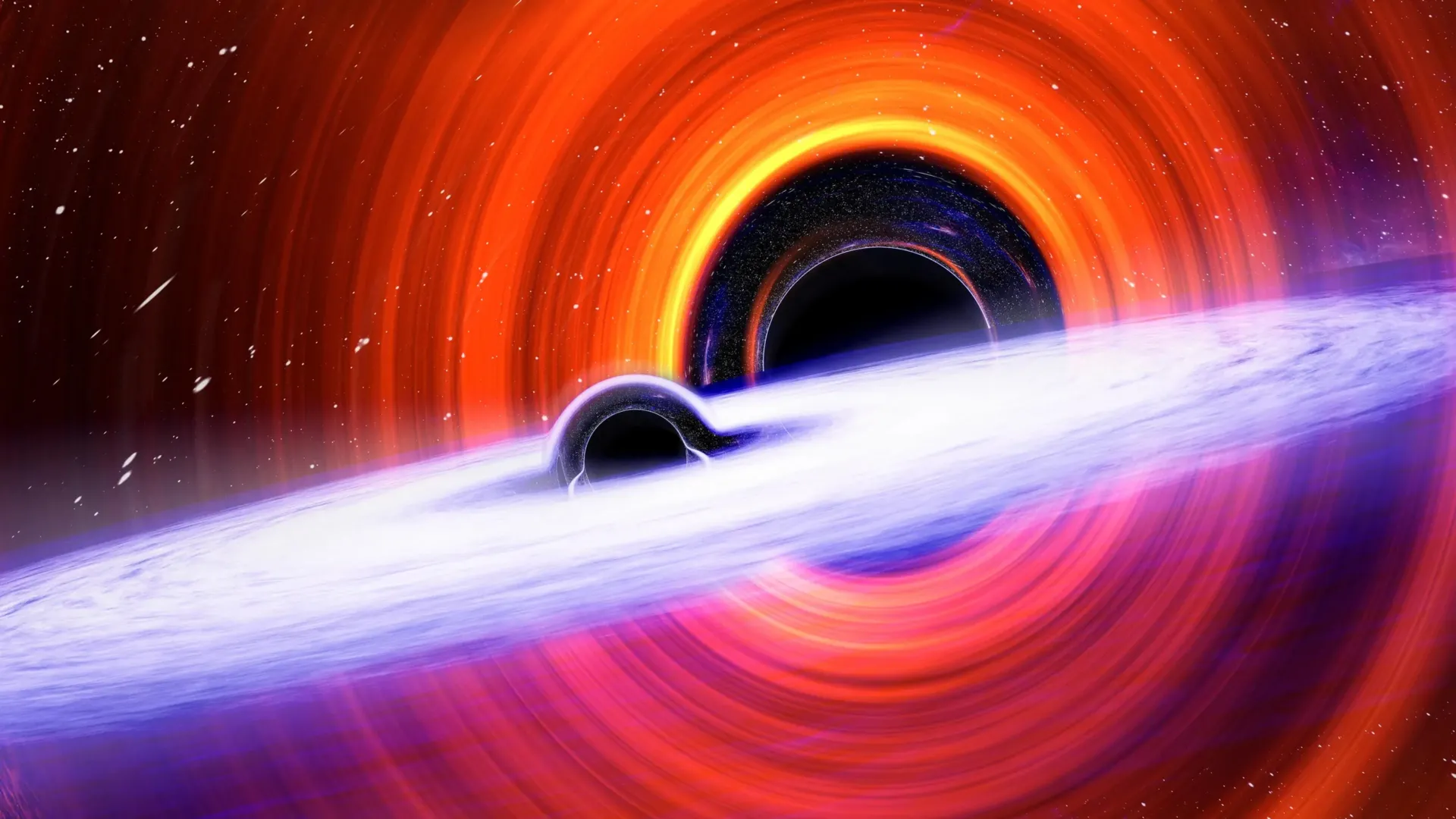
An unusual gravitational wave signal detected by the LIGO observatory has reignited scientific interest in primordial black holes. These black holes, previously considered purely theoretical, might now be closer to empirical discovery. If their existence is confirmed through this signal, it could provide a solution to one of the most significant unresolved mysteries in astronomy: the nature of dark matter. The potential discovery could bridge a gap in our understanding of the universe's composition and evolution.
The detection of an anomalous gravitational wave signal by LIGO presents an intriguing possibility for advancing our understanding of fundamental physics. Should this signal be definitively linked to primordial black holes, it would offer a tangible candidate for dark matter, a substance whose gravitational effects are observed but whose composition remains unknown. This potential breakthrough underscores the power of gravitational wave astronomy to probe phenomena beyond the reach of traditional electromagnetic observation. Future research will focus on corroborating this signal and refining theoretical models to explore the implications for cosmology and particle physics, potentially reshaping our cosmic inventory within the next decade.
AI-generated to prompt reflection — not editorial opinion, not advice, not a statement of fact. How this works.