Linux File Manager Plugin Mimics Windows 'My Computer' View
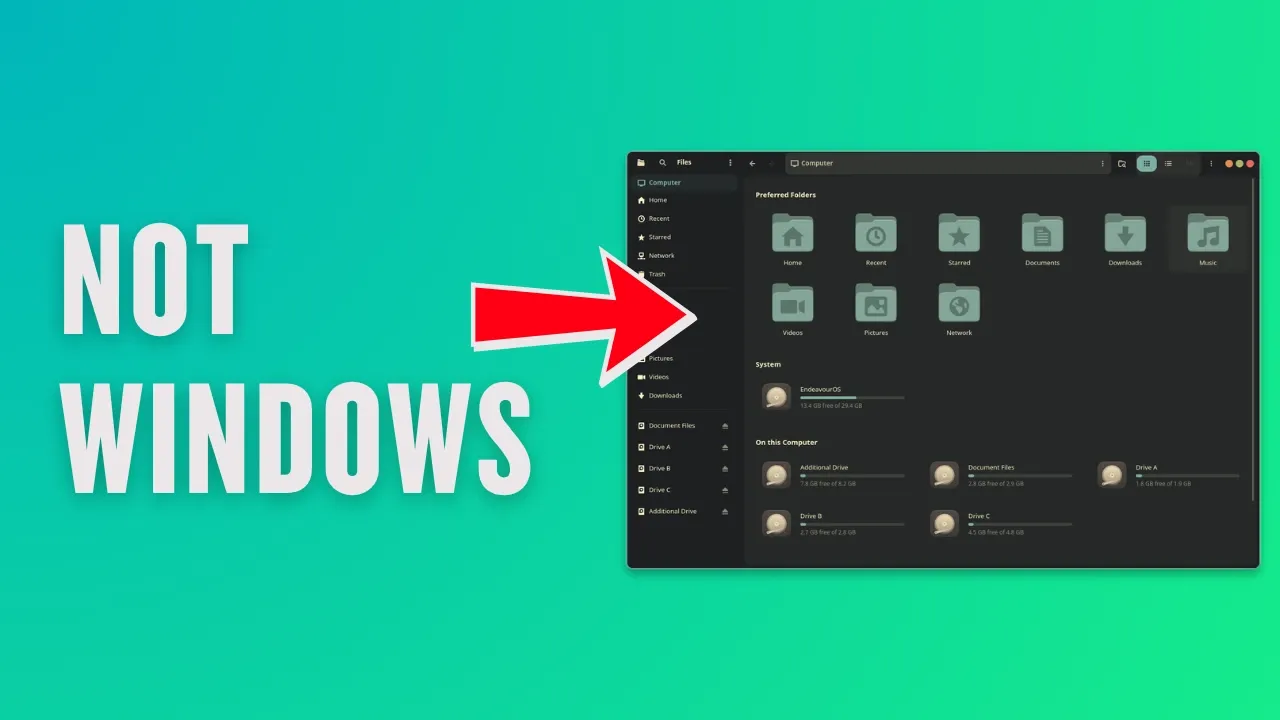
A new plugin for the Nautilus file manager on Linux aims to provide users with a familiar interface reminiscent of Windows' 'My Computer' feature. This plugin offers a unified view of all drives and locations accessible on the user's computer. The goal is to enhance the user experience by presenting disk drives and mounted locations in a clear and organized manner within the file manager. This can be particularly helpful for users transitioning from Windows to Linux, or for those who prefer a more traditional desktop metaphor for managing their file system. The plugin integrates directly into Nautilus, allowing for seamless access to all connected storage devices and network locations. It aims to simplify file navigation and management by consolidating these elements into a single, easily understandable panel. The unified view is designed to be aesthetically pleasing while also being highly functional for everyday use. By replicating the 'My Computer' functionality, the plugin seeks to make file management on Linux more intuitive and accessible.
This plugin addresses a common user interface preference by adapting a well-established convention from a dominant operating system. From a systems design perspective, it highlights the ongoing challenge of balancing established user expectations with the development of novel or distinct user experiences in evolving software ecosystems. The adoption of such features can lower the barrier to entry for new users, potentially increasing the overall accessibility and appeal of Linux-based systems. However, it also raises questions about the long-term direction of Linux desktop environments: will they converge on familiar paradigms, or continue to explore unique interaction models? This approach reflects a market dynamic where user familiarity and ease of adoption often outweigh purely innovative design, especially in competitive software landscapes.
AI-generated to prompt reflection — not editorial opinion, not advice, not a statement of fact. How this works.