Linux Now Runs on the Atari Jaguar, a "Might-Have-Been" Console
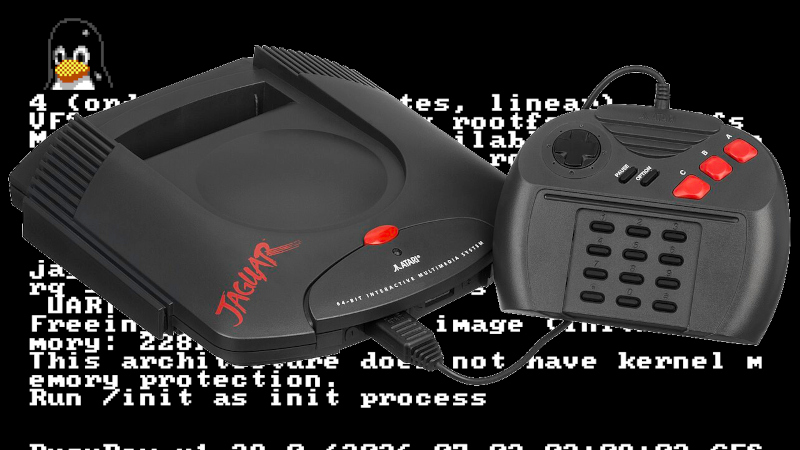
The Atari Jaguar, a console often remembered as a commercial failure and Atari Corporation's final product, has been revived in a new capacity. A group of enthusiasts has successfully ported the Linux operating system to the Jaguar. This achievement highlights the enduring potential of retro hardware and the dedication of the retro-computing community. The Atari Jaguar, released in 1993, was intended to be a powerful 64-bit console but struggled against competitors like the Sony PlayStation and Sega Saturn. Despite its commercial shortcomings, the Jaguar possessed unique architectural features that have now allowed for a modern operating system to be installed. This project demonstrates that even systems with limited market success can find new life through dedicated development and community effort. The success of this Linux port opens up possibilities for further experimentation and application on the Jaguar hardware.
The Atari Jaguar's legacy is being redefined by a community leveraging its unique architecture for modern applications like Linux. This resurgence underscores a broader trend where older, commercially unsuccessful hardware finds new purpose through open-source development and enthusiast innovation. Such projects highlight the potential for systems to transcend their original market intent, offering insights into the longevity of technological design when coupled with adaptable software ecosystems. The ability to run contemporary operating systems on vintage consoles prompts reflection on the long-term value of hardware design principles and the evolving definition of a system's utility beyond its initial commercial lifecycle.
AI-generated to prompt reflection — not editorial opinion, not advice, not a statement of fact. How this works.