Lionel Messi: The World's Most Dangerous Walker at the World Cup
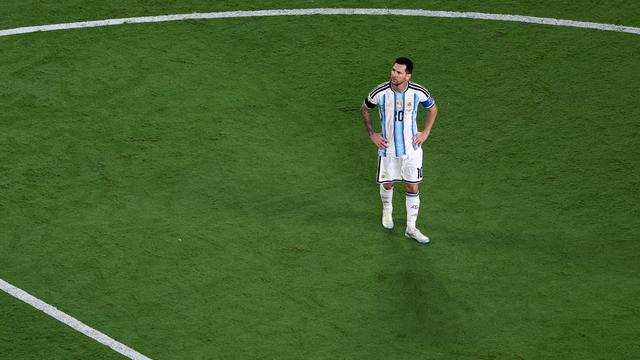
Despite spending more time walking than any other outfield player at the current World Cup, Lionel Messi has proven to be an exceptionally dangerous goal scorer. This seemingly contradictory observation highlights a unique aspect of his playing style. While he covers less ground actively running, his moments of engagement are highly impactful. This approach allows him to conserve energy and strategically position himself for crucial offensive plays. The data indicates that his perceived inactivity is not a sign of reduced effort but rather a calculated method of maximizing his effectiveness on the field. His ability to influence the game significantly, even with limited physical exertion, underscores his exceptional talent and tactical intelligence. This World Cup performance reinforces his reputation as one of football's most lethal finishers, capable of turning games with minimal, yet decisive, action.
Lionel Messi's World Cup performance demonstrates a fascinating dichotomy between perceived effort and actual output. His strategic conservation of energy, manifested as increased walking time, allows for peak efficiency during critical offensive phases. This approach challenges traditional metrics of player performance that heavily favor high-mileage running. The data suggests that effective football strategy may involve a re-evaluation of player engagement, prioritizing impactful moments over continuous high-intensity activity. As AI and advanced analytics continue to shape sports, understanding such nuanced player dynamics will be crucial for optimizing team performance and player development, potentially leading to new training methodologies that emphasize efficiency and tactical positioning alongside physical conditioning.
AI-generated to prompt reflection — not editorial opinion, not advice, not a statement of fact. How this works.