Liquid Trees Debut at Arraial de Belô Festival to Combat Air Pollution
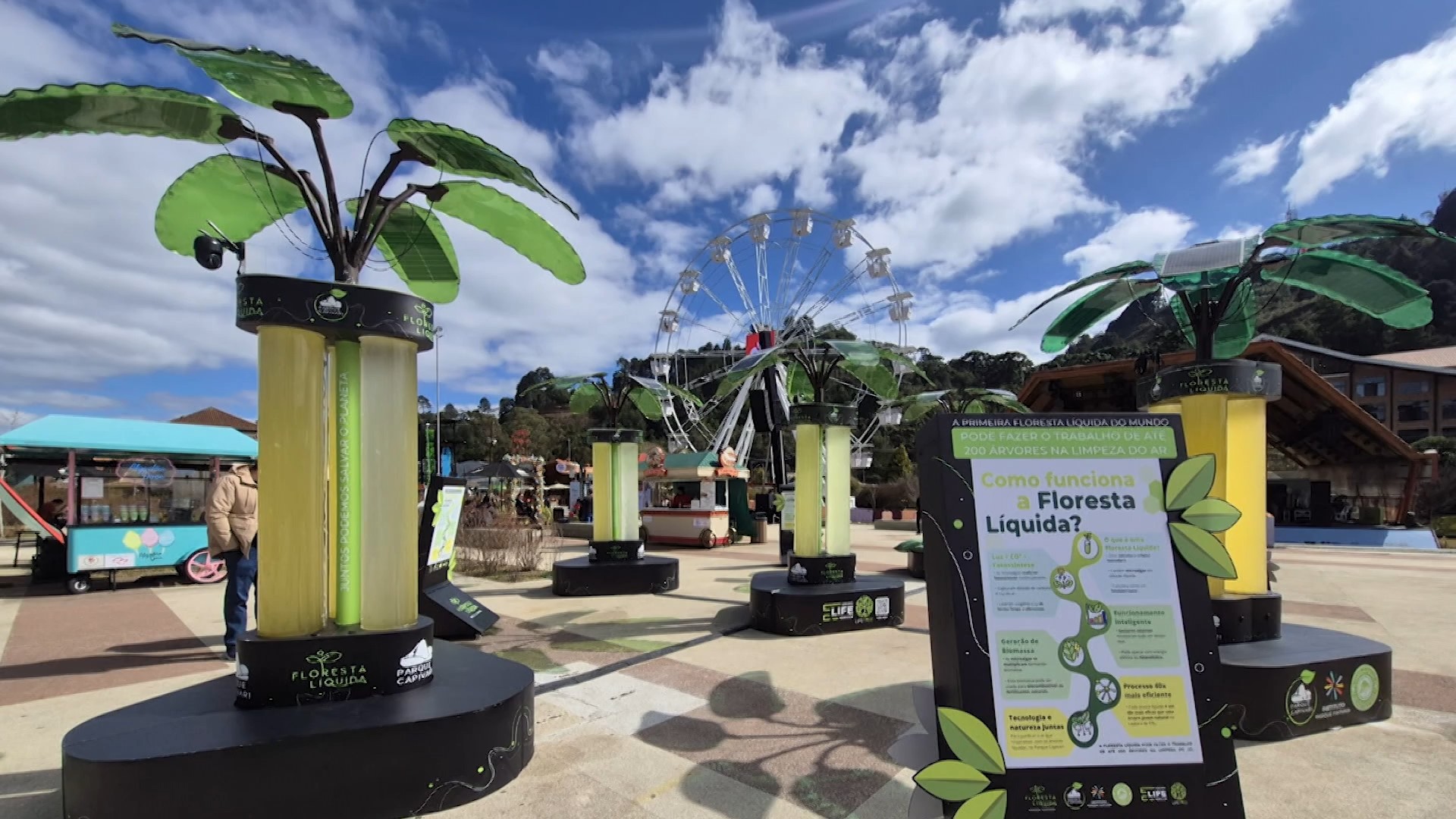
The Arraial de Belô festival in Belo Horizonte, Brazil, is featuring an innovative technology called 'liquid trees' for the first time. These structures utilize microalgae to capture carbon dioxide (CO₂) from the atmosphere, aiming to improve air quality. Installed in the external area of Mineirinho, the liquid trees will operate throughout the five-day event, which runs from August 24th to August 2nd. The system functions continuously, powered by electricity and water, and not only removes CO₂ but also produces biomass that can be converted into biofertilizer. Additionally, the microalgae contribute to oxygen production and help retain atmospheric particles. Beyond their environmental benefits, the liquid tree structures include seating areas for attendees to observe the equipment. This initiative is part of the festival's sustainability efforts, designed to raise awareness about climate change and encourage environmental consciousness among participants. Antônio Mazza, a mechanical engineer and the project's creator, will be present to explain the technology and discuss air quality and microalgae biology with interested visitors. The Arraial de Belô is taking place at Mineirinho in the Pampulha region of Belo Horizonte.
The deployment of 'liquid trees' at the Arraial de Belô festival highlights a growing trend of integrating environmental solutions into public events. This technology, leveraging microalgae for carbon capture and biomass production, presents a tangible demonstration of biotechnological approaches to air quality improvement. While the direct impact of a few such units at a festival may be symbolic, their presence serves to educate and engage the public on climate change mitigation strategies. The long-term viability and scalability of such systems, however, depend on factors like energy efficiency, maintenance costs, and the economic feasibility of biomass conversion. Future developments could focus on optimizing algae strains for specific pollutants and exploring decentralized applications in urban environments, potentially shifting the paradigm from passive infrastructure to active environmental remediation.
AI-generated to prompt reflection — not editorial opinion, not advice, not a statement of fact. How this works.