Local parties oppose smaller ballot with only party names and numbers
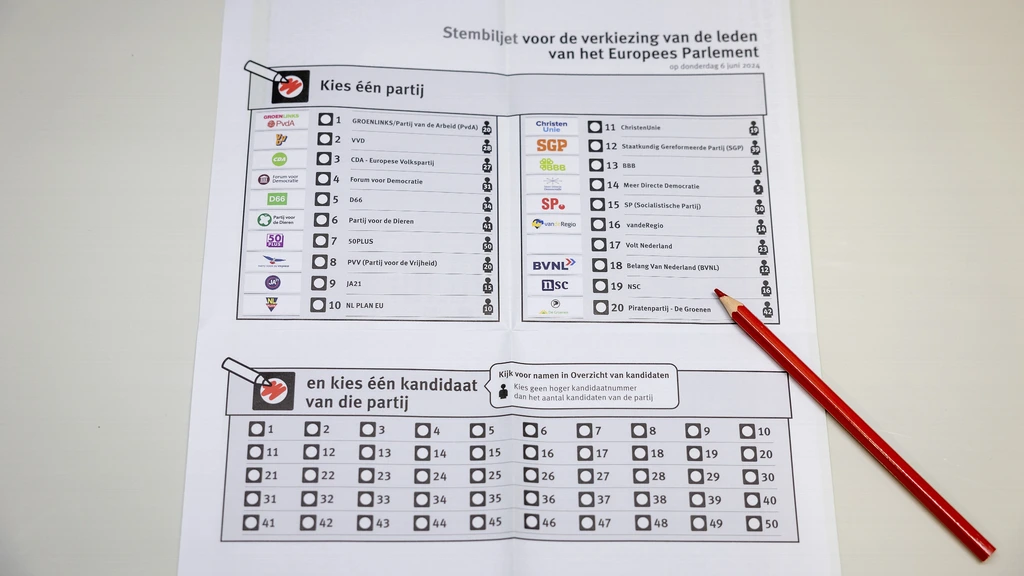
Over seventy local party leaders in the Netherlands have penned a letter to the minister, urging a halt to the planned introduction of a smaller ballot paper. The cabinet had decided that from 2029, a new, smaller ballot will be implemented, a model that was tested on a small scale in recent elections. Proponents argue that the smaller ballot allows for faster and simpler vote counting. However, local parties express support for modernizing the electoral process but object to the proposed format. Tjeu Berlijn, faction leader for Hart voor Medemblik, stated that while modernization is welcomed, the chosen model crosses a line. The new ballot will only feature party names and candidate numbers, requiring voters to first select a party and then manually enter a preferred candidate's number. The signatories fear this undermines a core principle of the Dutch electoral system, where voters traditionally cast their ballot for an individual rather than solely a party. They argue that the new system forces voters to first choose a party, and only then make an extra effort to select a specific person. The faction leaders are requesting the minister to revise the ballot design to include candidate names. If this is not feasible, they believe the smaller ballot should not be introduced for municipal council elections.
The debate over the ballot design highlights a tension between administrative efficiency and voter engagement with individual candidates. While a smaller ballot may streamline vote counting, local parties argue it could dilute the personal connection voters have with their representatives, potentially weakening the principle of voting for a person over a party. This shift could have long-term implications for political accountability and candidate visibility, especially for local representatives who rely on name recognition. Future electoral systems will need to balance technological advancements and data processing capabilities with the fundamental democratic value of enabling voters to directly and easily express their preference for individuals.
AI-generated to prompt reflection — not editorial opinion, not advice, not a statement of fact. How this works.