Lorenzo Mascheroni: The Mathematician Who Revolutionized Geometry with Only a Compass
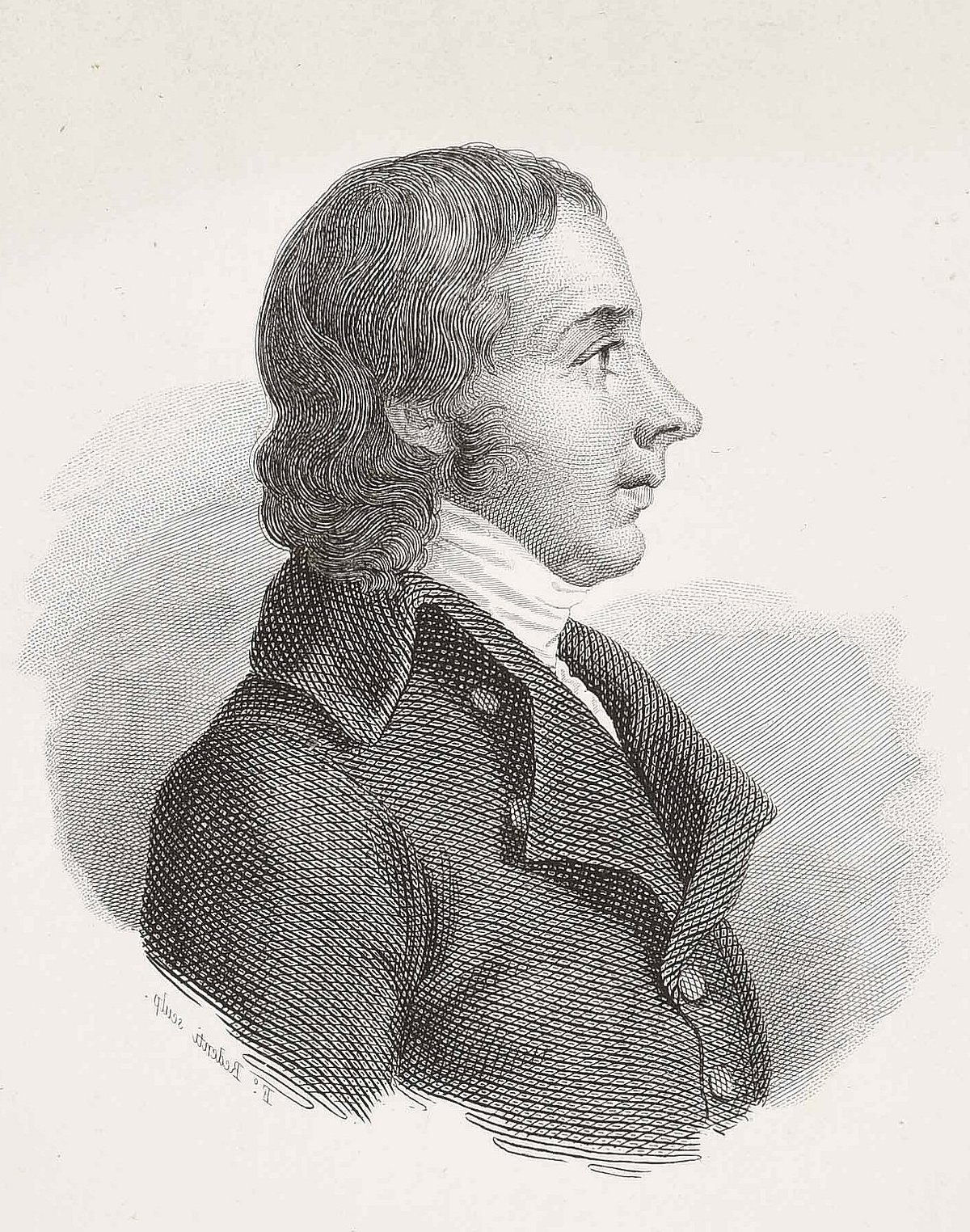
Lorenzo Mascheroni, an Italian mathematician born in Bergamo in 1750, challenged a centuries-old mathematical assumption: that both a ruler and a compass were necessary to construct geometric figures. In his book, "Geometria del Compasso" (Geometry of the Compass), published around 1797, Mascheroni argued and demonstrated that all geometric constructions possible with a ruler and compass could be achieved using only a compass. This groundbreaking idea, which seemed as impossible as painting without brushes, was presented with rigorous mathematical logic. Mascheroni, who also had a talent for poetry and was a member of the Arcadian Academy, dedicated his influential book to Napoleon Bonaparte, a known enthusiast of mathematics. Their intellectual connection led to discussions and problem-solving sessions, with Napoleon reportedly impressed by Mascheroni's solutions. Mascheroni's work was recognized with memberships in prestigious institutions like the Padua Academy and the Italian Scientific Society. His method became known as 'Mascheroni constructions.'
Lorenzo Mascheroni's discovery that geometric constructions could be performed solely with a compass, rather than requiring both a ruler and a compass, highlights a fundamental principle in mathematical exploration: challenging established axioms can unlock new possibilities. While Mascheroni's work was later found to have been anticipated by the Danish mathematician Georg Mohr 125 years earlier, Mascheroni's independent rediscovery and rigorous demonstration, particularly his engagement with Napoleon, underscore the importance of dissemination and context in scientific progress. This historical episode serves as a reminder that the perceived limitations of tools often reflect the limits of current understanding, and that innovative thinking, even if not entirely novel, can profoundly impact a field by providing new perspectives and methods for future generations of mathematicians and scientists.
AI-generated to prompt reflection — not editorial opinion, not advice, not a statement of fact. How this works.