Low Danube Water Levels Expose Mammoth Bones in Bulgaria
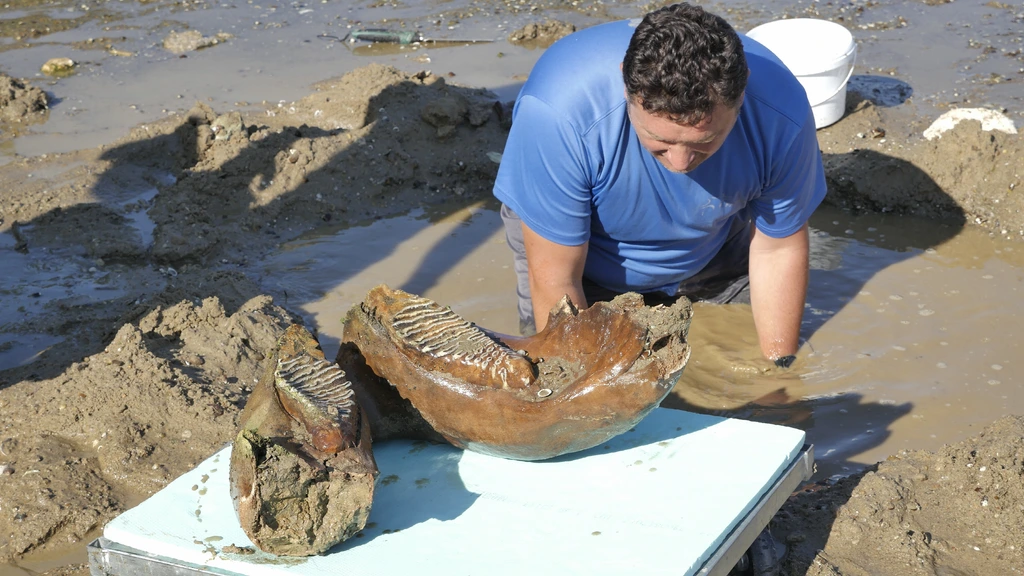
An exceptionally low water level in the Danube River has led to the discovery of ancient mammoth remains in Bulgaria. The exposed fossils, found near the northern village of Ryahovo, are provisionally believed to belong to a woolly mammoth. Identified remains include a lower jaw, tusks, a shoulder blade, and ribs, with specialists suggesting more of the skeleton might still be buried. A local resident alerted authorities after noticing the unusual find in the riverbed on Wednesday, sending photos to the municipal environmental service and a regional museum. Museum specialists were subsequently engaged to investigate the discovery. The news quickly spread throughout the village and the country, confirmed by Mayor Hristina Ivanova, who initially urged caution to avoid premature speculation. Woolly mammoths, estimated to stand nearly 5 meters tall and weigh 7 to 8 tons, roamed the Earth between approximately 500,000 and 800,000 years ago, with the species existing until about 7,000 to 10,000 years ago, according to museum curator Krasimir Kirov. Museum specialists commenced the recovery and transportation of the mammoth remains on Thursday, with plans for conservation and further study once fieldwork is complete.
This discovery highlights the impact of climate-driven environmental changes, specifically low water levels in major European rivers like the Danube, on revealing historical and paleontological artifacts. The event underscores how natural phenomena can unexpectedly bring to light evidence of past ecosystems, prompting scientific inquiry. The rapid dissemination of the news also reflects the public's fascination with ancient history and megafauna, while the careful approach by local authorities and museum specialists demonstrates a commitment to proper scientific procedure. Future climate projections suggest such low-water events may become more frequent, potentially leading to further significant discoveries across various regions, necessitating proactive strategies for artifact identification and preservation.
AI-generated to prompt reflection — not editorial opinion, not advice, not a statement of fact. How this works.