Low-Frequency Sound Waves Used to Track Prescribed Grassland Fires
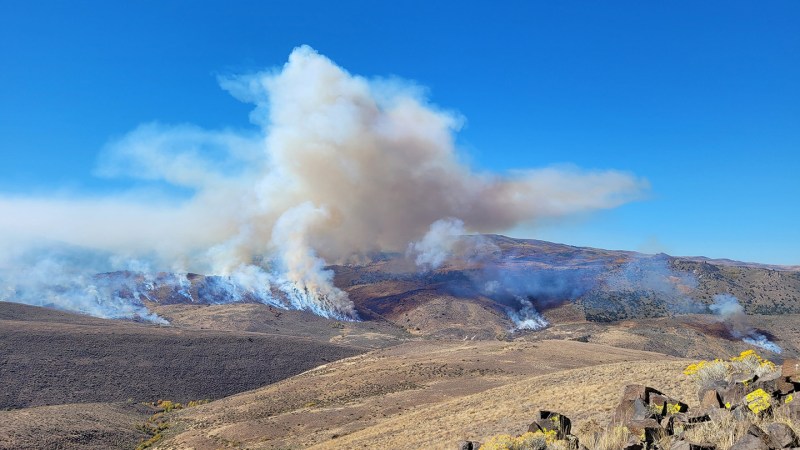
Scientists have successfully utilized infrasound, which consists of sound waves too low for human hearing, to monitor a controlled grassland fire. This innovative approach allows for the tracking of fire progression and behavior without direct visual observation. Infrasound, generated by natural phenomena like earthquakes and volcanic eruptions, can travel long distances with minimal attenuation. Researchers leveraged this characteristic to detect the acoustic signature of the burning grassland. The study demonstrates the potential of infrasound technology as a valuable tool for fire management and research. This method could offer a non-intrusive way to gather data on fire dynamics, potentially improving safety and efficiency in prescribed burn operations. Further development could lead to real-time monitoring systems for various types of fires.
This research introduces a novel application of infrasound detection for monitoring prescribed fires, moving beyond traditional visual or thermal imaging methods. By analyzing low-frequency sound waves, scientists can gain insights into fire behavior and spread, offering a potentially more robust and less visually dependent tracking system. This technological advancement could enhance the safety and effectiveness of land management practices by providing an alternative data stream, particularly in conditions where visibility is limited. The long-term implications may include improved early warning systems and more precise control over ecological restoration efforts through better fire management.
AI-generated to prompt reflection — not editorial opinion, not advice, not a statement of fact. How this works.