Low-income residents face long waits for subsidized food in Bangladesh
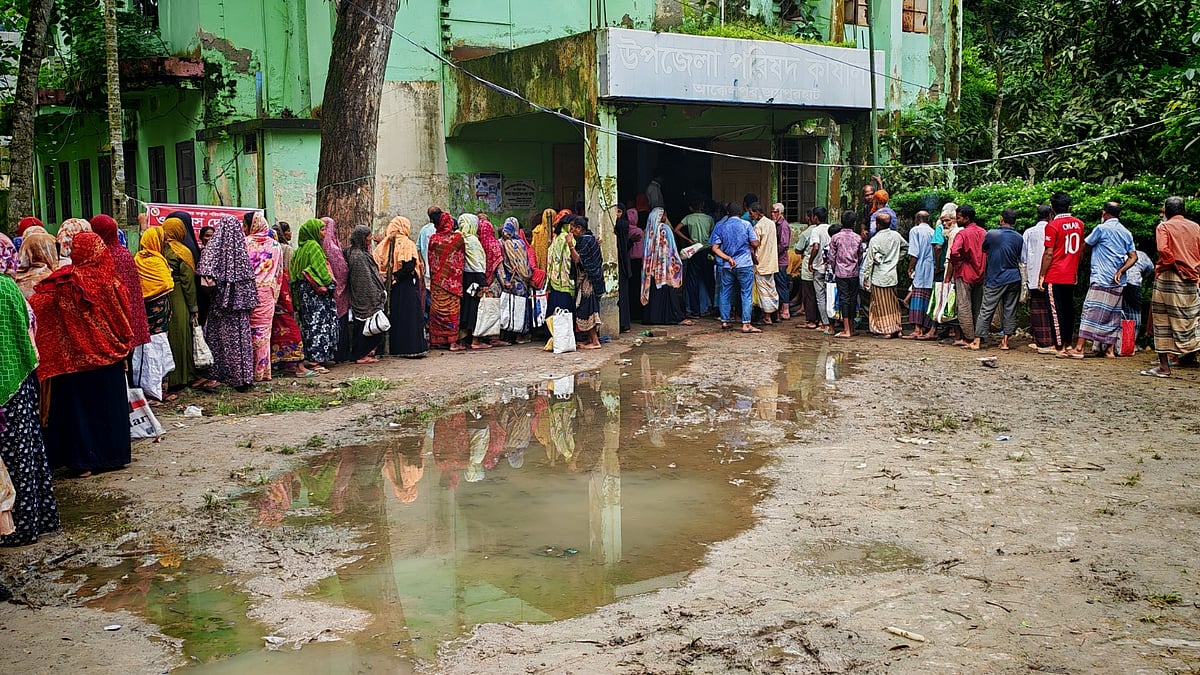
Residents in Akkelpur, Joypurhat, Bangladesh, are experiencing significant delays and hardship while trying to purchase subsidized atta (flour) and rice under the Open Market Sale (OMS) program. Many, like 60-year-old Josna Bewa, spend hours in line, arriving as early as 8 AM and still not getting their turn by mid-afternoon, preventing them from attending to household chores or work. This daily struggle is attributed to the slow pace of sales at the OMS center, which operates under the supervision of the Directorate of Food. The program aims to provide five kilograms of atta and five kilograms of rice for 270 Bangladeshi Taka to 400 beneficiaries each day, running from Sunday to Thursday. However, the process of collecting payment, verifying identity through fingerprint scans, and distributing the goods is time-consuming, with each transaction taking over ten minutes. This inefficiency leads to long queues and extended waiting times for all participants. Concerns have been raised about the slow sales process impacting the daily earnings of day laborers and disrupting the routines of homemakers. According to Khandaker Md. Mahbub Hossain, Akkelpur Upazila Food Controller, the sales are being conducted from a single booth due to a shortage of personnel, despite government guidelines suggesting two booths for the allocated two tons of atta and two tons of rice. This issue has been communicated to the Upazila Nirbahi Officer (UNO). The UNO, Ashiq-ur Rahman, who also chairs the Upazila OMS Committee, stated that the food controller will manage the program with his existing staff until the end of the current month. Subsequently, plans are in place to appoint dealers to manage the program, which is expected to allow for the operation of additional booths and potentially improve efficiency.
The described delays in the OMS food distribution program highlight a systemic inefficiency stemming from resource allocation and operational management. The bottleneck appears to be a combination of slow transaction processing times and insufficient staffing, leading to a reduced throughput that disproportionately affects vulnerable populations reliant on subsidized goods. While the intention of the OMS program is to provide affordable food, the current implementation creates an opportunity cost for beneficiaries in terms of lost work hours and disrupted domestic responsibilities. The reliance on manual verification processes and a single distribution point, exacerbated by personnel shortages, suggests a need for technological upgrades and a more robust staffing model. Future planning should consider optimizing distribution logistics, potentially through increased automation or a tiered service approach, to ensure that the program's benefits are realized without imposing undue burdens on its intended recipients. Addressing the personnel deficit and exploring dealer-led models are critical steps toward enhancing the program's effectiveness and responsiveness to public demand.
AI-generated to prompt reflection — not editorial opinion, not advice, not a statement of fact. How this works.
