Lu Xun's Story 'In the Wine Shop' Explores Friendship and Societal Ills
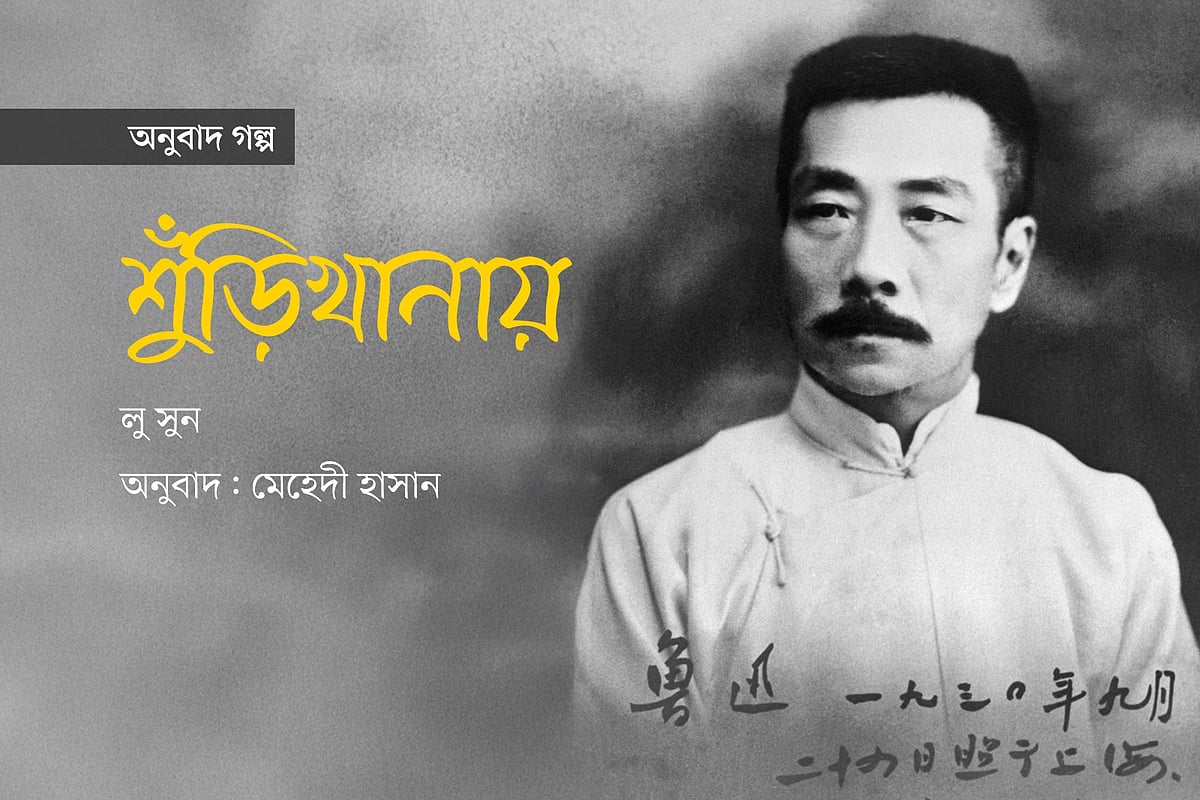
The story 'In the Wine Shop' by renowned Chinese writer Lu Xun, first published in May 1924, delves into the complex relationship between the author and his deceased friend, Fan Ainong. Researchers identify the character Wei-Fu in the story as Fan Ainong, who passed away in 1912, a decade before the story's completion. Lu Xun and Fan Ainong met in 1907 while studying in Tokyo, Japan. Their initial acquaintance was marked by Lu Xun's strong disapproval of Fan's seemingly indifferent reaction to the brutal execution of their mentor, Su Xilin, by government bodyguards. Lu Xun was deeply angered by Fan's statement that further action was pointless after the mentor's death. Their relationship evolved significantly four years later, around the 1911 revolution, when they reconnected and became close companions, sharing drinks and life's hardships. They even worked together briefly at the same school, with Lu Xun as principal and Fan as supervisor, a period of stability for Fan. However, this stability was short-lived. Lu Xun was transferred, and after his departure from Shaoxing, Fan lost his job and faced severe financial hardship, leading to a relapse into heavy drinking and a deterioration of his living conditions. Fan Ainong died at the age of 29, reportedly falling from a boat while intoxicated, though Lu Xun suspected suicide due to Fan's strong swimming ability. Lu Xun felt a deep sense of regret for not being able to secure a job for his impoverished friend and expressed sorrow over the fate of Fan's wife and young daughter, particularly a failed attempt to establish an educational fund for the child. Lu Xun's writings frequently returned to Fan's memory, seemingly driven by the pain of his friend's untimely death and his inability to help him during his struggles. The narrative suggests Fan was a victim of a cruel society and his own innate simplicity, unable to navigate the deceptions prevalent in social interactions. His disregard for social hierarchies, class distinctions, and status, exemplified by his overly familiar address to a military governor, was a trait that both puzzled and perhaps intrigued Lu Xun. Many believe Lu Xun was fascinated by this lack of class consciousness, as he identified societal hierarchy as a fundamental problem in Chinese society. Lu Xun penned several poems in memory of Fan, reflecting on his friend's character and premature demise. The story's character Wei-Fu also embodies Lu Xun's own desire to please his mother, reflecting his filial devotion and the lengths he went to for her happiness. The article concludes by referencing Mao Zedong's high praise of Lu Xun, questioning why such a revolutionary figure would focus on the seemingly compromising character of Wei-Fu.
This narrative explores the profound impact of friendship and societal pressures on individual lives, as depicted through Lu Xun's relationship with Fan Ainong. The story highlights the tension between individual integrity and the pragmatic compromises often required for survival within a hierarchical social structure. Lu Xun's portrayal of Fan's struggles and his own feelings of regret and helplessness offer a critical lens on the societal mechanisms that can lead to the downfall of even well-intentioned individuals. The analysis prompts reflection on how societal expectations and systemic inequalities can stifle personal potential, and whether the pursuit of authenticity, as exemplified by Fan, is sustainable in a world that rewards conformity and artifice. It invites consideration of the enduring relevance of these themes in contemporary society, particularly in the context of meritocracy and social mobility.
AI-generated to prompt reflection — not editorial opinion, not advice, not a statement of fact. How this works.