Luciferian Temple in Piracicaba Operates Privately, Uses Blood in Rituals
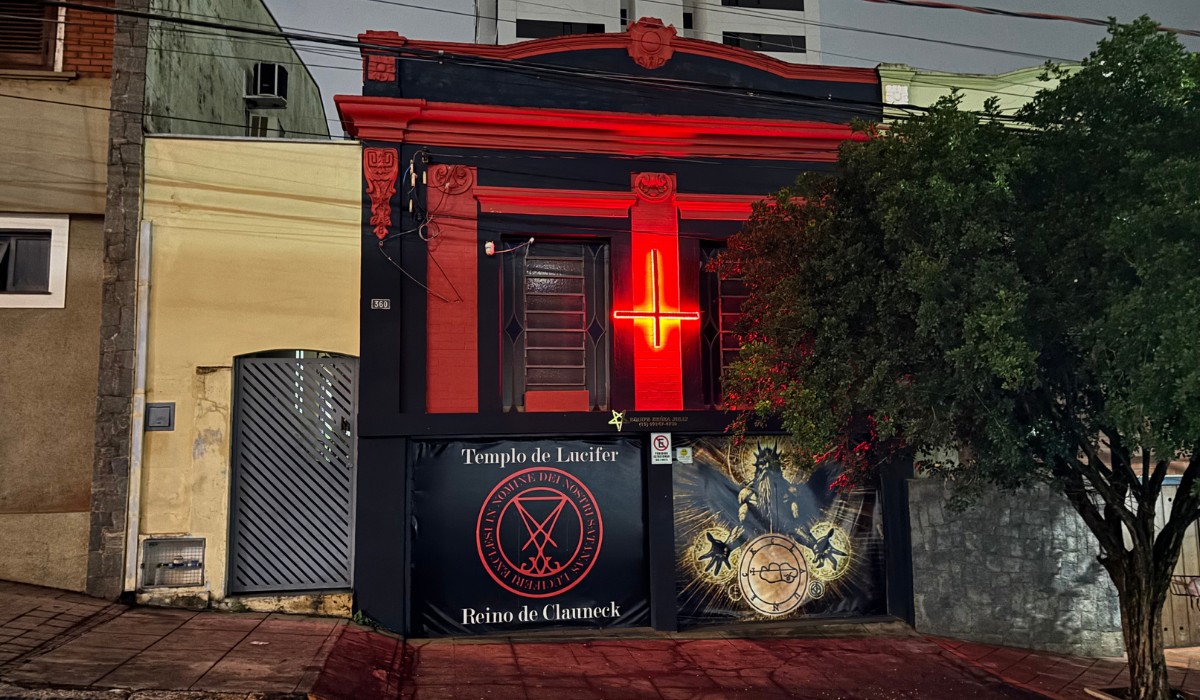
A Luciferian temple, known as the Temple of Lucifer and Kingdom of Clauneck, operates discreetly in Piracicaba, São Paulo, Brazil, from two rooms in a downtown building. The establishment, which has existed for 10 years and moved between various locations, serves as a private base for spiritual practices. It recently gained significant attention after a video of its facade went viral on TikTok, attracting 120,000 views. This exposure, however, has led to daily threats and hate attacks against its founders, Juliana Santana, also known as Bruxa Jully, and Joel Gomes.
The temple is not open to the public for collective worship; instead, services are conducted remotely, offering spiritual guidance to clients. Luciferianism is described not as a religion but as a life philosophy without dogma, where 'Lucifer' signifies 'light-bearer.' Clauneck, a figure associated with the temple, is identified as an entity from Lucifer's court responsible for prosperity and wealth. The rituals performed by the leaders aim to seek spiritual and financial assistance. Juliana clarifies that animal sacrifice is not practiced; instead, the rituals involve the use of the priests' own blood, drawn from a vein, symbolizing life and devotion.
Anthropologist Brenda Maribel Carranza Dávila explains that organized Luciferianism emerged in the 1960s as a countercultural movement, with Satan serving as a symbolic opposition to religious authority rather than a deity. She notes that the pursuit of wealth is common across many religious and philosophical systems. The use of transgressive symbols, however, can provoke societal 'moral panic,' contributing to the founders' decision to maintain secrecy. The founders report daily threats, including verbal abuse and physical intimidation, and have retained a legal team to address these issues. Juliana, 43, has studied magic since age 15, while Joel, 23, a veterinary medicine graduate, found answers in magic that his Catholic upbringing did not provide for his struggles with depression and anxiety. Legally, the temple operates as private property and pays taxes, as it does not meet the criteria for community service exemptions.
The reported operations of the Temple of Lucifer and Kingdom of Clauneck highlight the tension between freedom of religious expression and societal norms, particularly when practices deviate from mainstream understanding. The founders' use of their own blood in rituals, while explained as symbolic, can elicit strong negative reactions due to deeply ingrained cultural and religious associations with blood. This situation underscores how minority spiritual groups, even when operating within legal frameworks and not engaging in harmful acts, can face significant social ostracization and harassment. The legal protections afforded by Brazil's secular state and constitutional guarantees of religious freedom are crucial, yet the practical reality of intolerance, amplified by social media, presents a persistent challenge. Future societal integration for such groups may depend on fostering greater public understanding of diverse belief systems and reinforcing legal recourse against religiously motivated aggression, rather than solely relying on the seclusion of the practitioners.
AI-generated to prompt reflection — not editorial opinion, not advice, not a statement of fact. How this works.