Lucy Fossil, 3.2 Million Years Old, Travels from Ethiopia to Captivate Abu Dhabi Audiences
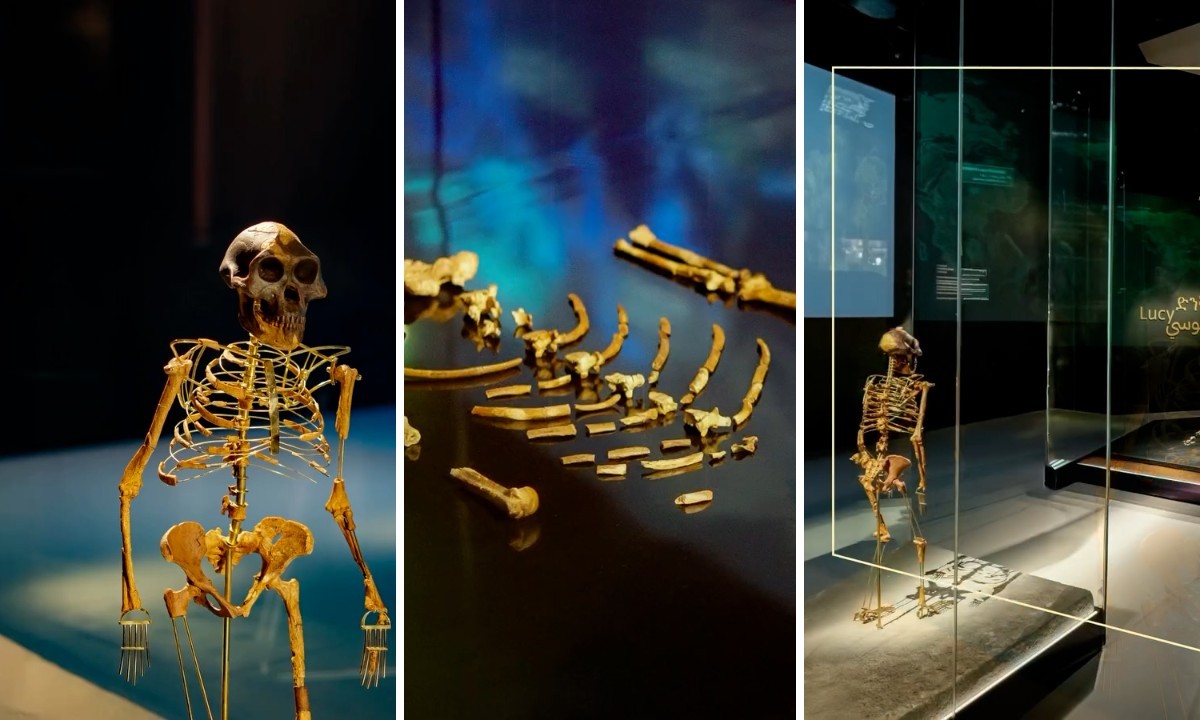
The remarkably complete 3.2-million-year-old fossil skeleton of 'Lucy,' an Australopithecus afarensis, has traveled from Ethiopia to be displayed at the Natural History Museum Abu Dhabi. Discovered in Ethiopia's Afar region in 1974 by a team led by American paleoanthropologist Donald Johanson, Lucy's remains provided crucial evidence that upright posture and walking preceded the expansion of the human brain, significantly altering scientific understanding of human evolution. Initially nicknamed by Western discoverers after a Beatles song, Ethiopian team members named her Dinknesh, meaning 'You are wonderful' in Amharic. Despite her global fame, few have seen the original fossil. Previous attempts to exhibit Lucy abroad, including a planned tour in the US in 2007, faced concerns from scientists regarding her safety, leading to limited exhibitions before her return to Ethiopia in 2013. This latest journey to Abu Dhabi, a closely guarded secret, involved meticulous planning for her transport and display conditions, with a small team working closely with Ethiopian heritage and museum specialists. The loan of Lucy symbolizes a shift from colonial-era collection practices to collaborative sharing of cultural and scientific heritage, empowering African nations to control and interpret their artifacts. Her presence in Abu Dhabi, a new cultural institution, is intended to foster global identity and scientific ambition, mirroring the historical significance of major museums. Lucy is expected to return to Addis Ababa in July 2026, leaving behind strengthened institutional relationships and a shared sense of human history.
The transportation of the 'Lucy' fossil from Ethiopia to Abu Dhabi highlights a significant evolution in the global management and display of invaluable paleontological heritage. This initiative appears to represent a deliberate move away from historical models of artifact acquisition and exhibition, which were often characterized by asymmetrical power dynamics and a concentration of scientific authority in Western institutions. By facilitating this loan, Ethiopia is asserting its sovereign right over its cultural patrimony, while Abu Dhabi is demonstrating its commitment to building a modern, inclusive museum infrastructure that emphasizes collaboration and shared history. This approach could foster greater trust and equitable partnerships between nations, potentially setting a precedent for how other significant global artifacts are shared and studied in the future, moving towards a more decentralized and internationally cooperative scientific landscape.
AI-generated to prompt reflection — not editorial opinion, not advice, not a statement of fact. How this works.