Lula dismisses Argentine President Milei: 'Who is this guy?'
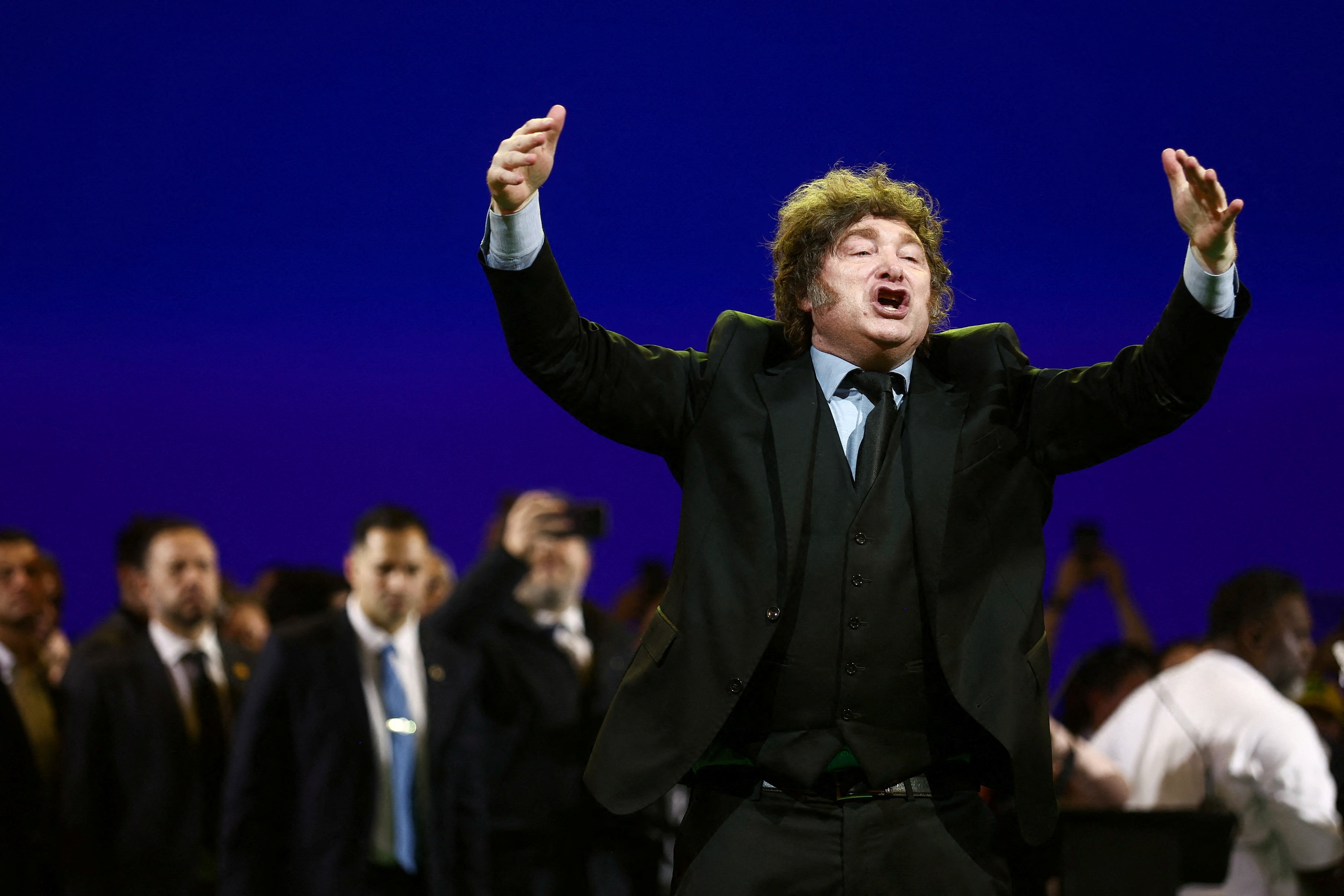
Brazilian President Luiz Inácio Lula da Silva responded dismissively when asked about recent statements made by Argentine President Javier Milei. When a reporter from Bloomberg inquired about Milei's remarks, Lula asked, "Who is this guy?" This exchange occurred at the Itamaraty Palace in Brasília as Lula awaited the arrival of the President of South Korea. Milei had recently attended a national convention of the Liberal Party (PL) in Brazil, where he officially endorsed Senator Flávio Bolsonaro as a presidential candidate. During his speech at the convention, Milei directly criticized Lula, referring to him as a "convict," and also attacked Supreme Federal Court (STF) Minister Alexandre de Moraes, calling him "bald trash."
These comments prompted a strong reaction from Brazil's Ministry of Foreign Affairs (Itamaraty). The ministry summoned the Argentine ambassador in Brasília for an explanation and recalled the Brazilian ambassador from Buenos Aires for consultations. Brazil's Minister of Finance, Dario Durigan, further criticized Milei, calling him a "clown" and highlighting the stronger economic indicators in Brazil compared to Argentina, such as lower country risk, public debt, and inflation. While some within the Lula administration initially saw no issue with Milei's presence at a party event, they stated they would react if he commented on Brazilian internal affairs. The STF President, Minister Edson Fachin, also condemned Milei's remarks as disrespectful to a high court magistrate acting within Brazilian law.
The diplomatic incident between Brazil and Argentina highlights the tension between national sovereignty and international relations, particularly when political rhetoric escalates. President Lula's dismissive response suggests a strategy to de-escalate by refusing to legitimize inflammatory statements, while the strong official reaction from Brazil's Ministry of Foreign Affairs underscores the importance of respecting institutional integrity. The involvement of economic ministers and the STF president indicates that the implications are viewed as significant, touching upon national pride, economic stability, and the rule of law. This event serves as a case study in managing inter-state relations amidst ideological differences and domestic political maneuvering, particularly in the context of upcoming elections and evolving regional political landscapes. The long-term impact will depend on how both governments navigate these sensitivities and whether such incidents become normalized or are contained as isolated diplomatic spats.
AI-generated to prompt reflection — not editorial opinion, not advice, not a statement of fact. How this works.