M-6 Motorway Project Divided into Five Sections, Funding Sources Identified
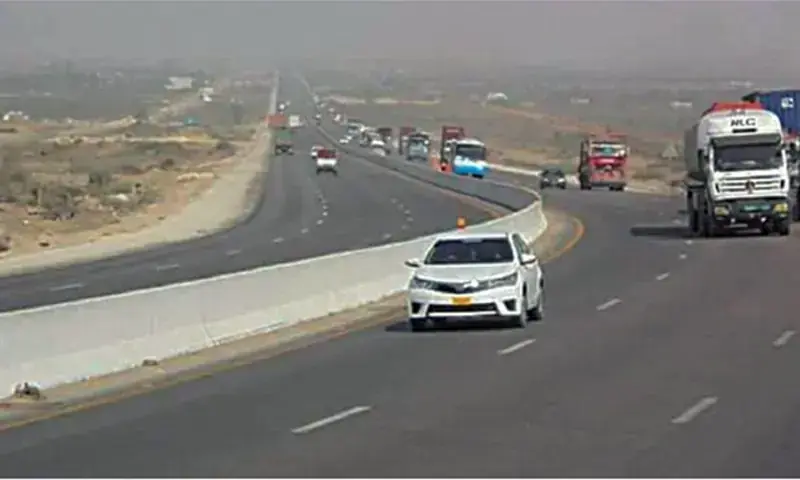
The Sukkur-Hyderabad Motorway (M-6) project, a multi-billion-rupee infrastructure initiative, has been divided into five distinct sections for construction, as revealed during a National Assembly Standing Committee on Communications meeting. The sections are Hyderabad–Tando Adam, Tando Adam–Nawabshah, Nawabshah–Naushahro Feroze, Naushahro Feroze–Ranipur, and Ranipur–Sukkur. Construction is slated to begin in the current fiscal year, though the project has already experienced over five years of delays. For the current financial year, Rs30 billion has been allocated out of a total requirement of Rs70 billion. Funding for the project will be sourced through various mechanisms: Sections I and II will utilize a public-private partnership (PPP) model, Sections IV and V will be financed by the Islamic Development Bank, and Section III will receive funding from the OPEC Fund. The committee also discussed the broader Public Sector Development Programme (PSDP), noting that approximately Rs2.6 trillion of the Rs3.7 trillion outlay consists of 'throw-forward' schemes. The National Highway Authority (NHA) experienced a reduction of around Rs60 billion in its federal budget allocation due to austerity and security needs. Concerns were raised about delayed projects like the Lasbela–Awaran road and unutilized funds for the Kharan–Basima road. The committee also sought updates on the Keti Bandar Road and expressed serious concern over the prolonged delays on the Quetta–Zhob road, emphasizing the priority of the Fort Munro to Loralai stretch. Furthermore, the incomplete Shahdadkot Bypass project was discussed, and the committee questioned the collection of toll revenue on incomplete roads and the awarding of all Sindh toll plazas to a single contractor. A sub-committee was formed to examine NHA throw-forward schemes and the toll plaza tendering process.
The division of the M-6 motorway project into five sections and the identification of diverse funding sources, including public-private partnerships and international development banks, represent a strategic approach to managing a large-scale infrastructure undertaking. This multi-pronged financing strategy aims to mitigate risks and leverage different financial instruments. However, the project's history of delays, exceeding five years, highlights persistent challenges in Pakistan's infrastructure development, potentially stemming from planning, land acquisition, or bureaucratic inefficiencies. The committee's focus on 'throw-forward' schemes and budget reductions due to austerity measures suggests a broader fiscal constraint impacting the NHA's capacity. The scrutiny of toll plaza operations and contractor performance indicates a push for greater transparency and accountability in revenue collection and project execution. Moving forward, the effective coordination between different funding bodies and the timely resolution of project-specific impediments will be critical for the M-6's successful completion and its contribution to regional connectivity and economic development.
AI-generated to prompt reflection — not editorial opinion, not advice, not a statement of fact. How this works.