Macapá Residents Outraged by Over 300% Surge in Public Lighting Fees
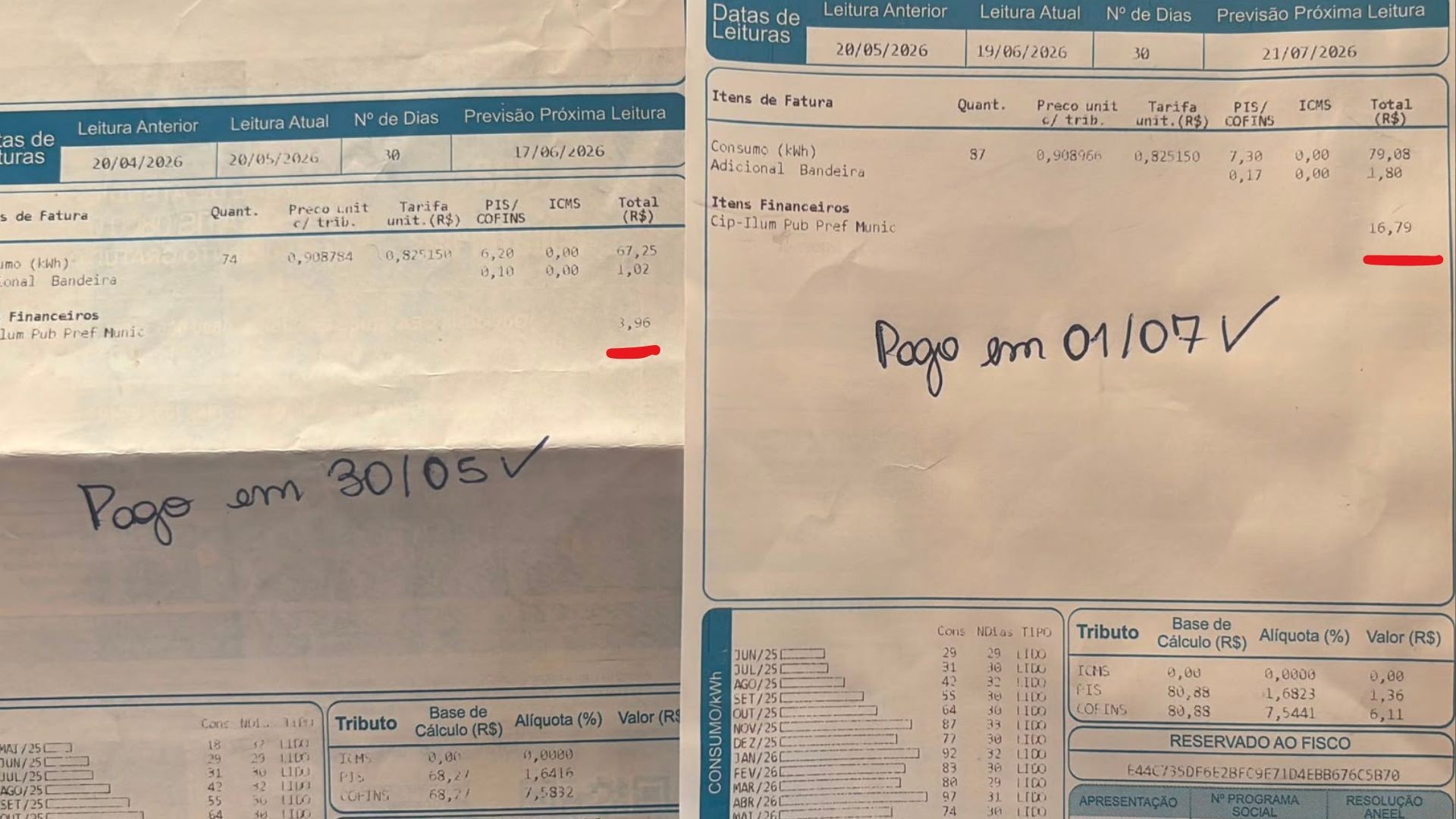
Residents of Macapá, Brazil, are protesting significant increases in their public lighting fees, with some experiencing hikes exceeding 300%. The fee adjustments followed changes approved by the Municipal Chamber in March, leading to the creation of the Municipal Public Lighting, Sustainable Energy, and Sanitation Company of Macapá (Cipemac) in the same month. One resident reported an increase from R$3.96 to R$16.79, a jump of approximately 324%, despite consuming less energy in the latter month. Other cases of 120% increases have also been documented by the Electric Energy Council. The Municipal Chamber stated the adjustments aimed to correct consumption band distortions and make the charges more proportional, with the law theoretically allowing for reductions in some instances, which consumers claim is not happening. Gastão Pereira, president of the Council, argued there is no technical justification for the increase, especially since energy tariffs from Aneel saw minimal adjustments in 2025 and 2026. The Council is collecting utility bills and plans to involve the Public Prosecutor's Office of Amapá. Cipemac stated it is investigating the complaints to provide clarification to the public.
The reported surge in Macapá's public lighting fees, with some consumers facing over 300% increases, raises questions about the transparency and fairness of municipal revenue collection mechanisms. While the stated intention behind the fee adjustments and the creation of Cipemac was to correct distortions and improve management, the disparity between the stated goals and the actual consumer experience suggests a potential disconnect in policy implementation or oversight. The Electric Energy Council's assertion of a lack of technical justification, particularly in light of minimal national energy tariff increases, points to possible systemic issues in how local fees are calculated and linked to broader energy costs. Future policy design should prioritize clear communication, robust independent oversight, and mechanisms for consumer recourse to ensure that essential public services are funded equitably and transparently, avoiding the perception of arbitrary or exploitative charges.
AI-generated to prompt reflection — not editorial opinion, not advice, not a statement of fact. How this works.