Macapá's Pedra do Guindaste Renovation Leaves Visitors at Risk Due to Exposed Steel
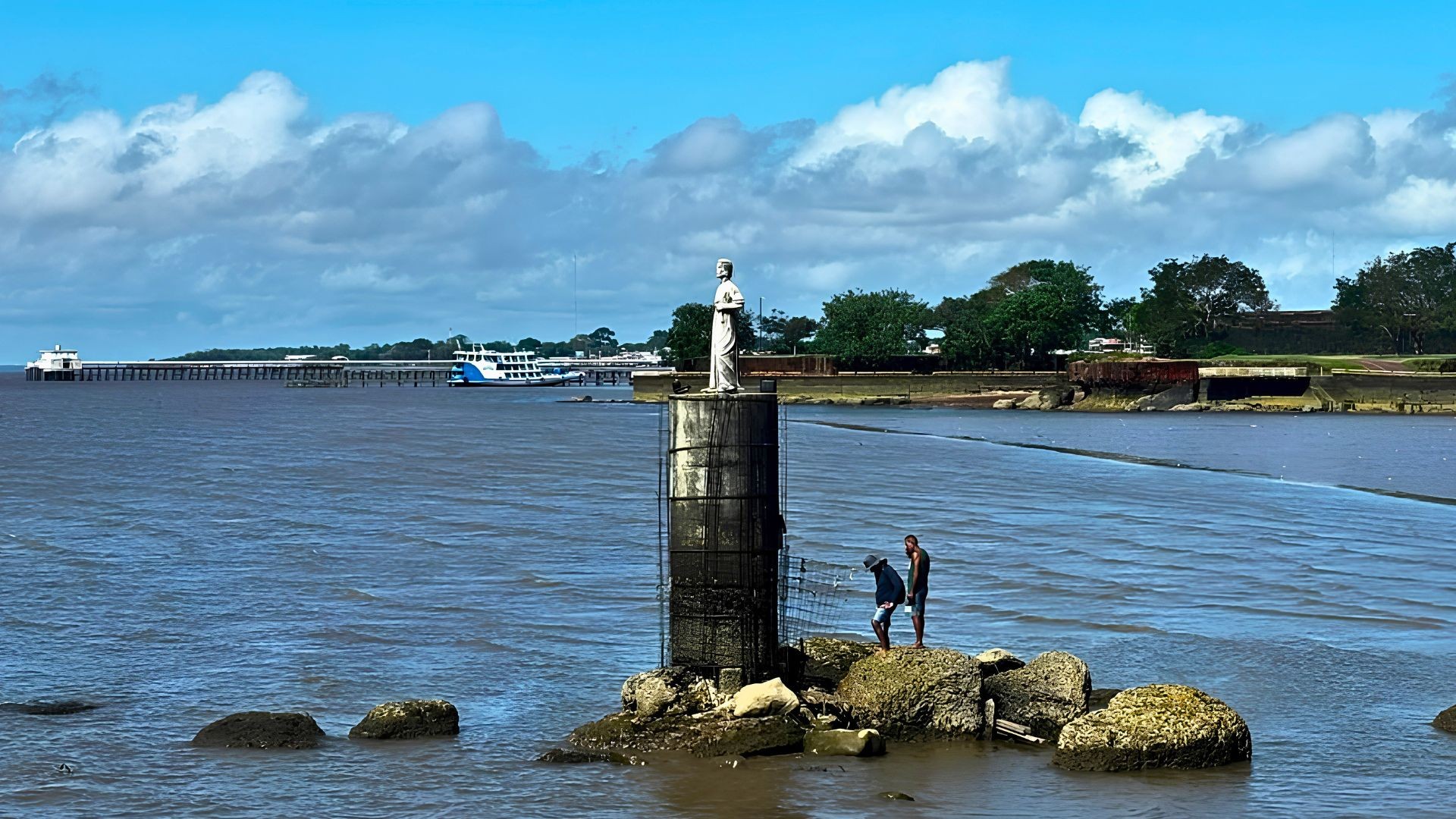
The renovation of the Pedra do Guindaste monument in Macapá, Brazil, has stalled, leaving exposed steel reinforcements a significant safety hazard for visitors. The project, initially slated for completion on March 19, faced a schedule revision by the Macapá City Hall, which now estimates a new delivery timeframe of 30 to 45 days. The exposed rebar in the Amazon River poses a risk to both locals and tourists, with some individuals even seen climbing the structure for photos despite the danger of cuts, falls, and tidal currents. The issue stems from the degradation of the original cylinder supporting the monument, identified in 2019. The city's plan to replace the corroded base with a sculpture mimicking the original rock has been interrupted, leaving the iron framework exposed to the elements and tides. The Municipal Secretary of Works, Leonardo Bruno Craveiro de Oliveira, explained that the delay was due to the need to create a new, technically sound project, as the initial one was a hand-drawn sketch lacking proper documentation. The intervention costs R$156,000, and its execution is dependent on the river's tide levels, with work restricted to crafting pieces at the artist's studio during high tides. The secretary assured that there is no risk of structural collapse, stating that the exposed steel will be treated with anticorrosive agents and concrete. The municipality is considering temporary protective barriers and a new access pier to allow closer viewing of the São José sculpture once completed.
The stalled renovation of Macapá's Pedra do Guindaste highlights a common challenge in public infrastructure projects: the gap between initial planning and on-the-ground execution. The need to re-engineer the project due to an inadequate initial design suggests potential deficiencies in the procurement or preliminary assessment phases. While the municipality assures structural integrity, the prolonged exposure of construction materials creates an unacceptable public safety risk, particularly given the site's continued accessibility. Future project management frameworks could benefit from more robust initial design validation and contingency planning for unforeseen technical requirements. The reliance on tide levels for certain construction activities also points to the need for integrated logistical planning that accounts for environmental variables. The long-term vision for the site, including improved access for viewing the completed sculpture, is positive, but immediate safety concerns must be paramount.
AI-generated to prompt reflection — not editorial opinion, not advice, not a statement of fact. How this works.