Macaw in MS Praça Pública Greets Residents, Goes Viral
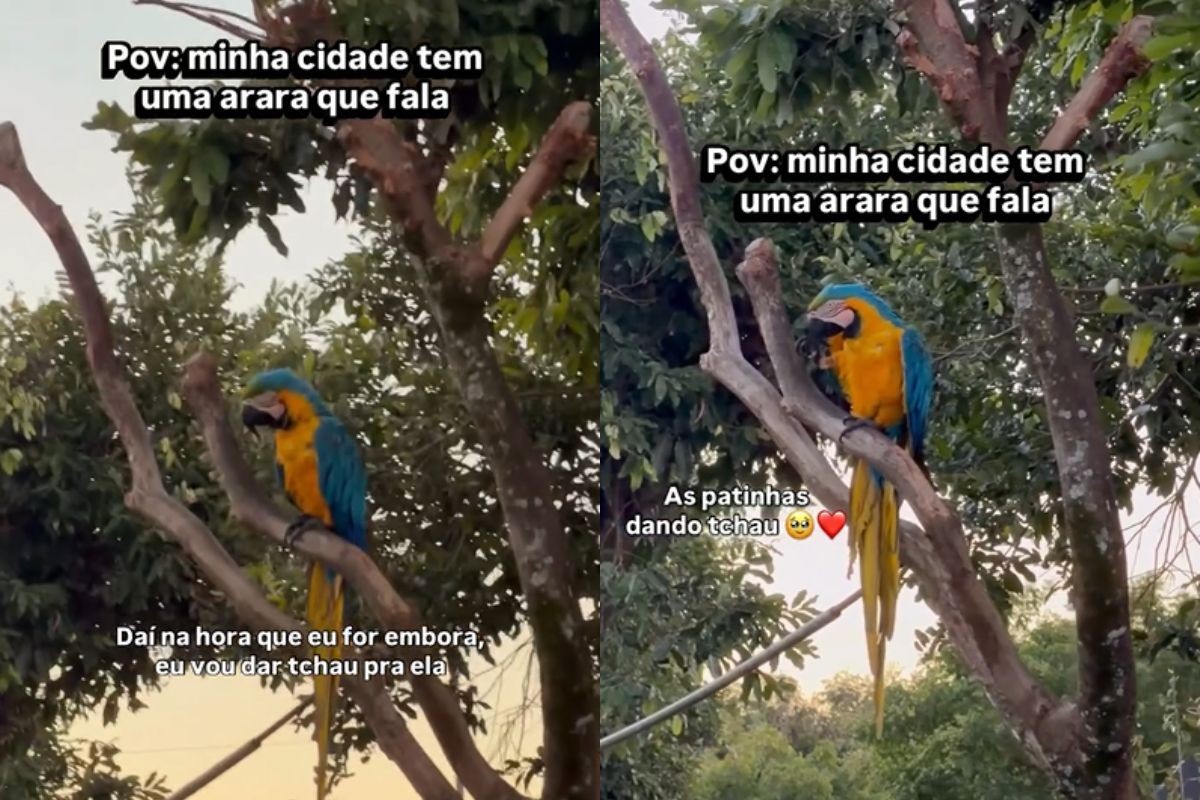
A video shared by digital influencer Amanda Corrêa has gained viral attention, showcasing a macaw residing in a public square in São Gabriel do Oeste, Mato Grosso do Sul (MS), Brazil. The bird is known for interacting with locals, including a notable instance where it appeared to say "tchau" (goodbye) multiple times. The footage shows Corrêa approaching the macaw, which initially only squawks when she bids farewell. However, when her 4-year-old son, João Pedro, says "tchau arara," the bird responds with "tchau" three times. The macaw also lifts a leg, a gesture likened to a wave. Corrêa explained that the macaw typically stays in a tree near a school on Avenida São Francisco in the city center. Following the video's publication, many residents confirmed their familiarity with the bird, with some recalling it being in the same location for approximately 40 years. One resident mentioned remembering the macaw since childhood, indicating its long-standing presence. Corrêa noted that while the macaw used to vocalize more frequently in the past, encountering it was a remarkable experience.
This heartwarming narrative highlights a unique human-wildlife interaction, where a common macaw has become an integrated part of a community's daily life in São Gabriel do Oeste. The bird's apparent ability to mimic human speech and engage in reciprocal greetings fosters a sense of connection and familiarity, transforming a wild animal into a local icon. The longevity of the macaw's presence, spanning an estimated 40 years, underscores the stable urban environment it has inhabited and the consistent human interaction it has received. This scenario raises questions about urban biodiversity management and the potential for cohabitation between humans and wildlife, particularly in areas where natural habitats are scarce. The long-term integration suggests that with appropriate conditions and minimal disturbance, certain species can adapt to and even thrive within urban landscapes, becoming unexpected cultural elements. Future considerations might involve understanding the ecological factors that have allowed this specific macaw to flourish and whether such models of urban wildlife integration can be replicated or supported elsewhere.
AI-generated to prompt reflection — not editorial opinion, not advice, not a statement of fact. How this works.