Macaws Brighten Brasília's Urban Landscape, Delight Residents
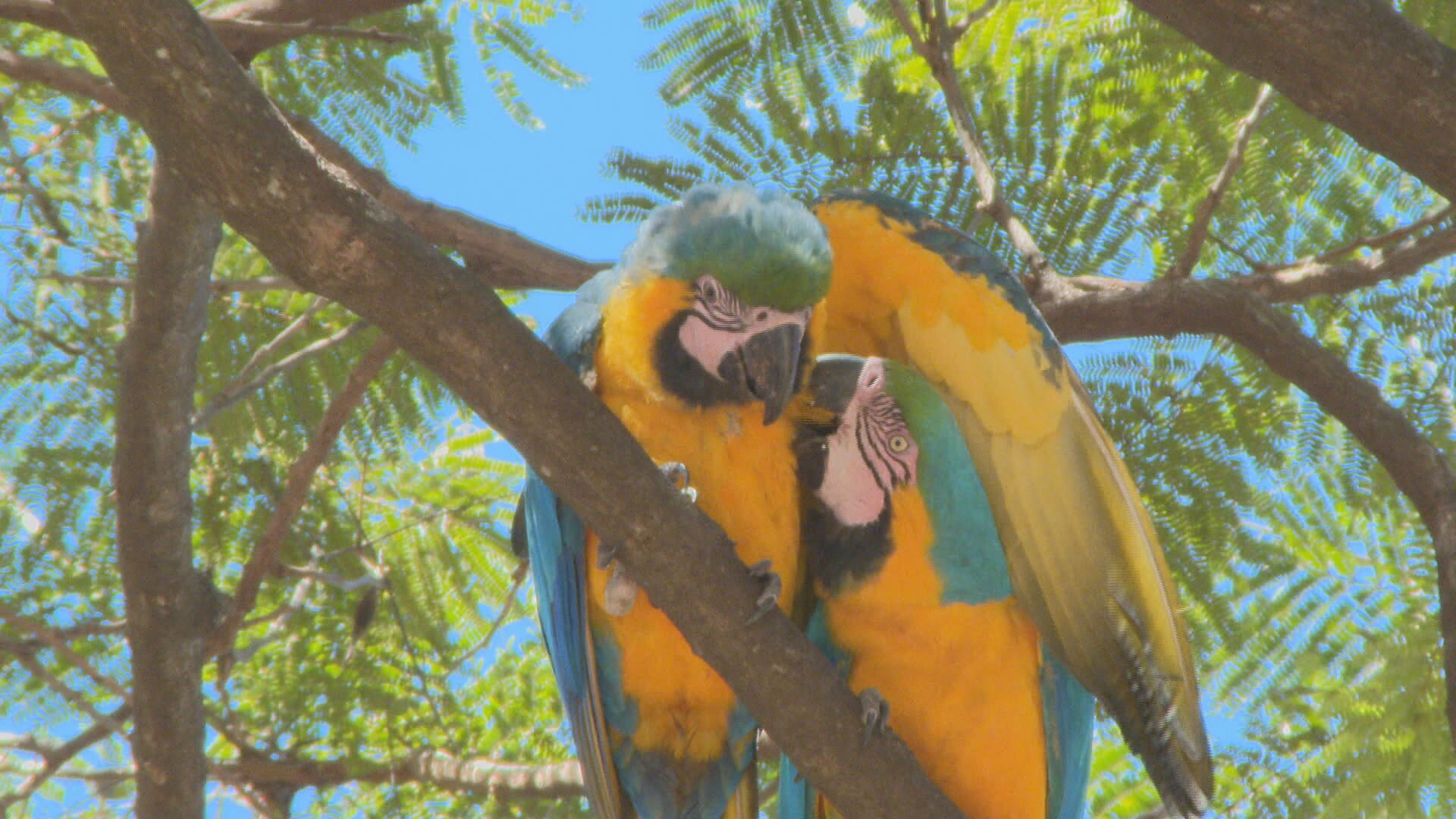
Large flocks of macaws have become a frequent and enchanting sight in various urban areas of Brasília, the capital of Brazil. Residents across the Federal District, including the Asa Norte, Lago Sul, Cruzeiro Novo, and Grande Colorado regions, have been capturing images and videos of these vibrant birds congregating in city trees. In one instance in Asa Norte, eight macaws were observed sharing a single tree. The birds' presence, marked by their calls and flights, has become a daily spectacle for many. Agent Cristiane Souza, working at a building in Asa Norte, noted that the macaws are a regular part of her routine, typically appearing around 10 AM, returning in the early afternoon, and sometimes again at the end of the day. She described their visits as bringing joy and harmony, seeing them as a symbol of humanization and unity. Sightings are not confined to Asa Norte; macaws have been spotted drinking coconut water in Lago Sul and resting in residential areas of Cruzeiro. In Grande Colorado, a pair has even built a nest in a palm tree trunk. Biologist Feliphe Novais explains that the macaws' urban presence is driven by the availability of food and the abundance of trees, which they use for resting, socializing, and observing their surroundings. Brasília's diverse landscaping, featuring both native and exotic species, further supports their urban habitation. Novais advises the public to observe the macaws from a distance, refraining from feeding or touching them, to ensure their continued well-being in the wild.
The increasing presence of macaws in Brasília's urban environment highlights a complex interplay between urban development and wildlife adaptation. The city's extensive green spaces and landscaping, designed with a variety of tree species, inadvertently create a favorable habitat for these large birds, offering both sustenance and shelter. This phenomenon underscores a broader trend where urban ecosystems become increasingly integrated with wildlife, presenting both opportunities for human-wildlife coexistence and potential challenges related to resource competition and public safety. While the macaws' visits are currently perceived as a positive aesthetic and emotional enrichment by residents, understanding the long-term ecological implications and establishing best practices for interaction are crucial. Future urban planning could consider incorporating biodiversity corridors and native planting strategies that support both human needs and wildlife habitats, fostering a more sustainable coexistence as cities continue to expand.
AI-generated to prompt reflection — not editorial opinion, not advice, not a statement of fact. How this works.