Machine gun found hidden inside TV at drug lookout's home in Espírito Santo
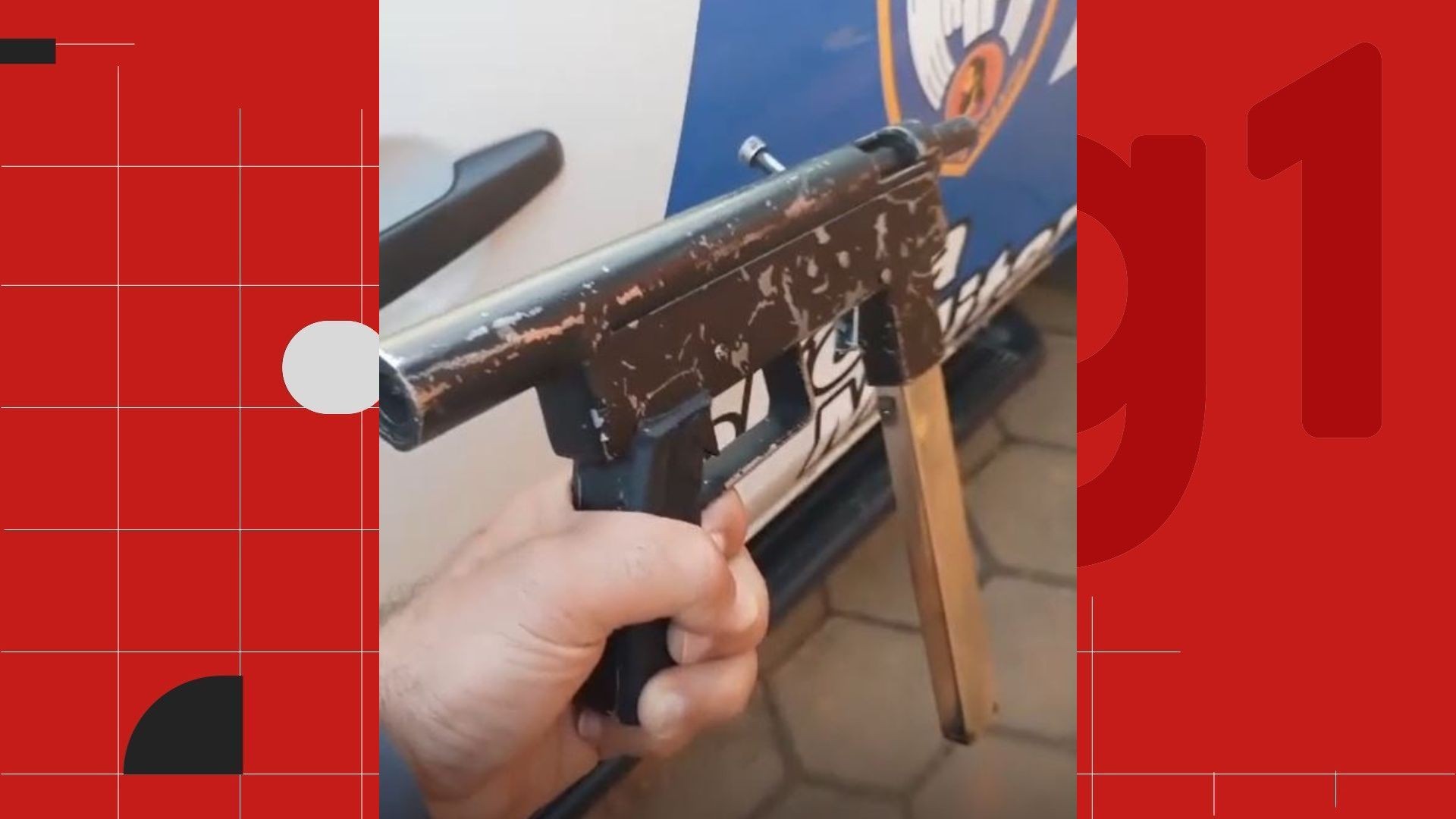
Authorities in Afonso Cláudio, Espírito Santo, Brazil, apprehended a man on Saturday, May 4th, in the João Valim neighborhood. The arrest followed reports of gunfire in the area. During the police operation, the suspect spontaneously revealed that he was storing a .380 caliber machine gun concealed within a television set at his residence. The machine gun was found to be loaded with four live rounds of the same caliber. Military police from the 2nd Independent Company's Tactical Force, supported by the K9 unit, had intensified patrols after receiving information about shots fired during the early morning hours. Residents indicated that the individual responsible for the shooting was accompanied by another man, and both were allegedly involved in drug trafficking in the region. Police observed the suspect and another individual near a wooded area, with the suspect exhibiting a bulge around his waist. Upon noticing the approaching officers, the suspect attempted to flee. A search of his person yielded only a cell phone. While initially denying involvement in the shooting, the suspect voluntarily disclosed the hidden machine gun. Additionally, officers discovered a radio communicator, the suspect's identification, and a notebook with drug trafficking-related notations at his home. The arrested individual stated he served as security for a drug point and assisted the other man in selling narcotics in the Morada Pôr do Sol area. The second man was not present at the residence. A drug-sniffing dog, Black, located eleven packets of cocaine, six rocks of crack cocaine, and one marijuana joint hidden in a nearby vegetated area. The suspect and the seized items were taken to the police station.
The discovery of a machine gun concealed within a television highlights the sophisticated methods employed by criminal organizations to evade law enforcement. This incident underscores the persistent challenge of drug trafficking and associated violence in regions like Espírito Santo, Brazil. The suspect's role as a lookout and enforcer points to a hierarchical structure within local criminal networks. The presence of communication devices and detailed ledgers suggests a level of organization and planning that requires continuous monitoring and strategic disruption by authorities. Future efforts may need to focus on intelligence gathering to dismantle these networks comprehensively, rather than solely on reactive arrests. Addressing the underlying socio-economic factors that contribute to recruitment into such activities remains a critical long-term consideration for sustainable public safety.
AI-generated to prompt reflection — not editorial opinion, not advice, not a statement of fact. How this works.