Macron Bids Farewell to Deschamps: "A Page in French Football History Turns"
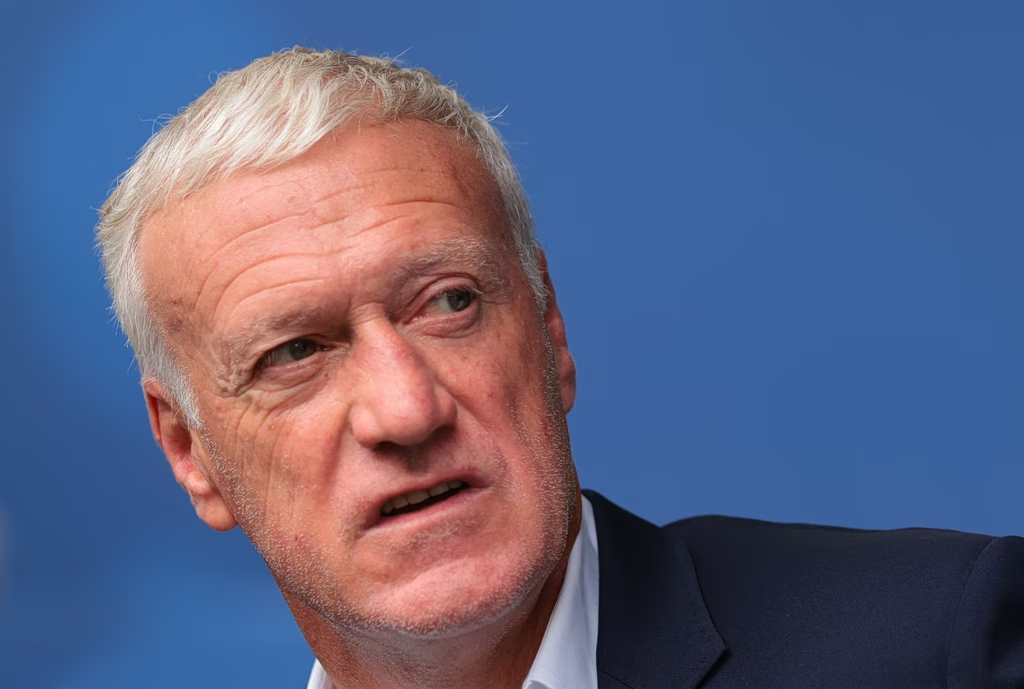
French President Emmanuel Macron has bid farewell to Didier Deschamps, who concluded his 14-year tenure as the head coach of the French national football team. Macron expressed gratitude on social media for the significant successes and memorable moments Deschamps provided to the nation. The president acknowledged the experienced coach's contributions to "Les Bleus" and his important role in the team's history. Deschamps' departure marks the end of a highly successful era for French football. During his 14 years at the helm, the team achieved considerable success, including winning the 2018 FIFA World Cup and reaching the final of the 2022 FIFA World Cup. His leadership also saw France win the UEFA Nations League in 2021. Macron's message reflects the national appreciation for Deschamps' dedication and achievements over more than a decade. The transition signifies a new chapter for the French national team, as they look to build on the legacy left by Deschamps. The impact of his long-standing management is widely recognized as a defining period for French football.
President Macron's public acknowledgment of Didier Deschamps' departure highlights the significant cultural and symbolic weight of national sports leadership. The transition from a long-serving, successful coach represents a pivotal moment for the French Football Federation, prompting consideration of future strategic direction, player development pathways, and coaching philosophies. As AI continues to influence sports analytics and performance optimization, future coaching appointments will likely weigh not only tactical acumen and past results but also adaptability to evolving technological tools and data-driven methodologies. This leadership change invites reflection on how national sporting bodies balance established traditions with the imperative to innovate and maintain international competitiveness in a rapidly advancing global landscape.
AI-generated to prompt reflection — not editorial opinion, not advice, not a statement of fact. How this works.