Madhesh Province Government Continues Under Congress Leadership
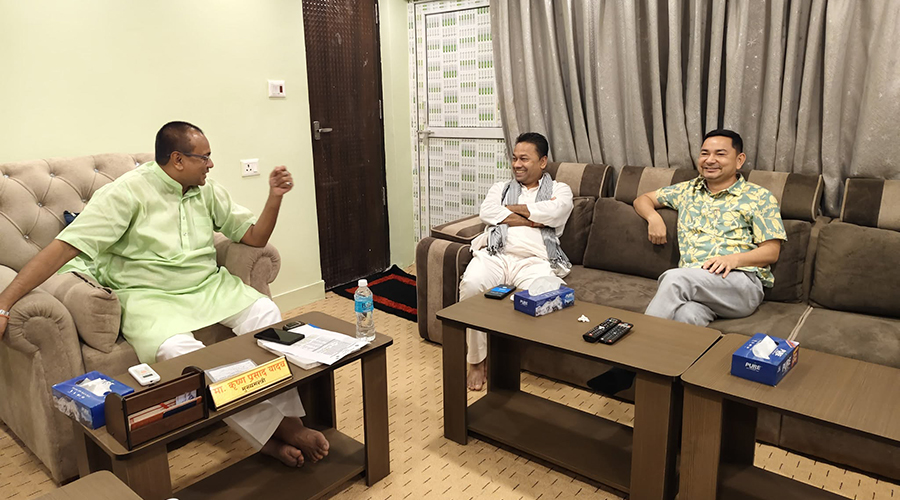
The Madhesh Province government will continue under the leadership of Krishna Prasad Yadav, who is affiliated with the Nepali Congress party. The current government is formed through a coalition that includes the Nepali Congress, the Communist Party of Nepal (Unified Marxist–Leninist) or CPN (UML), and the Communist Party of Nepal (Maoist Centre) or CPN (Maoist Centre). This alliance aims to maintain stability and governance within the province. The formation of this coalition underscores the ongoing political dynamics and power-sharing arrangements in Madhesh Province. The Nepali Congress, as the leading party in this coalition, plays a crucial role in shaping the provincial administration and policy direction. The inclusion of CPN (UML) and CPN (Maoist Centre) indicates a broad base of support for the current government. This political arrangement is expected to facilitate the implementation of developmental projects and public welfare initiatives in the region. The continuity of leadership under Krishna Prasad Yadav suggests a degree of consensus among the coalition partners regarding the government's direction. The province anticipates a period of stable governance under this multi-party alliance.
The continuation of the Madhesh Province government under a Nepali Congress-led coalition highlights the established patterns of multi-party governance in Nepal. This structure, while potentially fostering broad representation, also necessitates continuous negotiation and consensus-building among coalition partners, including CPN (UML) and CPN (Maoist Centre). The stability of such governments often hinges on the alignment of core interests and the effective management of policy priorities. Looking ahead, the efficacy of this coalition will be tested by its ability to deliver on development agendas and address provincial needs amidst evolving national political landscapes. The dynamic between coalition partners will be a key factor in the province's governance trajectory over the next decade, particularly as technological and societal shifts demand adaptive policy-making.
AI-generated to prompt reflection — not editorial opinion, not advice, not a statement of fact. How this works.