Magnitude 4.7 Earthquake Shakes Southern Italy, Causing Power Outages and Minor Injuries
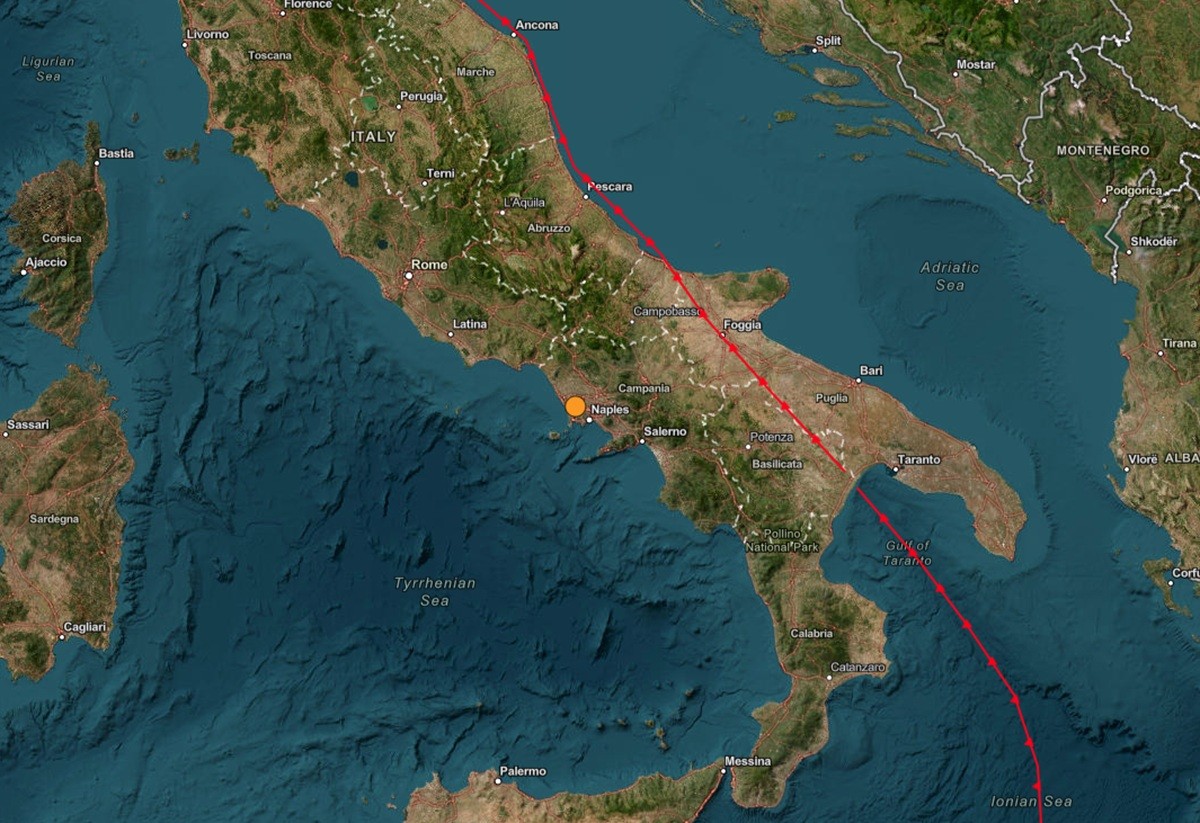
A magnitude 4.7 earthquake struck the Campi Flegrei region near Naples in southern Italy on Friday, July 31, 2026. The tremor, recorded at 7:46 PM local time, caused power outages and damage to some buildings, with four people reportedly injured according to local media. The epicenter was located about 3 kilometers deep, considered shallow and potentially intensifying the quake's impact. Italian press described it as one of the strongest earthquakes recorded in the area, prompting residents in some neighborhoods to flee into the streets. Social media images showed rockslides impacting a residential area, and the Italian Fire Corps reported minor damage to buildings in and around Naples, though no major rescue calls were received. Local train and subway lines were temporarily suspended as a precautionary measure. Campi Flegrei is a densely populated volcanic caldera west of Naples, experiencing increasingly frequent seismic activity. This has raised concerns about a potential repeat of the 1980s seismic crisis, which led to mass evacuations. Italy has a history of significant seismic events, including a devastating sequence in central Italy in 2016 that caused around 300 deaths, and a powerful 1980 earthquake in southern Italy that killed approximately 2,700 people.
This seismic event in Campi Flegrei highlights the inherent risks associated with living in volcanically active and densely populated regions. The shallow depth of the earthquake, combined with the area's geological characteristics, likely amplified its perceived intensity and the resulting public anxiety. While the immediate damage and injuries appear limited, the recurring seismic activity prompts a systems-level consideration of long-term urban planning and emergency preparedness in such geologically sensitive zones. Future challenges will involve balancing population density with seismic resilience, potentially through enhanced building codes, early warning systems, and clear evacuation strategies, especially given the historical precedent of more severe events in the region. The incident underscores the ongoing tension between human settlement patterns and geological realities, a dynamic that will likely intensify with climate-related environmental shifts and increased urbanization globally.
AI-generated to prompt reflection — not editorial opinion, not advice, not a statement of fact. How this works.