Magnitude 7.1 Earthquake Strikes Kumamoto, Japan, Triggering Tsunami Alert
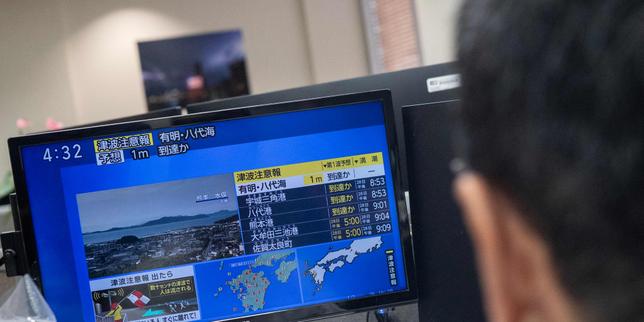
A powerful magnitude 7.1 earthquake has struck the Kumamoto region of Japan, prompting a tsunami alert. The seismic event registered the maximum intensity on Japan's seismic scale. As a consequence of the earthquake, rail traffic across the southern part of the country has been suspended. Authorities have reported no anomalies at any nuclear power plants following the tremor. The full extent of the damage and potential impact of the tsunami alert are still being assessed.
The earthquake in Kumamoto highlights Japan's ongoing vulnerability to seismic activity, a known risk factored into its infrastructure design and disaster preparedness. The immediate suspension of rail traffic and the absence of nuclear plant anomalies suggest the effectiveness of pre-established safety protocols. Future infrastructure development and urban planning in seismically active zones will likely continue to prioritize resilience and rapid response mechanisms, particularly as climate-related events may exacerbate geological stresses. Understanding the interplay between natural disasters and technological systems remains crucial for safeguarding populations and critical infrastructure in the coming decade.
AI-generated to prompt reflection — not editorial opinion, not advice, not a statement of fact. How this works.