Magnitude 7.1 Earthquake Strikes Southern Japan, Causing Shopping Mall Collapse and Explosion
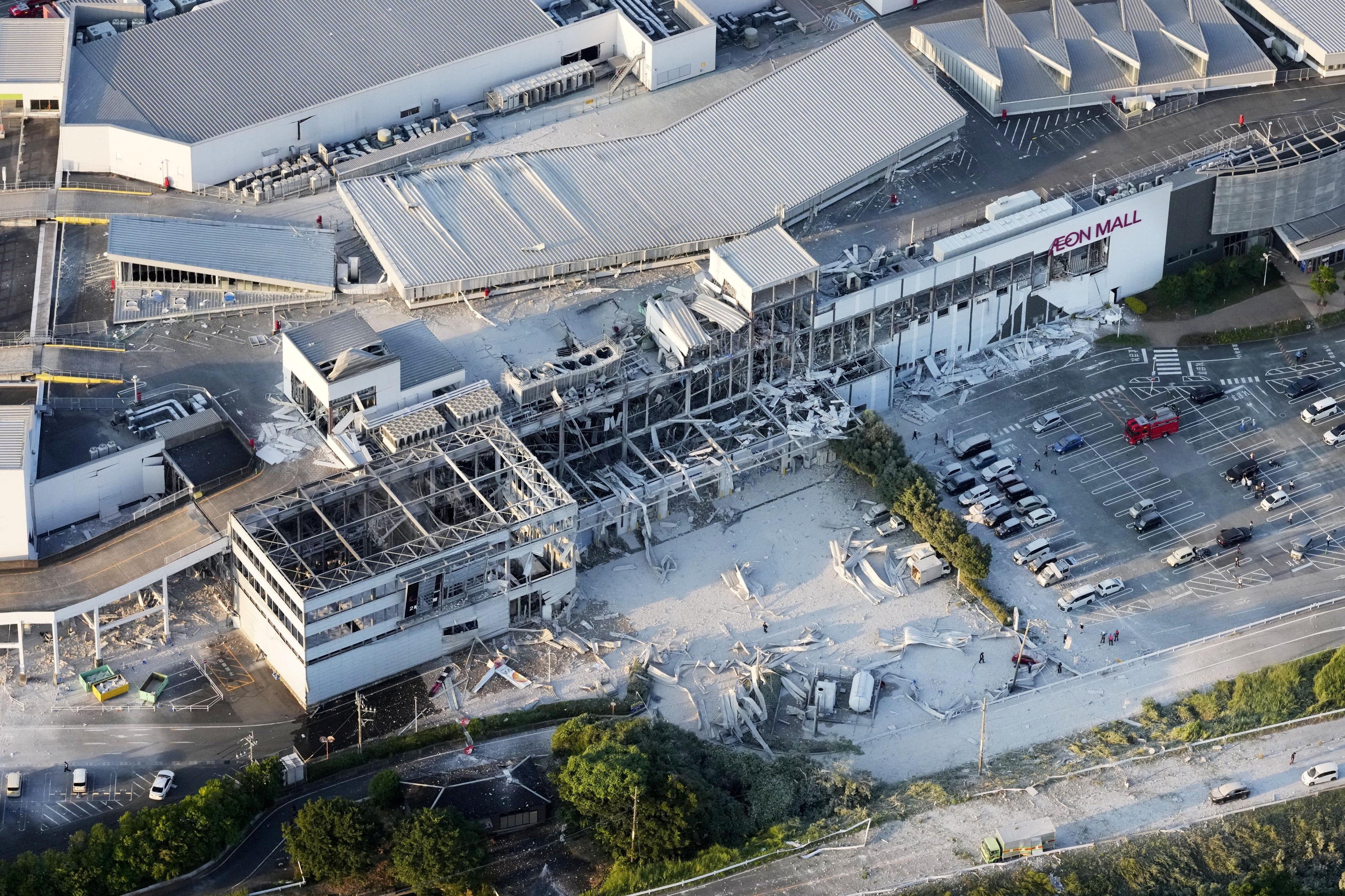
A powerful magnitude 7.1 earthquake struck southern Japan on Tuesday, July 28, 2026, causing significant destruction, including the partial collapse and explosion of the Aeon Mall in Kashima, Kumamoto. Video footage captured the dramatic moment of an explosion within the shopping center, which led to a lateral column collapsing. Dozens of people are reported trapped under debris, with initial reports indicating fatalities and disappearances. The earthquake's epicenter was inland near the cities of Kumamoto and Uki on Kyushu island, with a shallow depth of only 10 kilometers. This shallow depth, combined with intense seismic activity, has prompted the Japan Meteorological Agency (JMA) to warn of the possibility of further strong tremors, potentially up to magnitude 7, within the next week. The JMA noted that similar sequences of large earthquakes have occurred in the region historically. The tremors were felt as far as South Korea. Japanese TV networks reported numerous casualties, and NHK specifically mentioned 20 to 30 workers missing from the Aeon Mall. Kumamoto police believe a considerable number of people may have died, and rescue efforts are underway to determine how many were unable to evacuate. Emergency alerts were issued for seven prefectures on Kyushu, and thousands of homes lost power. The cities of Uki and Hikawa experienced the maximum intensity level of 7 on the Japanese scale.
This event underscores Japan's ongoing vulnerability to seismic activity due to its location on the Pacific Ring of Fire. The shallow depth and magnitude of the earthquake, coupled with the subsequent explosion and collapse of a major commercial structure, highlight critical infrastructure resilience challenges. The warning of aftershocks necessitates robust emergency preparedness and response systems, emphasizing the need for continuous evaluation of building codes and urban planning in seismically active zones. Future technological advancements in early warning systems and structural engineering will be crucial in mitigating the impact of such natural disasters, particularly in densely populated areas. The incident also points to the importance of clear, rapid communication during emergencies to manage public safety and facilitate rescue operations effectively.
AI-generated to prompt reflection — not editorial opinion, not advice, not a statement of fact. How this works.