Major Holiday Travel Begins, Crowds Expected on Foreign Roads
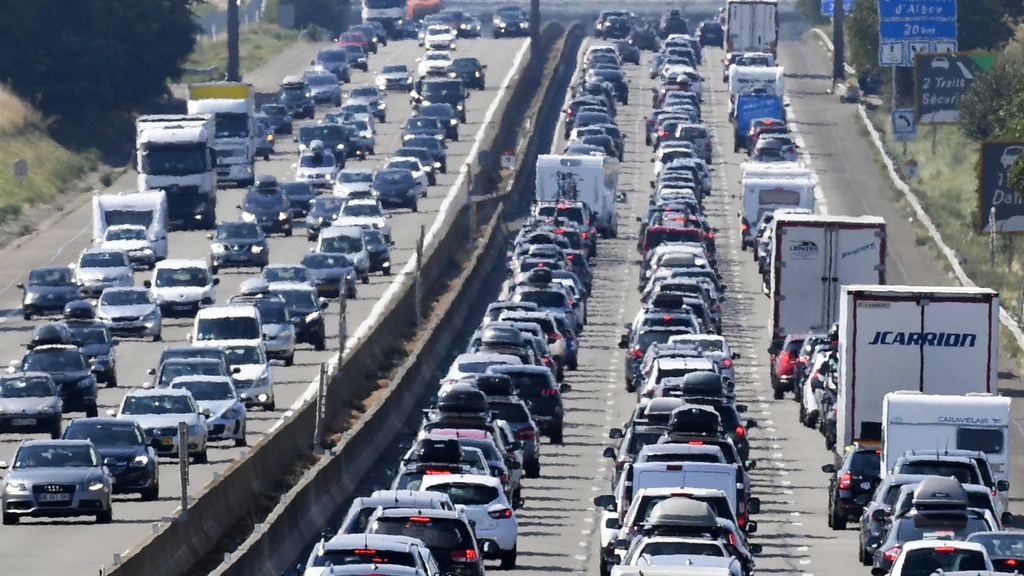
The ANWB anticipates significant traffic congestion this weekend, with a particular focus on foreign highways as all Dutch regions commence their holiday periods. The final region, Central Netherlands, which includes major cities like Rotterdam and Utrecht, begins its vacation today, contributing to the expected rush. This weekend is characterized as one of the busiest of the year, with many Dutch citizens departing simultaneously, a phenomenon the ANWB attributes to collective behavior. While congestion is anticipated within the Netherlands, especially today due to the overlap with commuter traffic, extreme traffic jams are not expected. However, the start of holidays in North Rhine-Westphalia, Germany, could lead to delays heading towards the coast, exacerbated by German border controls. The most substantial traffic is predicted abroad, with ADAC, Germany's equivalent of the ANWB, forecasting one of the busiest summer weekends. Major delays are likely around German cities such as Frankfurt and Munich, with Saturday being particularly heavy for international travel. Popular Dutch destinations like Italy, France, Austria, and Spain are expected to experience long queues. In France, the Autoroute du Soleil, heading south, may see slow traffic, though the A6 near Fontainebleau has reopened despite potential local road closures due to wildfires. Austria anticipates traffic jams on Saturday, particularly on routes to Slovenia and Croatia, while Italy expects congestion near the Brenner Pass. Great Britain is also bracing for heavy holiday traffic as schools in England and Wales begin their break, with concerns of a traffic chaos at the Port of Dover. This is due to a non-automated EU entry-exit system, requiring manual input by French customs for British travelers, potentially causing significant delays.
The widespread holiday travel highlights a predictable surge in demand for transportation infrastructure, particularly across international borders. This annual event underscores the systemic challenge of managing peak capacity, especially when coinciding with regional holidays in neighboring countries like Germany and the UK. The reported issues at the Port of Dover, stemming from an outdated or inefficient digital system for processing non-EU travelers, illustrate how technological friction can amplify logistical bottlenecks. This situation presents an opportunity for governments and private operators to invest in integrated, automated border management systems to enhance efficiency and traveler experience, thereby mitigating future disruptions and optimizing resource allocation during high-demand periods.
AI-generated to prompt reflection — not editorial opinion, not advice, not a statement of fact. How this works.