Malala Yousafzai Advocates for Tech in Remote Education at Rio Innovation Week
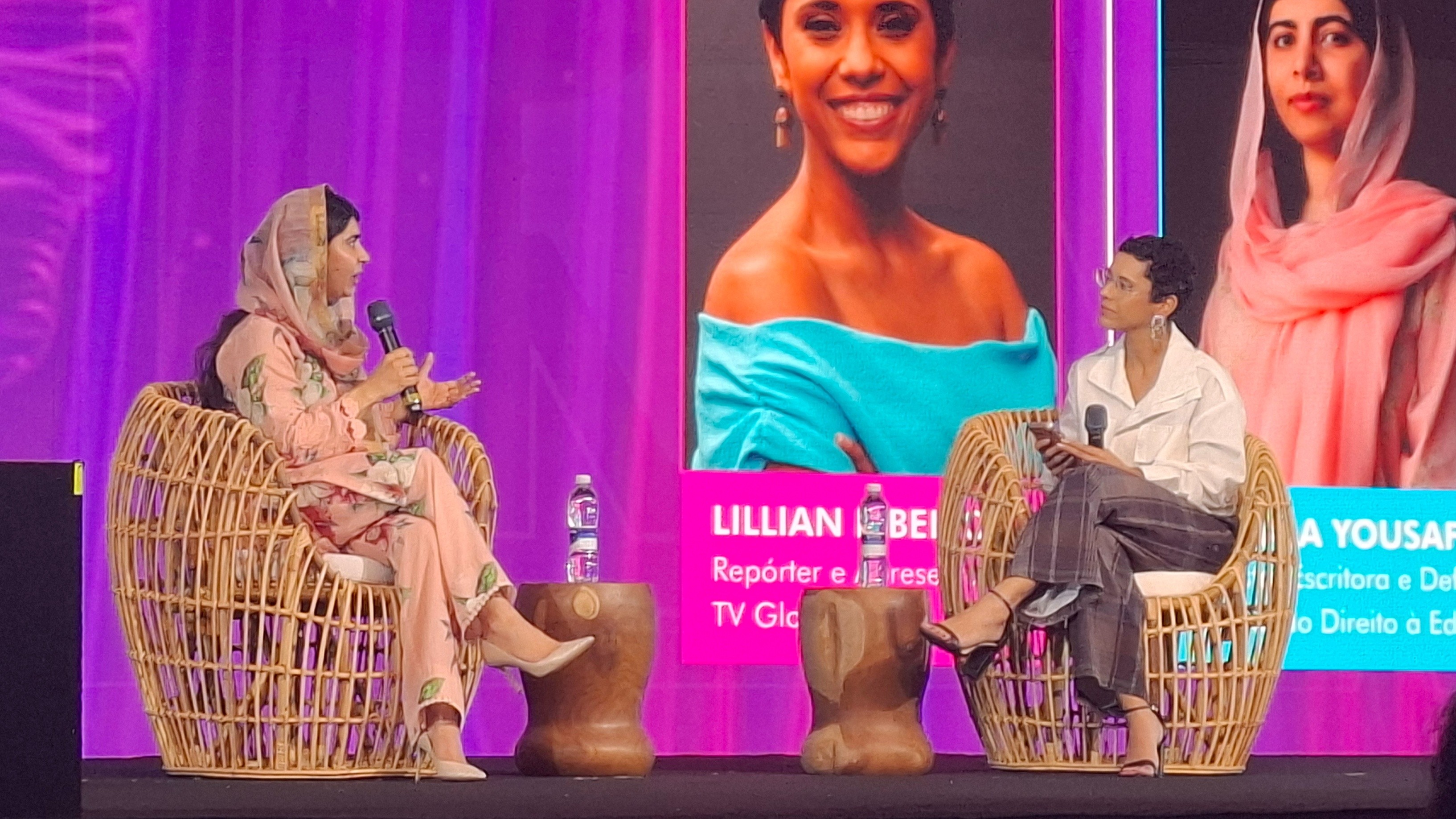
Pakistani activist and Nobel Peace Prize laureate Malala Yousafzai spoke at the 6th edition of Rio Innovation Week in Rio de Janeiro, emphasizing technology's crucial role in democratizing education. She highlighted how technology can extend educational access to remote regions and girls facing prohibitions on female schooling, particularly in Afghanistan where she expressed fear over the Taliban's actions. Yousafzai stated that current educational systems are too slow to adapt to rapid global changes, but technology offers tools to reach distant communities and make learning more accessible. She noted that approximately 120 million girls worldwide are denied education, and technology could help them overcome barriers to their development. Malala also discussed her non-profit, the Malala Fund, which supports around 140 groups globally, enabling education in areas where studying can be an act of resistance. She recalled Afghan girls telling her that reading a book is an act of resistance. Yousafzai, who survived a Taliban assassination attempt in 2012 for advocating girls' education, shared her personal journey and the transformative power of education, which she views as the foundation of women's emancipation. She also reflected on her international recognition, realizing that while one person can initiate change, collective action is essential for global transformation. Concluding her remarks, she urged attendees to dream big, take consistent steps toward their goals, and prioritize mental health, emphasizing that collective effort is more effective than individual action.
Malala Yousafzai's advocacy at Rio Innovation Week underscores the persistent global challenge of educational inequity, exacerbated by technological divides and regressive political forces. Her emphasis on technology as a democratizing tool is strategically aligned with the event's focus on innovation. However, the analysis must consider the inherent tension between technological solutions and the systemic political and social barriers that often prevent their effective deployment, particularly in regions with authoritarian regimes like Afghanistan. The narrative highlights the critical role of international activism and non-profit organizations in addressing these gaps, but future sustainability and scalability remain key questions. The event serves as a platform to raise awareness, but the long-term impact hinges on translating this awareness into concrete policy changes and equitable resource allocation by governments and international bodies, especially in the face of geopolitical instability and cultural resistance to women's education.
AI-generated to prompt reflection — not editorial opinion, not advice, not a statement of fact. How this works.
