Malaysian Rainforest Trees Show Remarkable Drought Resilience Through Physical Adaptations
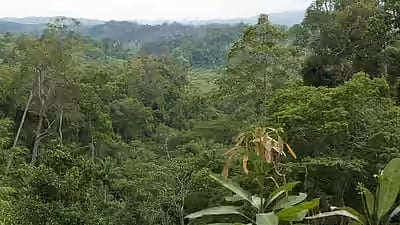
New research from Malaysia's rainforests has revealed surprising survival mechanisms in giant tropical trees, challenging long-held scientific beliefs about their vulnerability to drought. These towering trees, some exceeding 70 meters in height, are capable of transporting water from their roots to their uppermost leaves, a feat previously thought to be severely hindered by gravity and internal friction. A study published in the journal Science, conducted by researchers from the University of Exeter and the Southeast Asia Rainforest Research Partnership, investigated 38 Dipterocarp trees in Sabah's Kabili-Sepilok Forest Reserve. The research involved professional climbers collecting samples from various heights throughout the day and measuring 25 hydraulic traits, making it the most extensive study of its kind on tropical trees. Scientists discovered that these large trees possess wider xylem vessels in their lower trunks, which reduces friction and facilitates faster water transport upwards. Additionally, the leaves at the canopy have adapted to function under lower water pressure, preventing cellular damage even with limited water availability. These physical adaptations allow water to move efficiently despite extreme heights. The resilience of these trees was put to the test during the intense El Niño droughts of 2023 and 2024, where water levels dropped significantly. Surprisingly, the large Dipterocarp trees continued to grow at normal rates, similar to smaller trees, indicating that their drought tolerance is independent of their height. This finding is crucial for understanding how these vital trees, which store vast amounts of carbon and are prevalent in Southeast Asian rainforests, can persist in the face of climate change.
This research highlights the sophisticated adaptive capacity of tropical flora, demonstrating that biological systems can evolve complex physical traits to overcome environmental challenges like drought. The findings challenge established assumptions in plant physiology, suggesting that large trees are not inherently more vulnerable to water scarcity than previously believed. This has significant implications for climate change mitigation strategies, as these massive trees act as crucial carbon sinks. Understanding these internal structural adaptations provides a more nuanced view of forest resilience and the potential for these ecosystems to persist under future climatic pressures. The study underscores the importance of continued field research in diverse environments to uncover such vital, often overlooked, biological mechanisms that can inform conservation efforts and our understanding of planetary life support systems.
AI-generated to prompt reflection — not editorial opinion, not advice, not a statement of fact. How this works.