Malnourished Sea Lion Rescued in Rio de Janeiro May Have Traveled Over 3,700 km from Antarctica
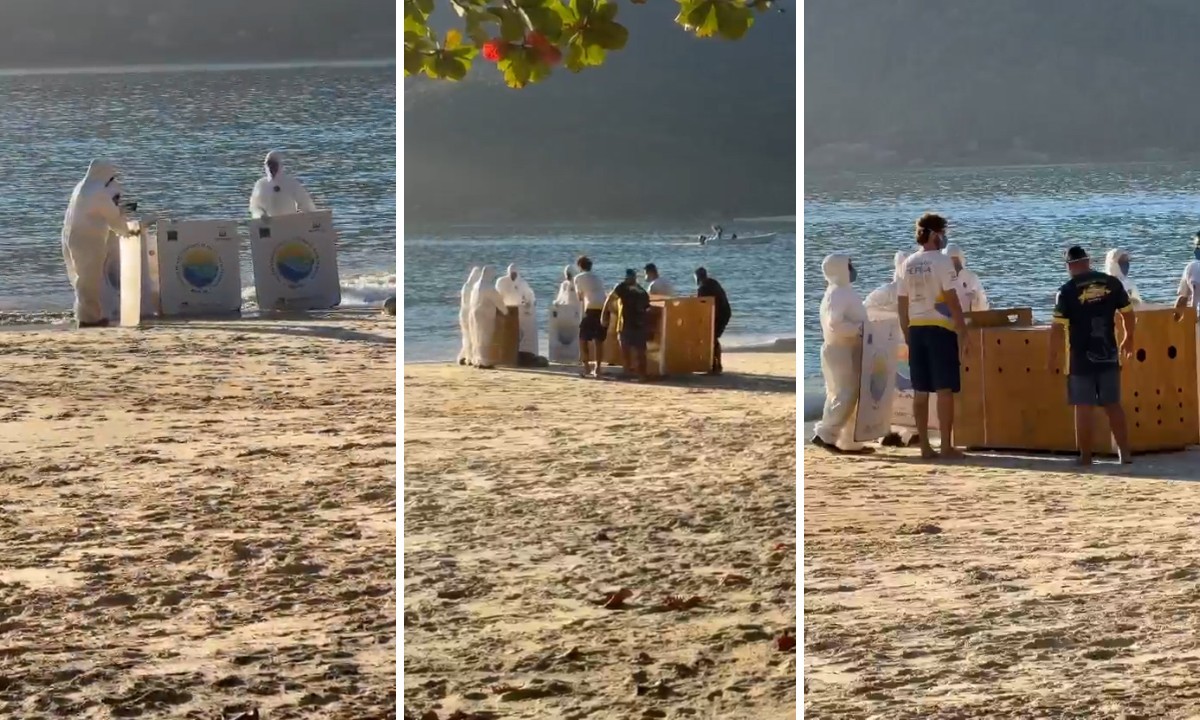
A South American sea lion (lobos-marinho-de-peito-branco) was rescued due to malnutrition after appearing on Parnaioca Beach in Ilha Grande, Angra dos Reis, Rio de Janeiro. This species primarily inhabits breeding colonies on islands between Antarctica and South America. Experts estimate the rescued animal may have traveled between 3,500 and 3,700 kilometers from its natural habitat in search of food. During these extensive migrations, some individuals become disoriented and use Brazilian coastlines as resting points. The sea lion was found resting on the beach on Sunday, May 19th, and its weakened state prompted a rescue by the PMP-BS Área RJ team, coordinated by Marta Coser. The animal had been monitored since the previous week, initially returning to the water, but reappeared on Sunday exhibiting abnormal behavior indicative of distress. Econservation, the organization responsible for the PMP-BS Área RJ, reported the sea lion was suffering from malnutrition but showed positive initial signs. Further clinical examinations are planned to rule out other health complications. The appearance of sea lions on the Rio de Janeiro coast during autumn and winter is not considered exceptional, as they migrate following marine currents and cold fronts, using southern and southeastern Brazilian beaches for rest. The primary driver for these long journeys is food scarcity, during which they deplete fat reserves and need to pause to regain energy. While not daily occurrences, sightings increase during these seasons. Dr. Gabriel Leandro Gomes, a marine mammal specialist, explained that the South American sea lion's population is concentrated south of the Antarctic Convergence, with major breeding grounds on South Georgia and Bird Islands. The Brazilian coast is outside their usual range, and animals found there are typically juveniles or subadults that stray too far during feeding expeditions, a phenomenon known as 'vagant' or 'errant' behavior. Although rare compared to their native regions, these animals have been sighted as far north as the Northeast region of Brazil. Resting on the sand is natural behavior for these migrating animals, and intervention is only necessary if signs of weakness, injury, or abnormal behavior are observed. The public is advised to maintain a safe distance, avoid touching or feeding the animal, keep pets away, and report sightings to specialized rescue teams to ensure both the animal's welfare and human safety.
The rescue of a disoriented sea lion in Rio de Janeiro highlights the significant distances marine animals undertake during migration, driven by ecological pressures such as food availability and oceanographic shifts. The event underscores the vulnerability of these species to environmental changes, potentially exacerbated by climate change impacting prey distribution and ocean currents. While the animal's journey of thousands of kilometers is a testament to natural migratory behavior, its malnourished state suggests a disruption in its feeding grounds or navigational capabilities. This incident serves as a reminder of the interconnectedness of marine ecosystems and the need for robust monitoring and conservation efforts that extend beyond immediate coastal areas to encompass broader oceanic health and migratory pathways. Understanding the factors leading to 'vagant' or 'errant' behavior in marine mammals is crucial for developing adaptive conservation strategies in an era of rapid environmental transformation.
AI-generated to prompt reflection — not editorial opinion, not advice, not a statement of fact. How this works.