Man Arrested After Expelling 29 Marijuana Packets at Hospital Following Theft
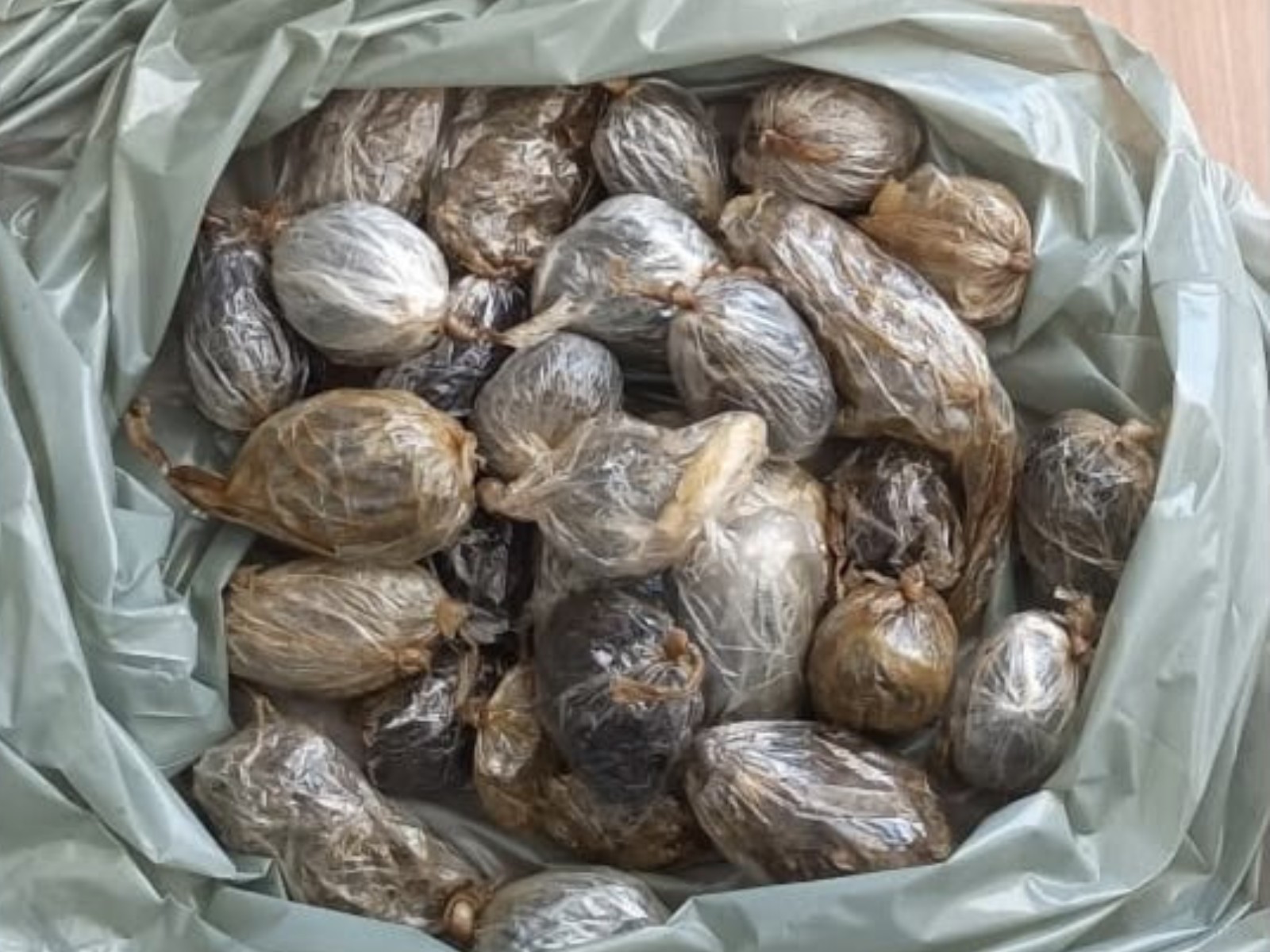
A 21-year-old man suspected of stealing from an appliance store in Manhuaçu, Brazil, was arrested after seeking medical attention for abdominal pain at Hospital César Leite on Tuesday, May 28th. The suspect told medical staff he intended to surrender to the police for the theft and revealed he had ingested 29 packets of marijuana, intending to smuggle them into a prison. During his treatment, he expelled the drug packets, which were seized by authorities. The medical team alerted the police, and the man remained under observation due to concerns about additional packets in his system. Following his discharge, he was arrested for drug trafficking and taken to the Civil Police station. The police also identified the same individual as the perpetrator of a separate theft on Friday, May 24th, where he broke into a store using a rock and stole a sound system. Security footage captured him repeatedly throwing a stone at the store's glass door until it shattered, after which he entered, took the sound system, and fled on foot. He reportedly told police during his hospital treatment that he planned to turn himself in for the theft. The stolen sound system had not been recovered at the time of the report.
This incident highlights the complex interplay between petty crime, drug smuggling attempts, and public health services. The suspect's decision to ingest a significant quantity of drugs, ostensibly to conceal them from law enforcement, led to a medical emergency and subsequent apprehension. This situation underscores the challenges faced by law enforcement in intercepting illicit substances, as individuals may resort to increasingly risky methods of concealment. Furthermore, it raises questions about the strain on hospital resources when dealing with individuals whose medical conditions are directly linked to criminal activity. The event also points to a potential systemic issue where individuals involved in minor offenses may also be entangled in more serious drug-related activities, necessitating a coordinated approach between law enforcement and healthcare providers.
AI-generated to prompt reflection — not editorial opinion, not advice, not a statement of fact. How this works.