Man Arrested for Storing Drugs to Settle Trafficking Debt in Itu
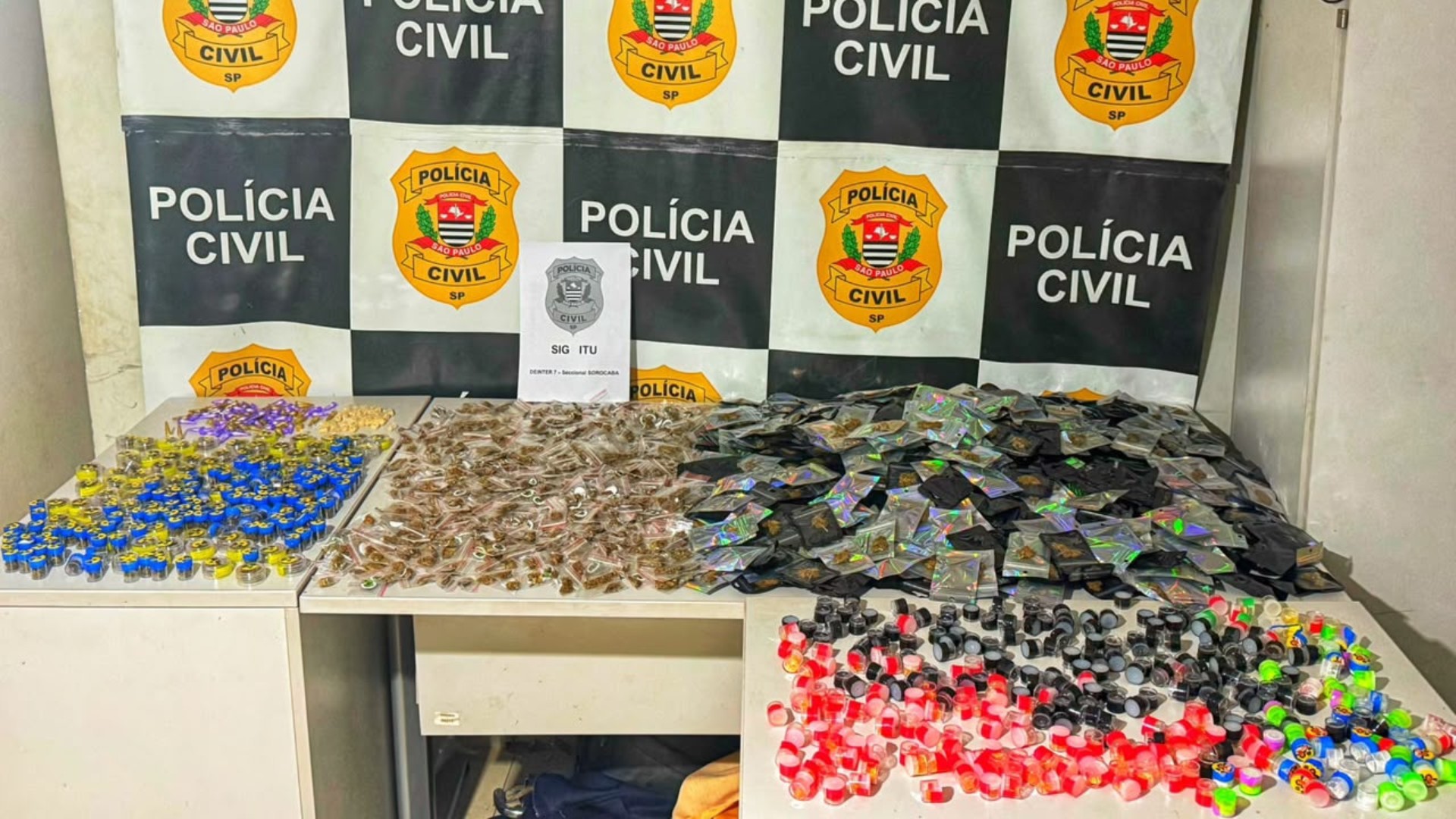
Police in Itu, São Paulo, Brazil, arrested a 26-year-old man on Friday, May 10th, suspected of operating a "bomb house" to store illicit substances. The property in Vila Martins was found to contain over 2,000 pre-portioned drug doses ready for sale. Investigators from the General Investigations Sector (SIG) were probing drug trafficking in the city and had information that the suspect was using his residence for storage. Upon arrival, officers found the man leaving the house. While he had no contraband on his person, he admitted to storing drugs in a black bag in one of the bedrooms. The seized items included 167 portions of crack, 150 of cocaine, 1,622 of marijuana, 139 of hashish, and a mobile phone. The suspect stated he agreed to store the drugs to pay off a debt to traffickers, also mentioning his wife is eight months pregnant, which influenced his decision. He was taken to the police station and charged with drug trafficking, awaiting judicial proceedings. Investigations are ongoing to identify those responsible for the drugs and other accomplices. In a separate but related operation, police in Itapetininga arrested another man and apprehended a teenager on Saturday, May 11th, during Operation "Casa-Forte." This operation targeted drug storage, preparation, and distribution in the Taboãozinho neighborhood, identifying two properties used as "bomb houses." These locations had previously been subjects of drug seizures. Authorities found drugs hidden in the ceiling, along with a precision scale, drug-related notes, and cash. One suspect escaped, while another, who has prior drug trafficking offenses, was apprehended.
The arrests in Itu and Itapetininga highlight the persistent challenge of drug trafficking networks utilizing residential properties for storage and distribution, often referred to as "bomb houses." These operations underscore the systemic pressures, such as debt and financial hardship, that can compel individuals to participate in illicit activities, even when facing personal circumstances like an impending child. The repeated targeting of similar properties in Itapetininga suggests a cycle of illicit activity that law enforcement agencies are struggling to permanently disrupt. Future strategies may need to address not only enforcement but also the underlying socio-economic factors that make individuals vulnerable to recruitment by trafficking organizations, potentially through community support programs and economic development initiatives. The ongoing investigations indicate a need for more comprehensive intelligence gathering to dismantle the broader networks rather than focusing solely on low-level operatives.
AI-generated to prompt reflection — not editorial opinion, not advice, not a statement of fact. How this works.