Man Arrested in Brazil Linked to $30 Million Laundering Scheme with Potential Al-Qaeda Ties
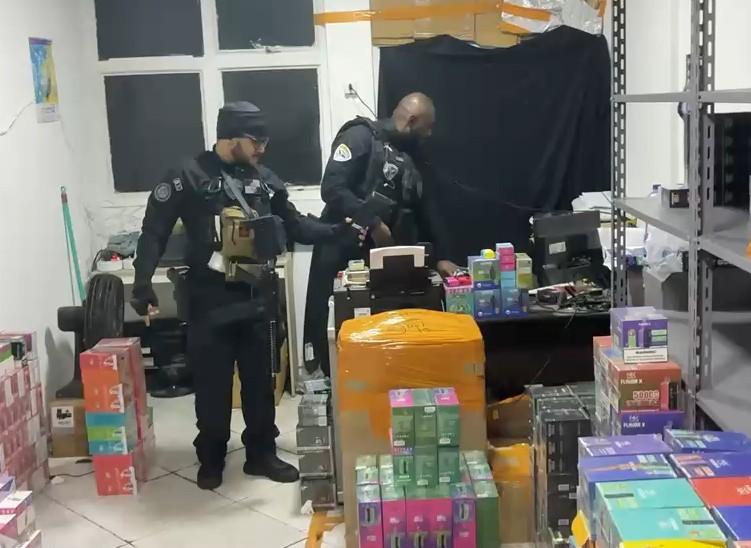
Authorities in Foz do Iguaçu, Paraná, Brazil, have arrested an individual as part of "Operation Hawala," an investigation into a money laundering scheme suspected of moving over R$100 million (approximately $30 million USD) for criminal factions. The suspect was apprehended at his father-in-law's residence in the Três Fronteiras neighborhood and transferred to the Foz do Iguaçu State Penitentiary. The Civil Police of Rio de Janeiro indicated that investigations have uncovered a potential connection between the scheme and an individual involved in financing activities for the terrorist organization Al-Qaeda. This link is being further investigated using evidence seized during the operation. The operation, launched by the Public Prosecutor's Office of Rio de Janeiro (MP-RJ) and the Civil Police, also involved executing 37 search and seizure warrants across Rio de Janeiro, São Paulo, Minas Gerais, and Foz do Iguaçu. A total of 10 arrests have been made, and 22 individuals have been formally charged, with a judge accepting the charges and making them defendants. The investigation originated from the discovery of a "multi-brand" operation linked to the Terceiro Comando Puro (TCP) faction, which dealt in counterfeit goods and stolen electronics. This led to the identification of a network of shell companies used to launder drug trafficking proceeds, employing methods like smurfing (small, repeated cash deposits) to evade detection. The probe also identified a group of businessmen of Lebanese origin suspected of facilitating the interstate and international movement of illicit funds, with indications of activity in the tri-border area of Brazil, Paraguay, and Argentina. A commercial relationship was found between a company linked to the suspects and an individual sanctioned by the U.S. Department of the Treasury's Office of Foreign Assets Control (OFAC), who is reportedly part of Al-Qaeda's financing structure.
This operation highlights the complex and often transnational nature of illicit financial flows, connecting domestic drug trafficking with potential international terrorism financing. The investigation's progression from counterfeit goods to a sophisticated money laundering network, involving shell companies and smurfing, demonstrates evolving criminal methodologies. The alleged link to Al-Qaeda, through a sanctioned individual and a commercial relationship, warrants careful scrutiny, emphasizing the critical role of financial intelligence and international cooperation in disrupting such networks. Future efforts may focus on enhancing cross-border regulatory oversight and leveraging advanced analytics to trace the movement of funds through seemingly legitimate business structures, particularly in regions with porous borders and diverse economic activities.
AI-generated to prompt reflection — not editorial opinion, not advice, not a statement of fact. How this works.