Man Arrested in Pernambuco for Terrifying Residents While Dressed as 'Jeepers Creepers' Character
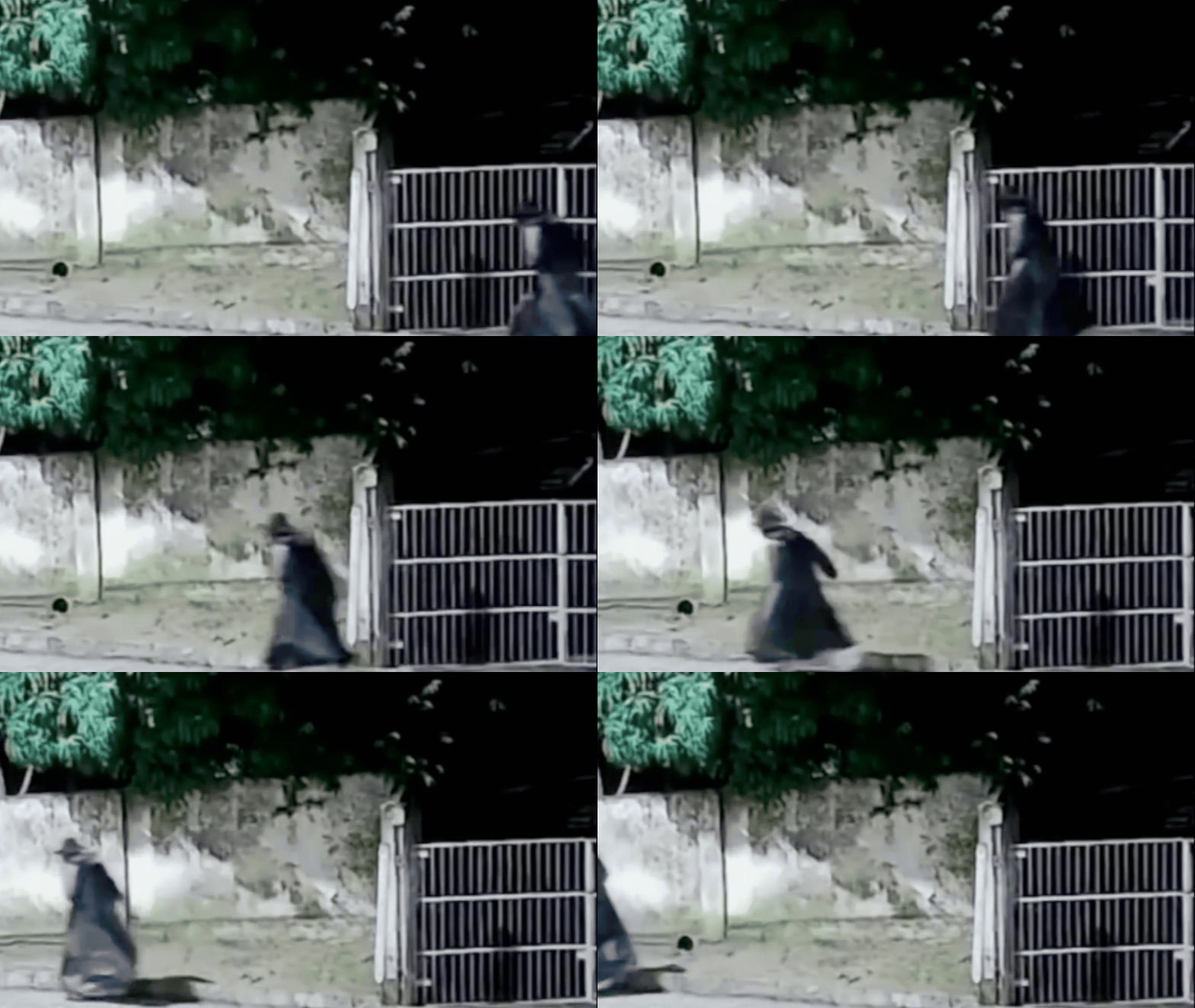
A 42-year-old man, identified as Elivaldo Ribeiro de Sales, has been arrested in Xexéu, Pernambuco, for intentionally frightening residents while dressed in a costume resembling the Creeper from the 'Jeepers Creepers' horror franchise. The man, who wore a black hat, mask, gloves, and a black cape, was apprehended on Friday, June 3rd, in the Campos Frios neighborhood by the 10th Military Police Battalion. The incidents occurred during the early morning hours over recent weeks, with videos of the costumed individual going viral on social media. Residents had reported the presence of a supposed creature, prompting police intervention. The costume's appearance closely mirrored the Creeper, a demonic entity from the films that hunts humans every 23 years. The first 'Jeepers Creepers' movie was released in 2001, with the latest installment, 'Jeepers Creepers: Reborn,' premiering in 2022. During the arrest, police seized the costume elements, which were reportedly used for recordings. The man and the confiscated items were taken to the municipal police station, where a Termo Circunstanciado de Ocorrência (TCO) was issued for disturbing public order and tranquility. The Civil Police of Pernambuco confirmed that the 83rd Precinct of Xexéu is investigating the case, and further inquiries are ongoing to fully clarify the events.
This incident highlights how cultural references, particularly from popular horror media, can be leveraged to create real-world disruption. The individual's actions, while seemingly a prank, escalated to a level requiring police intervention due to public disturbance. The case raises questions about the intersection of online virality, public perception, and law enforcement's response to events that blur the lines between fantasy and reality. Future considerations for community safety might involve understanding the impact of such public displays and establishing clear protocols for addressing perceived threats that originate from fictional characters, particularly in an era where digital content can rapidly influence offline behavior and perception.
AI-generated to prompt reflection — not editorial opinion, not advice, not a statement of fact. How this works.