Man Bathes in Flaming Natural Spring in Russia's Dagestan Region
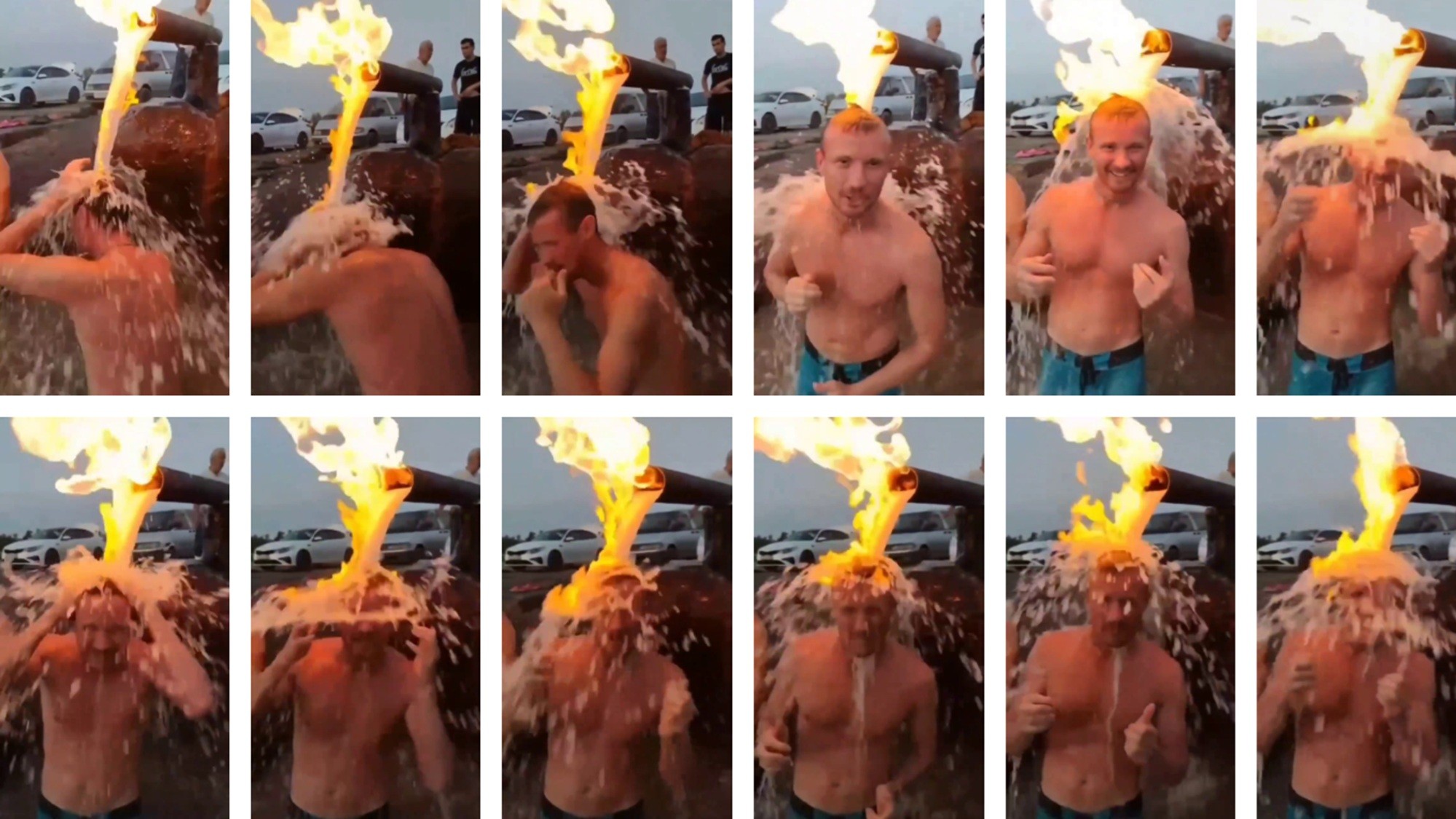
A video circulating on social media shows a man calmly bathing in a natural water spring that is engulfed in flames. The 21-second clip, which first went viral in September 2024 and has garnered hundreds of thousands of views, depicts the man washing his head and torso in water emerging from a pipe, with flames visible nearby. He appears relaxed and smiles during the experience. The phenomenon is explained by the release of flammable gases, primarily methane, mixed with the water from the spring. Geographer Humberto Marotta Ribeiro of the Federal Fluminense University (UFF) confirmed that such 'burning water' is possible, often occurring in lakes with organic sediments or geological systems associated with natural gas or oil. While the flames combust the gas and not the water, Ribeiro cautioned that the situation is not entirely safe, as direct contact with flames or a larger gas flow could cause burns. The specific location has been identified as a tourist spot in Dagestan, Russia, near the village of Belidzhi, known for its sulfurous spring called 'Goryachka'. This unique natural feature, with water temperatures around 40-50°C (104-122°F), has been documented by local media and tourists since at least 2020, with some describing the water as medicinal and rejuvenating. Despite its unusual appearance and the presence of flames, visitors have reported being able to touch the flames without being burned, attributing it to the water's heat-absorbing properties and the concentration of combustion on the gas.
The event showcases a natural phenomenon where methane gas, released from underground geological sources, ignites upon contact with the air, creating visible flames around a water spring. While visually striking and potentially perceived as magical or dangerous, the scientific explanation involves the combustion of gas rather than the water itself. The practice of bathing in such springs, as depicted, highlights a human inclination to interact with and utilize natural wonders, even those with inherent risks. From a public safety and environmental perspective, the presence of unmanaged natural gas seeps near populated or tourist areas warrants careful assessment of potential hazards, including uncontrolled ignition or asphyxiation risks. Future management strategies could involve understanding the long-term stability of these gas releases and ensuring public access is balanced with safety protocols, potentially through controlled viewing areas or public awareness campaigns about the underlying geological processes and associated risks.
AI-generated to prompt reflection — not editorial opinion, not advice, not a statement of fact. How this works.