Man Bitten by Rattlesnake While Trying to Move it With a Stick in Brazil
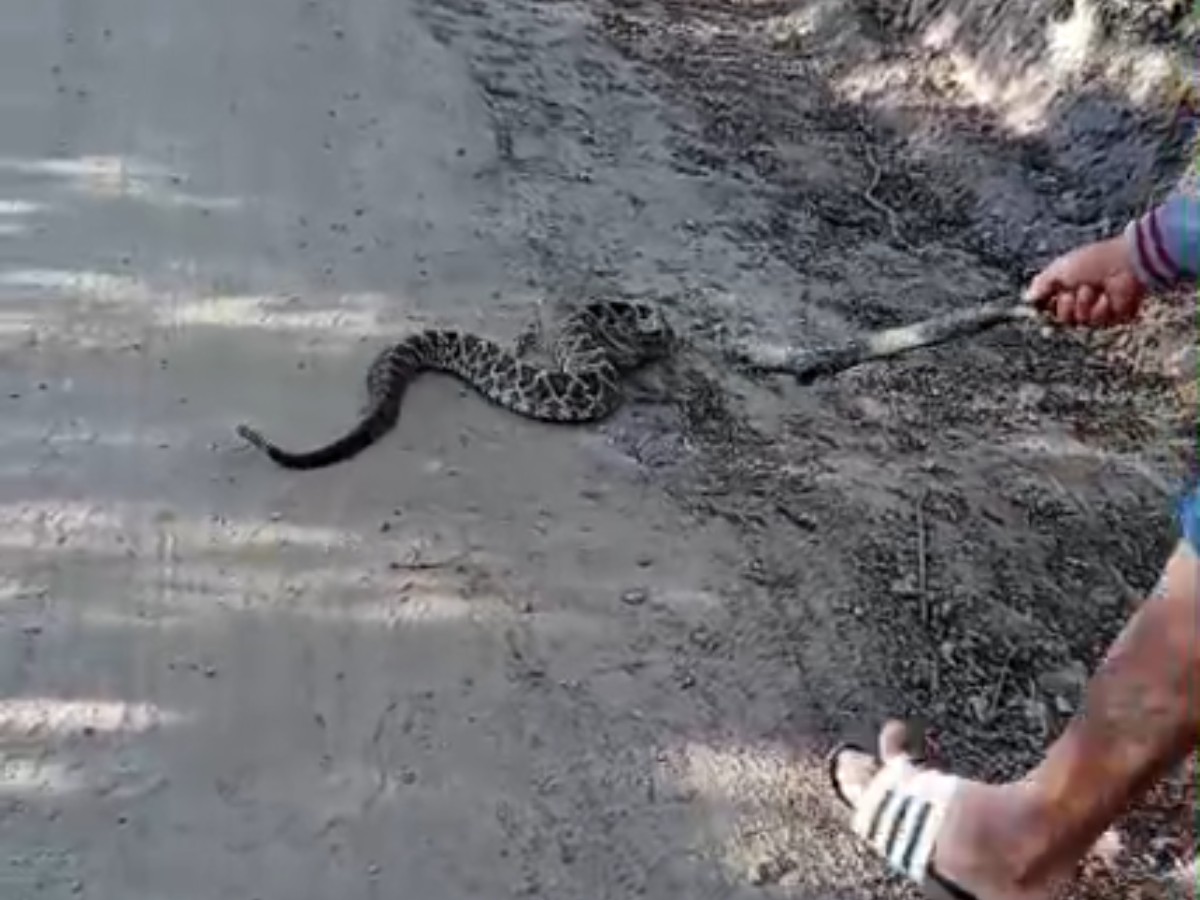
A man in Capoeiras, Pernambuco, Brazil, was bitten by a rattlesnake on Sunday, July 2nd, after attempting to move the venomous reptile away with a piece of wood. He was initially taken to Hospital Quitéria Alves Vilela in Capoeiras and subsequently transferred to the Hospital Regional Dom Moura in Garanhuns. A video circulating on social media captured the incident, showing the rattlesnake with its rattle activated, a clear warning sign. Despite this, the man approached the snake with a short branch, and during his attempt to push it away, he was bitten. The man's identity and age have not been released. The Hospital Regional Dom Moura confirmed his admission following the venomous animal encounter and stated that he remains hospitalized in stable condition, receiving necessary care. Biologist Alexandre Nunes strongly advises against approaching or attempting to handle any encountered snake. He recommends contacting the Fire Department or relevant authorities for safe removal. Nunes emphasized that using objects like sticks does not eliminate the risk of an attack, as demonstrated in this case with the highly venomous rattlesnake. In the event of a bite, Nunes advises immediate medical attention. He suggests washing the bite area with soap and water and proceeding to a hospital without delay. Keeping the affected limb elevated above heart level during transport can help slow venom spread. If possible and safe to do so, taking a photo of the snake is beneficial for species identification and administering the correct antivenom.
This incident highlights a common human tendency to interact with wildlife, often driven by a desire to control perceived threats or curiosity, despite inherent risks. The man's attempt to manage the rattlesnake himself, rather than seeking professional assistance from authorities like the Fire Department, underscores a potential gap in public awareness regarding safe wildlife encounters and the efficacy of specialized intervention. The biologist's advice to photograph the snake, if safe, points to the critical role of accurate identification in medical treatment, particularly for venomous bites. Moving forward, educational initiatives focusing on the specific dangers of venomous species and promoting established protocols for wildlife management could mitigate future occurrences, emphasizing the limitations of individual intervention against potent natural defenses and the importance of relying on expert response systems.
AI-generated to prompt reflection — not editorial opinion, not advice, not a statement of fact. How this works.
