Man Dies After Tree Falls During High Winds in Santos, Brazil
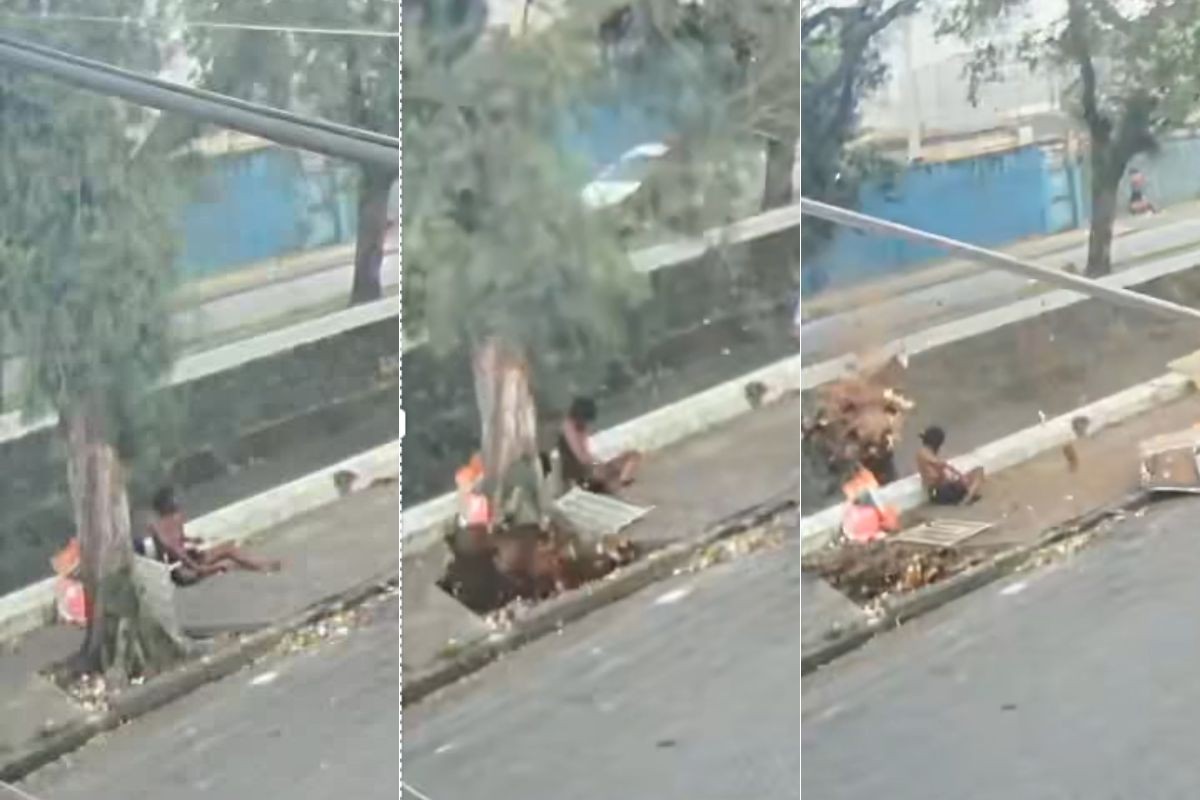
A man living on the streets in Santos, on the coast of São Paulo, Brazil, died on Wednesday, May 29th, after a tree collapsed on him during a severe windstorm. The incident occurred on Avenida Almirante Cochrane, where wind gusts exceeded 100 km/h in the Baixada Santista region. The 58-year-old victim was reportedly sitting on a wall when the tree fell, causing him to fall into Canal 5. Surveillance footage captured the strong winds, which were strong enough to topple a shopping cart. While the victim was not directly visible in the camera's view, another man nearby narrowly avoided being struck, and the owner of the shopping cart had moved away moments before the tree fell. Other residents living on the streets, with assistance from company employees, helped retrieve the victim from the canal. Firefighters arrived and provided initial aid, but the man had already suffered cardiac arrest and was pronounced dead at the scene. The delegate investigating the case, Wagner Camargo Gouveia, stated that the victim sustained a severe head injury, likely the cause of death. As the victim had no identification, his body was sent to the Medical Examiner's Office (IML) for identification and to determine if negligence was involved. The Santos City Hall confirmed that the body remained at the scene for forensic examination and removal by the IML, and a witness was taken to the police station to give a statement. This incident is part of a series of weather-related fatalities in the Southeast region of Brazil, including a fisherman lost at sea in São Sebastião, a man killed by a tree in Cesário Lange, and a former football player among two victims of a wall collapse in Rio de Janeiro. Santos is noted as the fourth city in São Paulo state with the highest number of homeless individuals, according to a 2025 study, highlighting underlying social issues contributing to homelessness.
The tragic death of a homeless individual in Santos underscores the vulnerability of marginalized populations during extreme weather events. The incident raises questions about urban infrastructure maintenance and public safety protocols, particularly concerning the management of trees in public spaces prone to high winds. While the investigation will focus on potential negligence, the systemic issues contributing to homelessness—such as lack of affordable housing, inadequate social support systems, and untreated mental health or substance abuse issues—are critical factors that exacerbate the risks faced by this demographic. Future urban planning and disaster preparedness strategies must integrate considerations for vulnerable populations, ensuring that public safety measures extend to those most at risk, thereby mitigating the disproportionate impact of environmental hazards.
AI-generated to prompt reflection — not editorial opinion, not advice, not a statement of fact. How this works.