Man found guilty of damaging National Monument on Dam Square, but receives no punishment
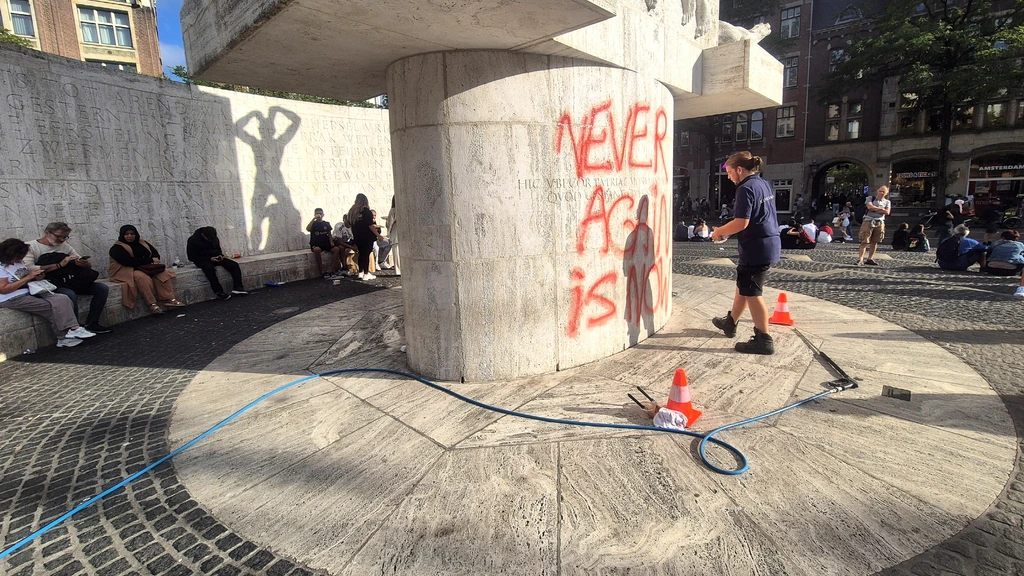
A 25-year-old man has been found guilty of damaging Amsterdam's National Monument on Dam Square by spraying it with red paint. The court ruled that while the monument was damaged, it was not destroyed, as the paint was successfully removed, restoring it to its original state. The man had written "Never again is now" on the monument during a pro-Palestinian demonstration on August 16th of last year, which was attended by approximately 1500 people. He was arrested at the scene and immediately confessed to the act. The Public Prosecution Service had argued for vandalism, but the judge distinguished between damage and destruction. The man will not receive any punishment or measures because he has already paid the 895 euro cost of the damage to the municipality. The court considered the payment, his arrest, and a nearly three-hour police interrogation as sufficient consequences. The suspect's lawyer argued that the act was an exercise of freedom of speech and the right to protest, intended as a political message against the Dutch government's stance on Israel's actions in Gaza. However, the judge rejected this, stating the message could have been conveyed through other means, such as a banner, without damaging the monument. The judge emphasized the monument's significance as a memorial to World War II victims and others who died for or by the Netherlands, deeming the defacement "socially unacceptable and disproportionate" regardless of its political intent. The monument was also defaced earlier this year on May 4th, the national Remembrance of the Dead day.
The court's decision to find the perpetrator guilty of damage but impose no penalty highlights a tension between acknowledging the sanctity of national memorials and upholding freedom of expression, even when that expression causes material harm. By focusing on the restoration of the monument and the payment of damages, the ruling implicitly prioritizes a restorative justice model over punitive measures. This approach may incentivize individuals to engage in acts of protest that cause damage, provided they can afford to rectify the harm, potentially creating a loophole for future disruptions. The court's assertion that the political message did not justify the damage, while legally sound, overlooks the potential for such acts to amplify political discourse in an era where symbolic actions often gain significant traction. Future considerations might involve clearer guidelines on the acceptable boundaries of protest concerning national heritage sites, balancing public memory with evolving societal grievances.
AI-generated to prompt reflection — not editorial opinion, not advice, not a statement of fact. How this works.