Man Investigated for Secretly Recording Women in Santos Commercial Building Restroom
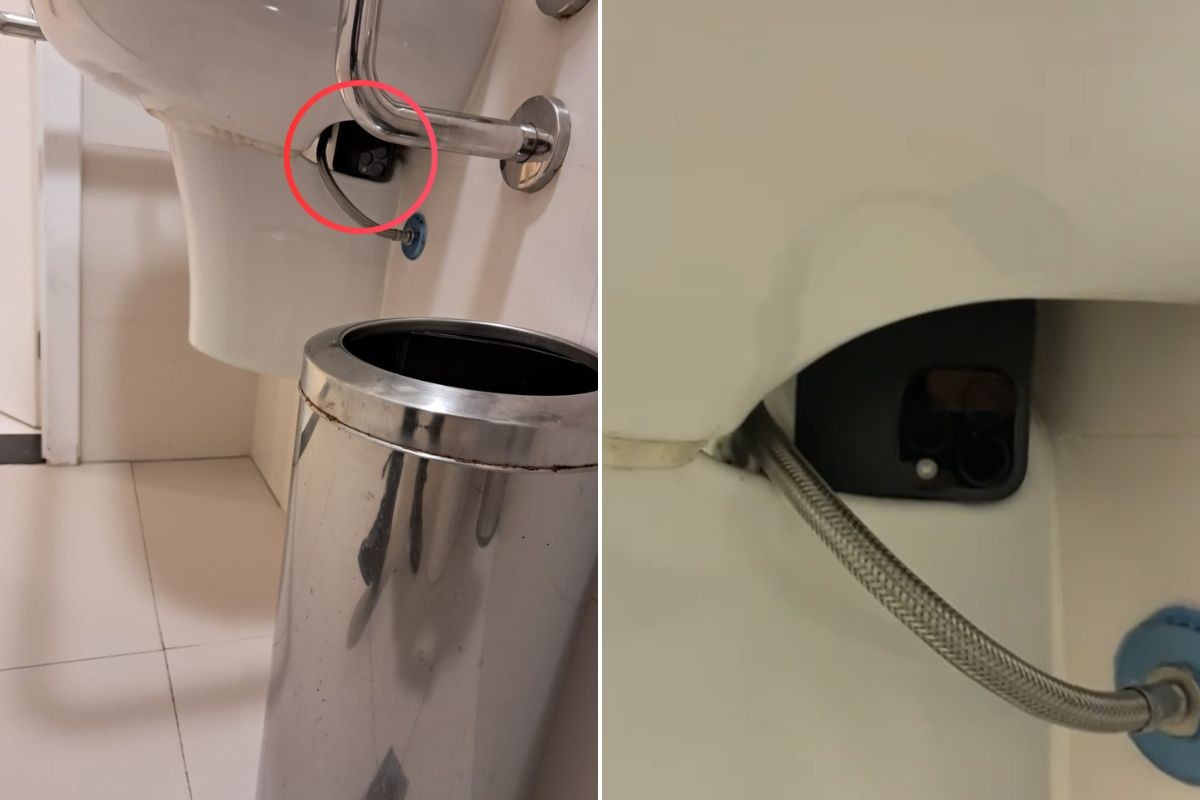
Authorities in Santos, São Paulo, are investigating a 21-year-old man accused of hiding a cell phone in a women's restroom within a commercial building to record unsuspecting women. The device was discovered placed beneath a sink, with its camera angled towards the toilet. Two women found the phone last week and filed a police report, initiating the investigation by the 3rd Police District. The suspect, whose identity has not been released, was taken to the police station and subsequently released after providing a statement on Tuesday, November 14th. He admitted to owning the phone and placing it in the restroom designated for women with disabilities in the Aparecida neighborhood. The building management confirmed that a judicial order was executed at the premises. The accused stated he is undergoing psychological and psychiatric treatment for voyeuristic behavior, attributing his actions to years of excessive pornography consumption and a subsequent attraction to observing others' private moments without their knowledge. He also cited psychiatric medication causing memory lapses as a factor, claiming he doesn't recall how the phone ended up in the restroom. Surveillance footage from the building showed the man entering the restroom where the phone was found, though he claimed ignorance of it being exclusively for women. Police are now examining whether the recordings were for personal gratification or potential sale to pornography sites. Officers executed search warrants at the commercial building and the suspect's home, seizing a cell phone, computer, laptop, and four imitation firearms. The suspect provided passwords for data extraction and forensic analysis.
This incident highlights the critical need for robust privacy measures and security protocols in public and commercial spaces, particularly concerning restrooms. The investigation into the suspect's motivations, including alleged voyeuristic tendencies and potential distribution of illicit content, underscores the complex interplay between psychological factors and criminal behavior. From a systemic perspective, the case prompts a re-evaluation of surveillance technology deployment, ensuring it serves security without infringing upon fundamental privacy rights. Future considerations should include enhanced building access controls, discreet but effective monitoring systems, and accessible reporting mechanisms for potential victims. The legal and ethical frameworks surrounding digital privacy and the exploitation of personal data require continuous adaptation to address evolving technological capabilities and their misuse.
AI-generated to prompt reflection — not editorial opinion, not advice, not a statement of fact. How this works.